The media has already dubbed Hillary Clinton the presumptive presidential nominee. Even before she won California, she had won more votes, more pledged delegates and more primaries than Bernie Sanders. Super-delegates will not overturn the choice of the voters unless the former secretary of state’s e-mail scandal gets much worse. We are headed into a race between Donald Trump and Hillary Clinton.
Most attention is focused on their personalities. The polls show that Americans feel unfavorably toward both of them. Trump calls Clinton “crooked” and has already begun a campaign of personal insult and slur. Clinton calls Trump “unfit temperamentally” for the job and has highlighted his changing ideas and lack of policy expertise. Trump wants to be seen as a strong outsider. Clinton wants to be perceived as experienced and responsible.

But this election is less a choice about personality than about direction, less about individuals than about movements. Trump presents himself as an insurgent in the Republican Party, but he carries that party’s right-wing agenda. He thinks climate change is a myth. He’s for massive tax cuts on the wealthy, and for more spending on the military. He has embraced the GOP’s race-baiting politics and carted them to new lows. He has no program for dealing with inequality. He’s built his campaign by pushing off against Hispanics, Muslims, women, environmentalists and African Americans. He pledges to tear up the Iran nuclear deal, which would add tensions to the most volatile region of the world.
Trump sounds refreshing in his skepticism about America’s failed trade policies and about its interventions across the world. But his answers (that he’d cut a better deal) are postures, not policy.
Clinton, in contrast, offers herself as an experienced reformer who will build on the progress made over the last years, not reverse it. She’ll push for strengthening the Voting Rights Act, comprehensive immigration reform, equal pay for women and a stronger effort to address climate change. She’ll defend progress made on choice, gay rights, civil rights and the environment. She favors lifting the minimum wage and empowering workers to organize. She celebrates the Iran deal and the Paris agreement on climate.
Trump is far more a Caesar than a movement candidate. But he will be supported by and pressed by the conservative movements that drive the Republican right—the Tea Party, the Gun Lobby and the anti-choice, anti-immigrant, anti-gay and anti-black reactions.
Clinton is far more an establishment than a movement candidate. But she will be supported by and pressed by the civil rights, women’s, environmental, LGBT, union, Latino, pro-democracy and anti-Wall Street movements. Sanders was right to run in the Democratic primaries because that is where the reform movement energy gets expressed.
The choice in direction is clear. Activists have to decide whether it is preferable to fight against a leader supported and pushed by the right (even if it means supporting a candidate they deem less progressive) or to deny their vote to both nominees.
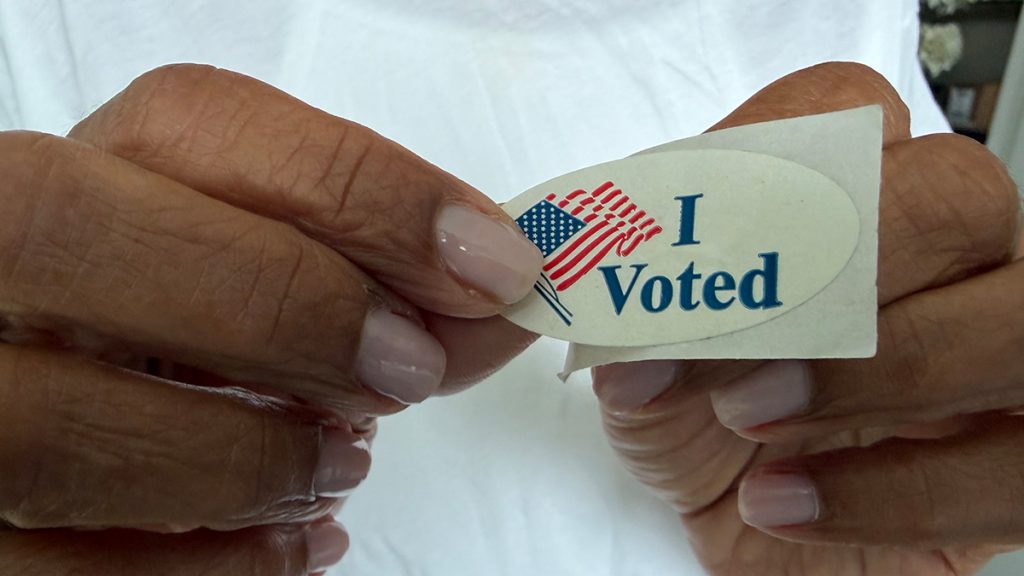
We know the cost of dismay and the power of hope. In 1960, John F. Kennedy beat Richard Nixon by 112,000 votes, the margin of our hope.
In 1968, Hubert Humphrey lost to Richard Nixon by 800,000 votes, the margin of our despair. In 1980, Ronald Reagan won in large part because of Democratic Party divisions over Jimmy Carter. In 2008, Barack Obama became the first African American president on the basis of our hope.
We’re headed into a negative campaign featuring on personal insult and negative attacks. But we’re making a choice about direction. And we should not forget that.