

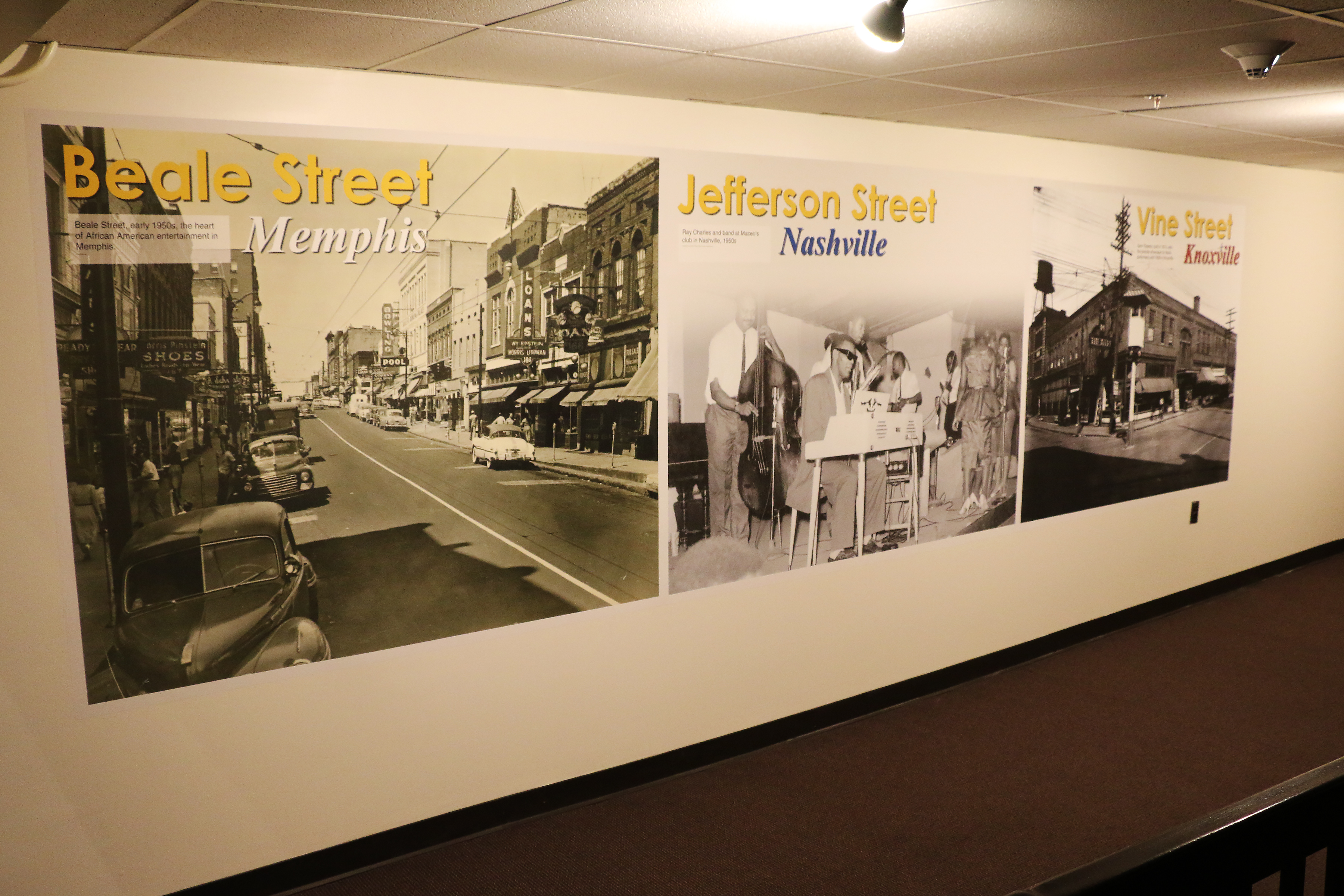
The February edition of the ‘Tennessee State Museum’s Lunch & Learn’ series will focus on Tennessee’s African American Music Heritage. On Thursday, February 15 at 12:15 pm at the museum, historians Graham Perry, curator of Social History, and Mike Bell, curator of Popular Music, together with Lorenzo Washington, CEO/founder of Jefferson Street Sound, will speak about and perform some of the music of Black Tennesseans that transformed American music, including spirituals, blues, ragtime, jazz, gospel, rhythm and blues, rock and roll, and soul music.
“These musicians have influenced and enriched music around the world, from the early blues legends of W. C. Handy and Bessie Smith to the soul hits of STAX Records in Memphis,” said museum officials.
Perry and Bell are the curators of the award-winning exhibition, ‘I Have a Voice: Tennessee’s African American Musical Heritage,’ which opened at the Tennessee State Museum in 2016 and is now traveling across the state. It is currently on display at The West Delta Heritage Center in Brownsville, Tennessee.
Washington, through Jefferson Street Sound, is committed to carrying on the legacy of musicians and artists like Marion James, DeFord Bailey, James Brown, Little Richard, Johnny Jones, Jimmy Church, Jimmy Hendrix and more who performed in the clubs on Jefferson Street from the 1940s to the 1970s. He is also featured in an oral history portion of the ‘I Have a Voice’ exhibit.
For those unable to attend the Lunch and Learn, the event will be beginning at 12:15 pm.
The Tennessee State Museum is located at Fifth Avenue and Deaderick Street in downtown Nashville, and metered and lot parking is available nearby. While the event is free, attendees should plan on paying for parking in downtown Nashville. The main branch of the Nashville Public Library, at 615 Church Street, has a public parking lot and is a convenient walk to the museum.

The Tennessee State Museum was established by law in 1937 “to bring together the various collections of articles, specimens, and relics now owned by the State under one divisional head,” and “to provide for a transfer of exhibits wherever they may be.”
Today, the Tennessee State Museum is housed in the James K. Polk building in downtown Nashville, where it has been for nearly 35 years. Gov. Bill Haslam proposed and the Tennessee General Assembly approved $120 million in the FY-2015-16 budget to build a new home for the Tennessee State Museum on the Bicentennial Mall to maximize the state’s rich history by creating a state-of-the-art educational asset and tourist attraction for the state. The governor also announced that $40 million would be raised in private funds for the project.
A 140,000 square foot facility is being built on the northwest corner of the Bicentennial Mall at the corner of Rosa Parks Boulevard and Jefferson Street to tell Tennessee’s story by showcasing one-of-a-kind artifacts, art and historical documents in an interactive and engaging way. More information on the museum can be found at tnmuseum.org.