All too often, our ‘history’ month turns into a tribute to the past. And while the past is an important place to lift up it is, indeed, a tributary, a stream that flows into the larger stream of an unbounded future. The future must always be greater than the present, or there has been no progress. And in the words of Frederick Douglas, “progress concedes nothing without a demand.”
I spend much of Women’s History Month thinking of those who have come before me; I stand on their shoulders. I claim Women’s History Month for Black Women and love to call our roll of luminaries that, for me, includes Dr. Sadie Tanner Mossell Alexander, the first Black woman to get a Ph.D. in economics, Dr. Phyllis Ann Wallace, the first Black woman to get a Ph.D. in economics from Yale, and the first to attain tenure at MIT.
There are more, but I also want to speculate about the future role of luminaries and reflect on that fact that many Black women have made it possible for us to bask in a new generation of leadership. The past has laid a foundation, but the future is far more important than the past.
Rev. Leah Daughtry
Thus, Leah Daughtry (who managed the 2016 Democratic National Convention), Minyon Moore (who had a key role in the Clinton campaign), and Yolanda Caraway (an amazing political operative who has worked for Rev. Jesse Jackson, President Bill Clinton, and candidate Hillary Clinton), put a footprint in the sand for future leadership with their Power Rising conference in Atlanta, last month. They gathered more than a thousand Black women from around the country to develop a ‘Black Women’s Agenda,’ deliberately mixing up the seasoned with the sassy, established leaders with those who are eager to make their mark.
Symone Sanders
Symone Sanders, the CNN commentator who made her mark supporting Bernie Sanders, and who does not back down from a fight around principles and issues, led a panel of young women who spoke of the challenges in their work. Amanda Brown Lierman, a new mom and the political director of the Democratic National Committee, was among those on another panel about life in politics. Others on that panel included LaDavia Drane, who led Black outreach for Hillary Clinton and is now chief of staff for Congresswoman Yvette Clark (D-N.Y.) and Boston City Councilor Ayanna Pressley, who is now running for Congress. These young women aren’t playing! They are calling out their elders, but also calling out the rules. They aren’t trying to toe a line, they are trying to make a difference.
Ayanna Pressley
Ayanna Pressley, as an example, is challenging an incumbent Democrat in a Congressional primary. Tired of being told to ‘wait her turn,’ she has decided that now is her time. Even though she has always garnered support from Emily’s List, the fact that she is challenging a pro-choice Democratic man in Boston has not won her support from the political establishment. Yet the 42-year-old sister says she will not be constrained by tradition. The Power Rising conference represented an example of that unfettered and passionate energy.
Tamika Mallory
One of the most promising young leaders is Tamika Mallory, one of the four co-leaders of the Women’s March. Tamika is a protégé of Rev. Al Sharpton (her parents were among the founders of the National Action Network, and she served as its Executive Director for several years). Because of her amazing work, Mallory earned a Phoenix Award from the Congressional Black Caucus Foundation in 2017. With appropriate humility, she accepted her award ‘for the people,’ and the most important thing that one gets from Tamika Mallory is that she loves humanity, loves Black people, and especially Black women. She, like the others mentioned, is a leader for our future. She is the future of Black Women’s History. We all know that because she is a leader, she will attract negative energy and still, she rises, walking through life with her shoulders back, head held high, an unapologetic lover of her people.
The Akan (Ghanaian) word ‘sankofa’ translates as ‘go back and get it.’ It is associated with the proverb ‘Se wo were fi na wosankofa a yenkyi,’ which means ‘It is not wrong to go back for that which you have forgotten.’ The Adinkra symbol for Sankofa is either that of a bird with its head turned backward carrying a precious egg in its mouth, or a stylized heart shape.
The precious egg is the history of our leadership, the women like Mary McLeod Bethune and Dorothy Height and Sadie Alexander and Phyllis Wallace. Even while looking backward, though, the Sankofa bird is moving forward, just like Tamika Mallory, LaDavia Drane, Amanda Brown Lierman, and so many others. In the paraphrased words of the poet Mari Evans, “Look on them and be renewed.”
Julianne Malveaux is an author, economist and founder of Economic Education. Her latest book Are we Better Off? Race, Obama and Public Policy is available to order at Amazon.com and at www.juliannemalveaux.com. Follow Dr. Malveaux on Twitter @drjlastword.
Fisk University explains how its proposed North Nashville data center could expand AI education, research, workforce training and community technology access.
Frist Art Museum expands its free Explorer Membership to eligible Middle Tennessee college students, offering gallery admission, ArtQuest access and more.


Power Rising Conference features best, brightest in Black women leadership
PRIDE Newsdesk
All too often, our ‘history’ month turns into a tribute to the past. And while the past is an important place to lift up it is, indeed, a tributary, a stream that flows into the larger stream of an unbounded future. The future must always be greater than the present, or there has been no progress. And in the words of Frederick Douglas, “progress concedes nothing without a demand.”
I spend much of Women’s History Month thinking of those who have come before me; I stand on their shoulders. I claim Women’s History Month for Black Women and love to call our roll of luminaries that, for me, includes Dr. Sadie Tanner Mossell Alexander, the first Black woman to get a Ph.D. in economics, Dr. Phyllis Ann Wallace, the first Black woman to get a Ph.D. in economics from Yale, and the first to attain tenure at MIT.
There are more, but I also want to speculate about the future role of luminaries and reflect on that fact that many Black women have made it possible for us to bask in a new generation of leadership. The past has laid a foundation, but the future is far more important than the past.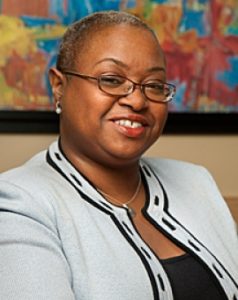
Rev. Leah Daughtry
Thus, Leah Daughtry (who managed the 2016 Democratic National Convention), Minyon Moore (who had a key role in the Clinton campaign), and Yolanda Caraway (an amazing political operative who has worked for Rev. Jesse Jackson, President Bill Clinton, and candidate Hillary Clinton), put a footprint in the sand for future leadership with their Power Rising conference in Atlanta, last month. They gathered more than a thousand Black women from around the country to develop a ‘Black Women’s Agenda,’ deliberately mixing up the seasoned with the sassy, established leaders with those who are eager to make their mark.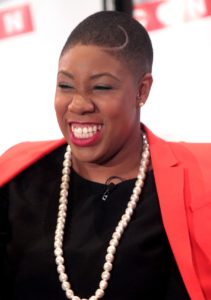
Symone Sanders
Symone Sanders, the CNN commentator who made her mark supporting Bernie Sanders, and who does not back down from a fight around principles and issues, led a panel of young women who spoke of the challenges in their work. Amanda Brown Lierman, a new mom and the political director of the Democratic National Committee, was among those on another panel about life in politics. Others on that panel included LaDavia Drane, who led Black outreach for Hillary Clinton and is now chief of staff for Congresswoman Yvette Clark (D-N.Y.) and Boston City Councilor Ayanna Pressley, who is now running for Congress. These young women aren’t playing! They are calling out their elders, but also calling out the rules. They aren’t trying to toe a line, they are trying to make a difference.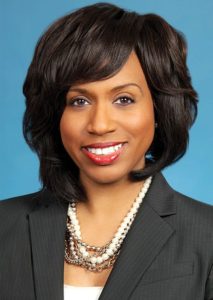
Ayanna Pressley
Ayanna Pressley, as an example, is challenging an incumbent Democrat in a Congressional primary. Tired of being told to ‘wait her turn,’ she has decided that now is her time. Even though she has always garnered support from Emily’s List, the fact that she is challenging a pro-choice Democratic man in Boston has not won her support from the political establishment. Yet the 42-year-old sister says she will not be constrained by tradition. The Power Rising conference represented an example of that unfettered and passionate energy.
Tamika Mallory
One of the most promising young leaders is Tamika Mallory, one of the four co-leaders of the Women’s March. Tamika is a protégé of Rev. Al Sharpton (her parents were among the founders of the National Action Network, and she served as its Executive Director for several years). Because of her amazing work, Mallory earned a Phoenix Award from the Congressional Black Caucus Foundation in 2017. With appropriate humility, she accepted her award ‘for the people,’ and the most important thing that one gets from Tamika Mallory is that she loves humanity, loves Black people, and especially Black women. She, like the others mentioned, is a leader for our future. She is the future of Black Women’s History. We all know that because she is a leader, she will attract negative energy and still, she rises, walking through life with her shoulders back, head held high, an unapologetic lover of her people.
The Akan (Ghanaian) word ‘sankofa’ translates as ‘go back and get it.’ It is associated with the proverb ‘Se wo were fi na wosankofa a yenkyi,’ which means ‘It is not wrong to go back for that which you have forgotten.’ The Adinkra symbol for Sankofa is either that of a bird with its head turned backward carrying a precious egg in its mouth, or a stylized heart shape.
The precious egg is the history of our leadership, the women like Mary McLeod Bethune and Dorothy Height and Sadie Alexander and Phyllis Wallace. Even while looking backward, though, the Sankofa bird is moving forward, just like Tamika Mallory, LaDavia Drane, Amanda Brown Lierman, and so many others. In the paraphrased words of the poet Mari Evans, “Look on them and be renewed.”
Julianne Malveaux is an author, economist and founder of Economic Education. Her latest book Are we Better Off? Race, Obama and Public Policy is available to order at Amazon.com and at www.juliannemalveaux.com. Follow Dr. Malveaux on Twitter @drjlastword.
Amanda Brown Lierman | commentary | Julianne Malveaux on Boston City Councilor Ayanna Pressley | Julianne Malveaux on Dr. Phyllis Ann Wallace | Julianne Malveaux on economist Dr. Sadie Tanner Mossell Alexander | Julianne Malveaux on LaDavia Drane | Julianne Malveaux on Leah Daughtry | Julianne Malveaux on Minyon Moore | Julianne Malveaux on Phoenix Award winner Tamika Mallory and women’s march | Julianne Malveaux on Power Rising conference | Julianne Malveaux on Yolanda Caraway | op-ed
PRIDE Newsdesk
Fisk makes academic case for controversial North Nashville data center
Nashville Airport Begins Renaming Process to Honor Dolly Parton
Frist Art Museum expands free membership to local college students
TJ Hardaway ends write-in campaign for late father’s House seat
Smithsonian’s first Black secretary steps down amid White House pressure
Stay connected
Subscribe to our
Newsletter
Recent News
Fisk makes academic case for controversial North Nashville data center
Nashville Airport Begins Renaming Process to Honor Dolly Parton
Frist Art Museum expands free membership to local college students
TJ Hardaway ends write-in campaign for late father’s House seat
Smithsonian’s first Black secretary steps down amid White House pressure