
(Family Features) A diagnosis of atrial fibrillation (AFib) may be scary, but it doesn’t have to hold you back from enjoying life. Learning more about the condition and treatment options can significantly affect your prognosis and quality of living.
AFib is the most common type of cardiac arrhythmia or abnormal heart rhythm. It occurs when the upper chambers of the heart, called the atria, beat rapidly or in an uncontrolled manner. AFib can cause a wide variety of symptoms, including heart palpitations, fatigue, shortness of breath, difficulty exercising, anxiety, chest pain and dizziness.

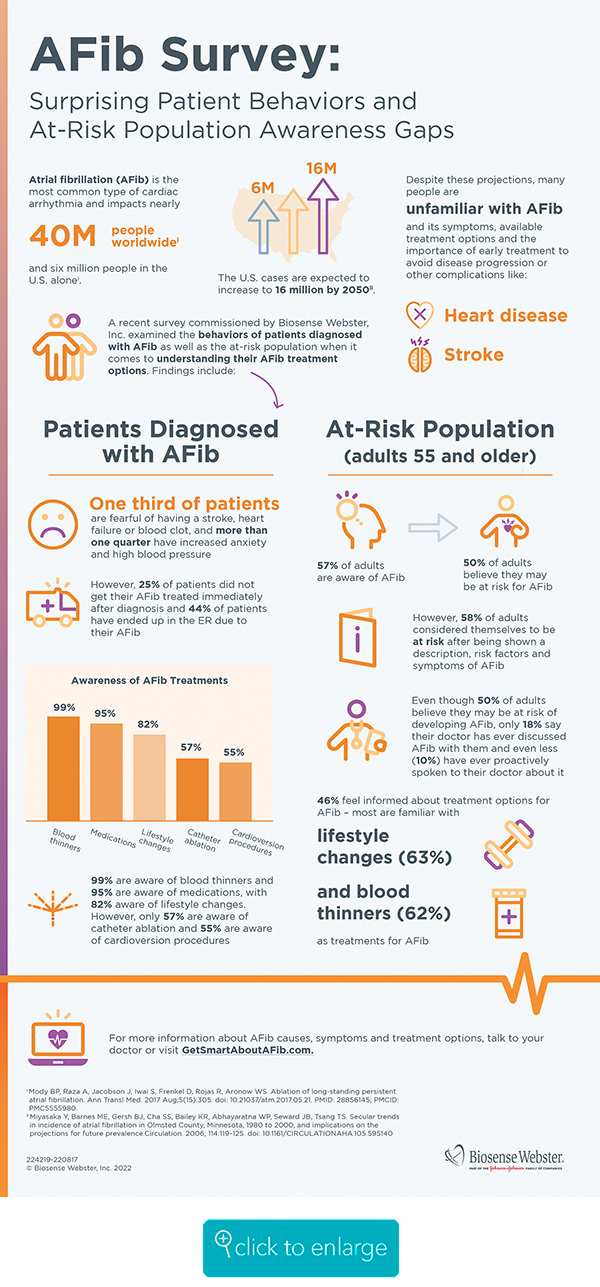
AFib impacts nearly 40 million people worldwide, according to research published in the “International Journal of Stroke,” including 6 million people in the United States alone. Despite its prevalence, many people are unfamiliar with the symptoms, available treatment options and importance of early treatment to avoid disease progression or other life-threatening complications such as a stroke.
More than a quarter of adults living with AFib have fears and anxiety about the progressive nature of the disease, according to a survey conducted by Biosense Webster, Inc., part of Johnson & Johnson MedTech. However, a quarter of patients did not get treatment immediately after diagnosis and 44% of patients have ended up in the emergency room due to their condition.
 Speak to Your Doctor
Despite half of adults 55 and older believing they may be at risk for AFib, only one-fifth (18%) said their doctors have ever discussed AFib with them and even less (10%) have proactively spoken to their doctors about it. Recognizing symptoms and talking to your doctor as soon as possible can help prevent the progression of AFib.
Make Lifestyle Changes
About 1 in 4 adults over the age of 40 are at risk of developing AFib. The causes are wide-ranging and include non-modifiable and lifestyle factors. Some non-modifiable risk factors include age, family history and a heart disease diagnosis.
Making lifestyle changes to control factors such as obesity, smoking and sleep apnea may help lower your risk. Limiting alcohol and caffeine consumption and controlling your stress can also reduce your risk and may help manage AFib episodes.
Consider Treatment Options
For most AFib patients, treatment begins with medication. Medications can be used for controlling your heart rate, rhythm and blood thickness, but about half of patients don’t respond to or can’t tolerate medications. Catheter ablation is a procedure to restore the heart’s incorrect electrical signals that cause an abnormal heart rhythm. It is recommended by the American College of Cardiology, the Heart Rhythm Society and the American Heart Association for patients when medication proves to be unsuccessful.
To learn more about AFib and treatment options, including catheter ablation, visit getsmartaboutafib.com.
Questions to Ask Your Doctor
If you’re concerned about your risk of AFib, consider these questions to ask your doctor at your next visit:
Questions for your primary care physician:
- I have some concerning symptoms. Could they be the result of AFib?
- Do I need to take any diagnostic tests?
- Am I at risk of stroke?
- When should I go to the emergency room?
- Do I need to make any lifestyle modifications?
- What are my treatment options?
- Should I see a specialist?
If your physician recommends medications:
- Why are you recommending this medication?
- What should I do if I have side effects or it doesn’t work?
- Can I take this medication with the other medicines I’m already taking?
If medications aren’t working:
- .Am I a good candidate for a catheter ablation procedure?
- What are the benefits and risks of a catheter ablation procedure?
- Can you refer me to an electrophysiologist?
Photo courtesy of Getty Images
SOURCE:
Biosense Webster