



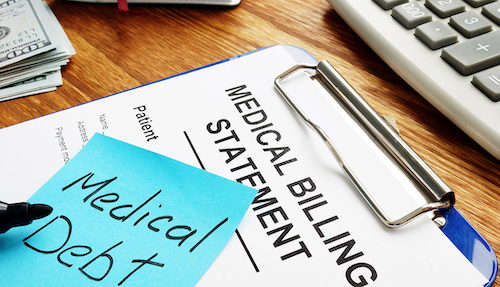
The Consumer Financial Protection Bureau (CFPB) has intensified its efforts to combat abusive medical debt collection practices, seeking to protect over 100 million Americans burdened by $220 billion in medical debt. Vice President Kamala Harris said she’s supporting the action, which targets pervasive problems like inflated prices, double billing, and attempts to collect on fictitious or unverified debts.
CFPB Director Rohit Chopra highlighted the rampant problems in medical billing and collection, including the illegal pursuit of undocumented debts and breaches of collection limits. The agency’s new guidance seeks to curb such practices and ensure that debt collectors follow the law when pursuing outstanding medical bills.
States are also stepping up their efforts to shield consumers from the detrimental effects of medical debt. Minnesota recently introduced new debt collection regulations, prohibiting healthcare providers from denying essential services due to unpaid bills. Beginning next year, a law in California signed by Governor Gavin Newsom will shield consumers’ credit reports from the majority of medical debt. Similar legislation has been enacted in New York and Connecticut, marking a growing trend of state-led protections.
“With this new law, California is stepping up to protect consumers,” said state Senator Monique Limón, who authored the legislation that prevents medical debt from damaging credit reports. Limón, backed by Attorney General Rob Bonta, noted that medical debt should not be treated like other forms of debt, as people often incur it through circumstances beyond their control.
In addition to state actions, the Biden-Harris administration has prioritized reducing the burden of medical debt nationwide. Harris, the Democratic presidential nominee, has underscored how medical debt can block access to critical economic opportunities, from homeownership to business ventures. In June, she announced a CFPB rule to remove medical debt from the credit reports of over 15 million Americans.
“No one should be denied economic opportunity because they got sick or experienced a medical emergency,” Harris said. “That is why I have worked to cancel hundreds of millions in medical debt to date – part of our Administration’s overall plan to forgive $7 billion by 2026.”
The White House said the CFPB’s actions and state initiatives should reshape how medical debt is collected and reported, providing much-needed relief to millions of Americans struggling with healthcare costs.