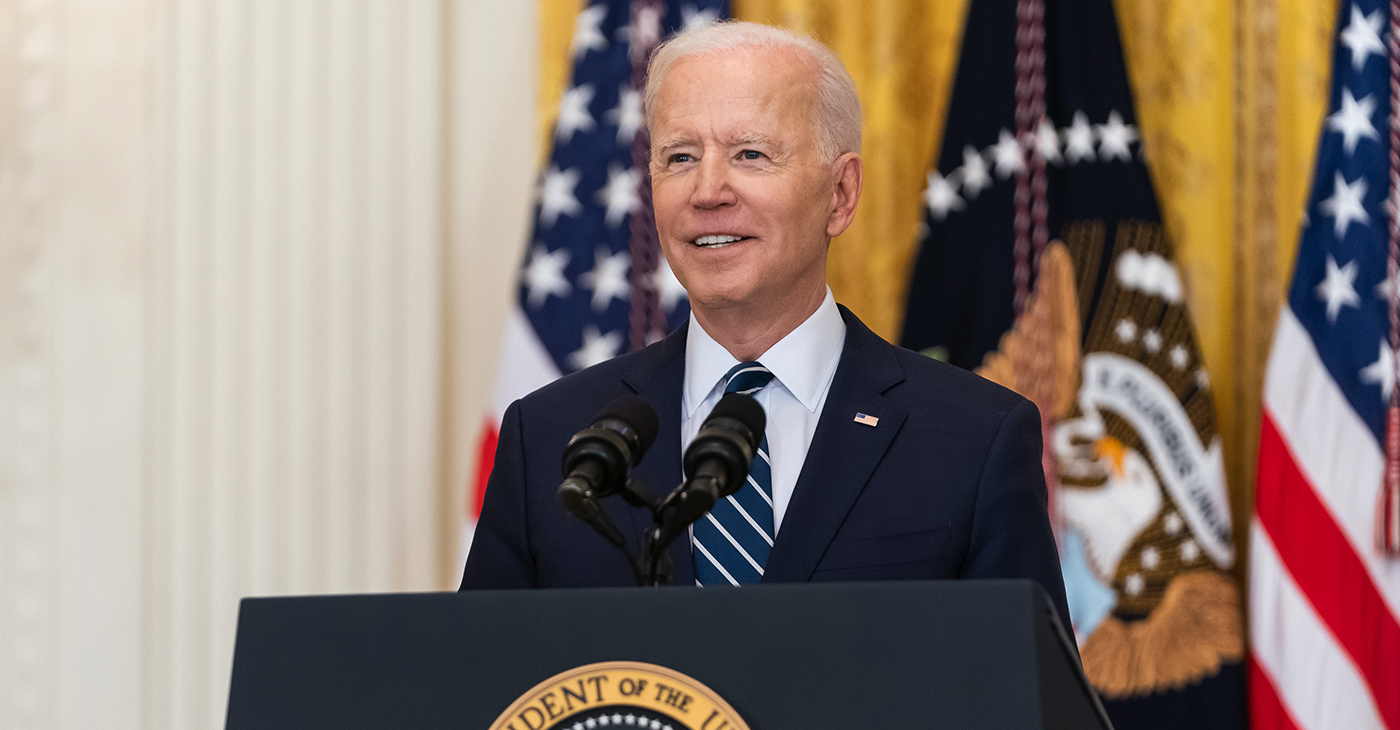
President Joe Biden’s commitment to diversifying the federal judiciary has culminated in a historic achievement: appointing 40 Black women to lifetime judgeships, the most of any president in U.S. history. Biden has appointed 62 Black judges, cementing his presidency as one focused on promoting equity and representation on the federal bench.
His record surpasses previous efforts by his predecessors. President Jimmy Carter appointed 37 Black judges, including seven Black women. In stark contrast, Donald Trump’s first term resulted in only two Black women appointed out of 234 lifetime judicial nominations.
The White House said Biden’s efforts show a broader commitment to racial equity and justice.
Meanwhile, Trump has vowed to dismantle key civil rights protections, including the Justice Department’s Civil Rights Division.
“Having the Black woman’s experience on the federal bench is extremely important because there is a different kind of voice that can come from the Black female from the bench,” Delores Jones-Brown, professor emeritus at John Jay College of Criminal Justice, told reporters.
Lena Zwarensteyn of the Leadership Conference on Civil and Human Rights told reporters that these district court judges are often the first and sometimes the final arbiters in cases affecting healthcare access, education equity, fair hiring practices, and voting rights.

“Those decisions are often the very final decisions because very few cases actually get heard by the U.S. Supreme Court,” Zwarensteyn explained.
Biden’s nomination of Justice Ketanji Brown Jackson to the Supreme Court further reflects his commitment to judicial diversity. Jackson became the first Black woman to serve on the nation’s highest court.
Patrick McNeil, spokesperson for the Leadership Conference, pointed out that over half of Biden’s Black female judicial appointees have backgrounds as civil rights attorneys and public defenders, experience advocates consider essential for a balanced judiciary.
Meanwhile, Congress remains divided over the expansion of federal judgeships. Legislation to add 66 new judgeships—approved unanimously by the Senate in August—stalled in the GOP-controlled House until after the election. House Republicans proposed distributing the new judgeships over the next decade, giving three administrations a say in appointments. President Biden, however, signaled he would veto the bill if it reached his desk.
Rep. Jerry Nadler, D-N.Y., argued the delay was a strategic move to benefit Trump’s potential return to office. “Donald Trump has made clear that he intends to expand the power of the presidency and giving him 25 new judges to appoint gives him one more tool at his disposal,” Nadler said.