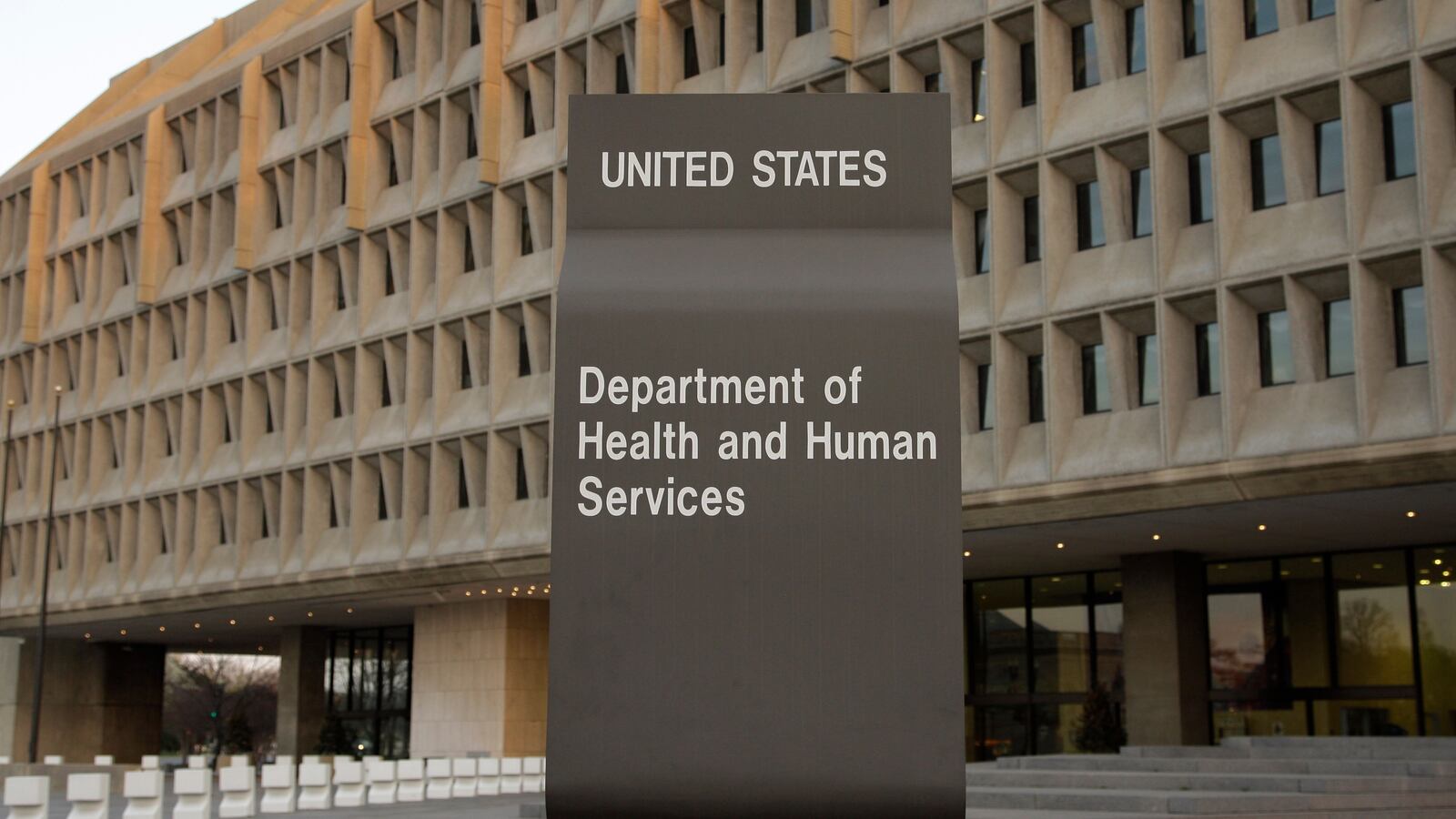
As President Donald Trump begins his second term, sweeping cuts to federal health agencies have sparked widespread public concern, according to the Kaiser Family Foundation Health Tracking Poll – April 2025, an independent and respected source for health policy research, polling, and news. The poll reveals that more than 20,000 jobs have been eliminated from the Department of Health and Human Services (HHS) and its sub-agencies since Robert F. Kennedy Jr. assumed leadership as secretary of HHS, part of a broader campaign to shrink the federal government.
The poll finds that 61% of Americans oppose major reductions in staffing and spending at federal health agencies. These views are deeply divided along partisan lines: 72% of Republicans support the cuts, while 89% of Democrats and 67% of independents oppose them.

Strongest support for the cuts comes from Republicans aligned with the Make America Great Again (MAGA) movement—about one-third of U.S. adults. Eight in ten MAGA supporters favor the staffing and funding reductions, while non-MAGA Republicans are more split (48% support, 52% oppose).
Despite support among some conservatives, most Americans say the cuts go too far. A majority (54%) believe the administration has overreached, compared to 31% who say the cuts are “about right,” and just 14% who think they haven’t gone far enough.
Arguments for and against the cuts have little effect on public opinion. When those who initially support the cuts hear that agency performance may suffer, support falls just nine points—from 38% to 27%. Conversely, when opponents are told the cuts could reduce waste and shrink government, support rises modestly to 46%, but a majority (53%) remain opposed.
Public concern extends to how the cuts are being carried out. Nearly six in ten Americans (59%) believe the administration is “recklessly” slashing vital programs and personnel, while 41% believe cuts are being made “carefully” to improve efficiency. Views again divide sharply by party, with 92% of Democrats and 65% of independents calling the cuts reckless, compared to just 18% of Republicans.
Though Republicans are more likely to back the overall initiative, many draw the line at major cuts to popular programs. Large majorities oppose funding reductions to Social Security (73%), Medicare (64%), and Medicaid (55%). Even among MAGA-aligned Republicans, fewer than four in ten support cutting Medicare (38%) and only 30% favor reducing Social Security.
Staffing cuts are similarly unpopular. The poll shows that 75% of the public opposes planned job cuts at the Department of Veterans Affairs (VA), which announced it would eliminate 83,000 positions. Majorities also oppose staff reductions at other major agencies, including the CDC, NIH, FDA, CMS, and SSA.
While the administration and the Department of Government Efficiency (DOGE), headed by Elon Musk, argue that these cuts are needed to eliminate fraud, waste, and reduce the budget deficit, skepticism remains. The public is split on whether the cuts will actually reduce fraud and waste (38% say “mostly positive impact,” 43% say “mostly negative”) or improve the federal deficit (40% positive vs. 34% negative).
Ultimately, Americans fear the real cost of these cuts will be in services lost. Majorities believe there will be negative impacts on veterans’ health care (62%), medical research (60%), infectious disease response (55%), and food safety (53%). Fewer than one in six believe the cuts will improve these areas.
The Kaiser Family Foundation Health Tracking Poll – April 2025 paints a clear picture: while a segment of the electorate supports streamlining government, the majority of Americans—across party lines—remain wary of sacrificing essential health services in the name of efficiency.