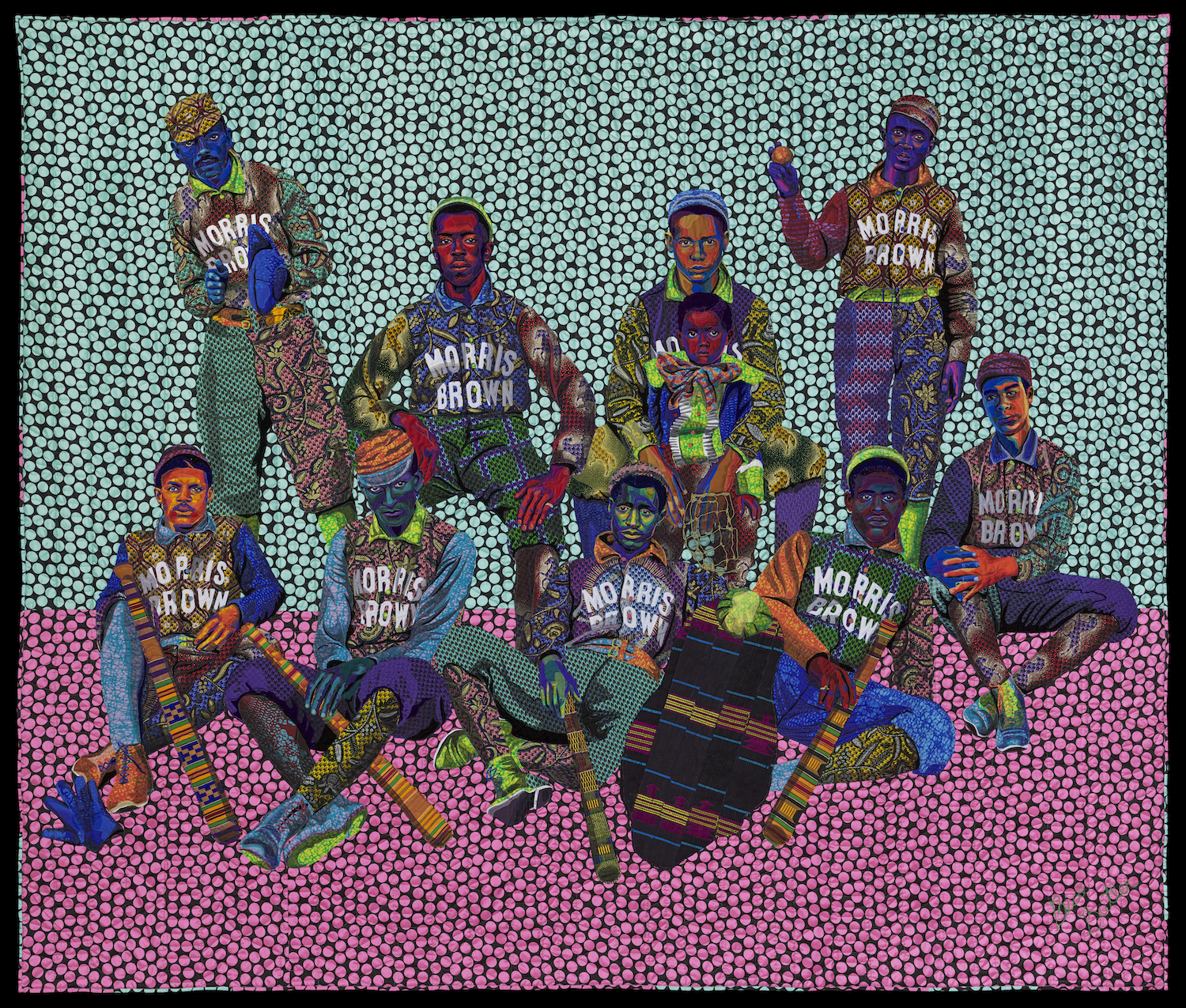
The Frist Art Museum presents “Fabric of a Nation: American Quilt Stories from the Museum of Fine Arts, Boston,” an exhibition that celebrates aesthetic and technical achievements in quilting as well as the lives of their makers. Organized by the Museum of Fine Arts, Boston, “Fabric of a Nation” will be on view in the Frist’s Upper – Level Galleries through October 12, 2025.
Featuring nearly 50 exceptional quilts and coverlets drawn from the MFA’s premier textile collection, the exhibition demonstrates how this art form, considered timeless and democratic by many, has evolved over more than 300 years in the United States and continues to develop today. Made by a diversity of artistic hands and minds, many under – recognized, the medium offers an opportunity to tell an array of rich stories within our shared and complicated history from the 18th century up to 2021.
Long admired for their utility, beauty, and design, as well as the sense of community they inspire, quilts have also taken on different purposes and meanings throughout history. First used to provide warmth and comfort as decorative bedcovers, quilts gained greater public visibility in the mid – 19th century as makers began to see themselves as textile artists.
“Today, quilters have expanded the medium to encompass a wide range of techniques, materials, and imagery,” writes Frist Art Museum Senior Curator Katie Delmez. “And some contemporary artists are using the quilt form to bring attention to social justice issues and to address difficult moments from the nation’s past and present. But all of the works in this show share one essential characteristic — the power to tell stories.”
Quilts and coverlets made by Americans of European ancestry will be shown with those created by Black and Indigenous Americans. Comparative examples from Britain and India will invite a broader understanding of five centuries of global textile production and trade. The voices of living artists are also heard throughout this exhibition’s audio tour, bringing new perspectives to this celebrated and historic mode of artistic expression.
In conversation with “Fabric of a Nation,” three contemporary textile works by Nashville – based artists Shabazz and Ashley Larkin will be on display in an adjacent space as part of the Frist’s Art in the Atrium series. The works share personal stories related to their own family — the joining of lives and communities through marriage as well as the transmission of values and traditions from parents to children — and offer a reflection on the vulnerable position of Black men in the United States.
Organized into seven thematic sections, the exhibition opens with the introductory questions, “What is American? Who is American?” including “Quilt: Vote, Housetop Variation” (1975) by Irene Williams, a Black American quilter from Gee’s Bend, Alabama, speaks to the obstacles that Black Americans have had to overcome to exercise the most basic right of citizenship.
The section “Unseen Hands” seeks to examine the typically unrecognized labor involved in the production of quilts and their materials. The following section, “Crafting a Nation,” focuses on the second quarter of the 19th century and shows how the industrial revolution changed how textiles were made.
“Conflict Without Resolution” features works that address the end of the antebellum period and the Civil War, and the ongoing legacy of racism and resistance from the civil rights movement to Black Lives Matter. “The contemporary quilts in this section such as Carolyn Mazloomi’s “Strange Fruit II” (2020), a direct reference to the anti – lynching protest song Billie Holiday recorded in 1939, demonstrate how quilts can be used to tell narratives about violent injustices, both historic and ones that continue today,” writes Delmez.
“Quilts as Art” features works that were made to be displayed and admired for their beauty — to be seen on walls rather than beds.,” writes Delmez.
On the section “Modern Myths,” Delmez writes, “Collectors visiting rural communities such as that of the Amish in Pennsylvania were attracted to vibrant, handcrafted quilts that conveyed a timelessness set apart from modern American culture. They reinforced the myth that this was a uniquely American art form, although quilting traditions arrived with immigrants to the United States.”
The final section, “Making A Difference”, looks at how quilt makers have melded artistry with activism to respond to historical events or their own personal experiences, and speak to contemporary issues such as feminism, racism, environmental justice, and gun violence.
Plan now for the next Frist Arts Fest, Sunday, July 13, 1:00 p.m. – 5:30 p.m. Free for members and guests ages 18 and younger; $20 for adults* (* No Military, senior, and student discounts). This is a day of performances, art making, music, and more celebrating the exhibitions “Venice and the Ottoman Empire” and “Fabric of a Nation: American Quilt Stories from the Museum of Fine Arts, Boston.” See the complete schedule on the Frist website: fristartmuseum.org.