



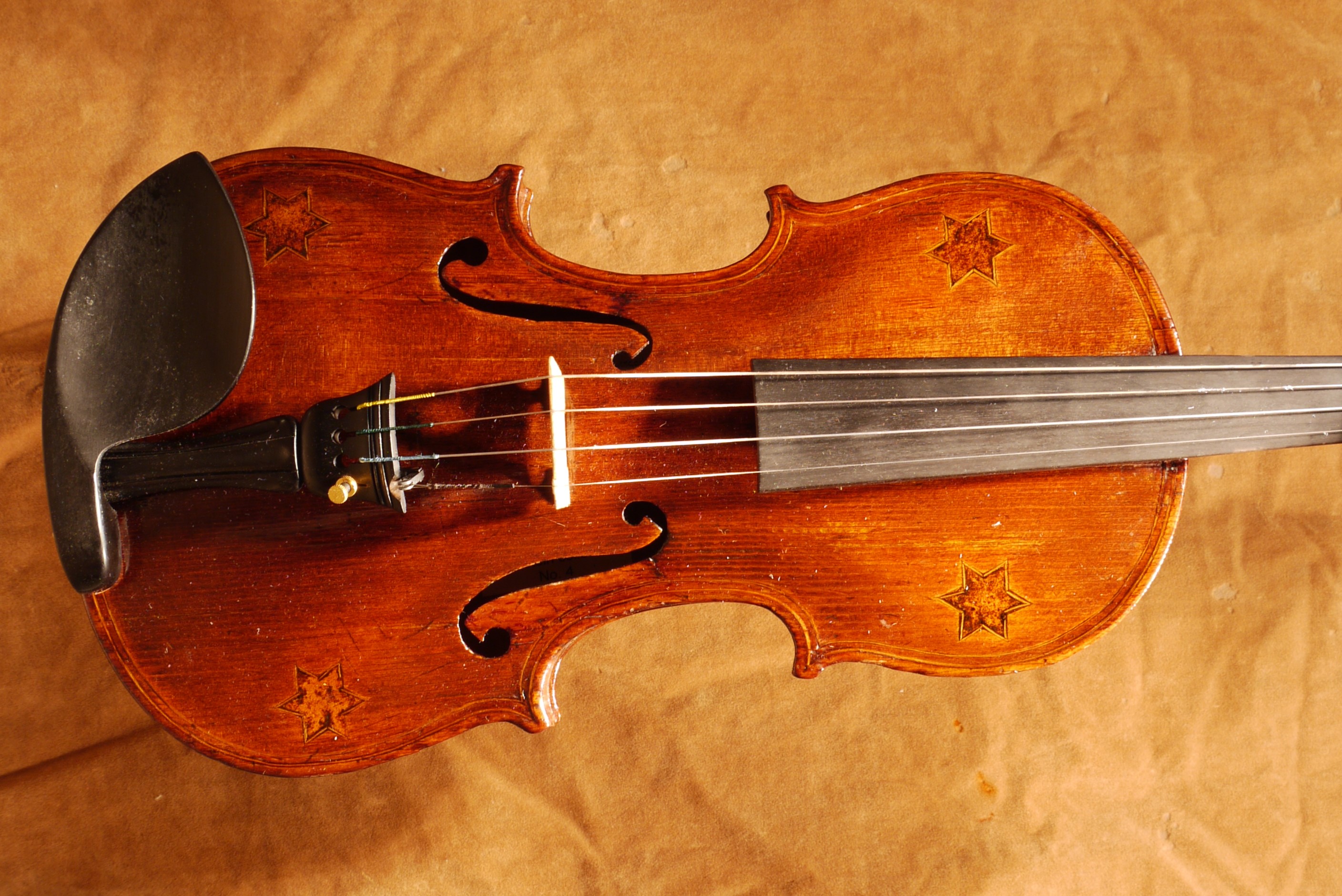
Centered around a collection of rare instruments played by Jewish musicians during the Holocaust, Violins of Hope Nashville is currently under way, with more than 30 events planned between now and June designed to educate, enrich and inspire. Presented by the Nashville Symphony and the Jewish Federation of Nashville and Middle Tennessee, this historic initiative is a partnership among more than 25 local organizations, including the Nashville Public Library, Blair School of Music, Nashville Ballet and the Frist Center for the Visual Arts. Featured events include musical performances, lectures, exhibits, film screenings and more, all designed to foster a citywide dialogue about music, art, social justice, equality and free expression.
The catalyst for Violins of Hope Nashville is a collection of 32 instruments owned by Jewish musicians who experienced ghettoization, violence, forced expulsions and unspeakable horrors in Nazi concentration camps. Restored by Israeli luthiers Amnon and Avshi Weinstein, the instruments – which have been the subject of a bestselling book and acclaimed documentary – now stand as symbols of resilience, survival and hope.
“These instruments have a very special history that allows us to use them as a launching point for a community conversation — not just about music and the instruments themselves, but also about social justice and civil rights,” said Steve Brosvik, chief operating officer of the Nashville Symphony. “The Holocaust is a very distinct moment in time with a message that we have to remember, but genocide and injustice are still occurring in the world right now, and this gives us an opportunity to talk as a community about the ways we can address these issues.”
The Violins of Hope will arrive in Nashville from Israel in mid-March, kicking off a series of events in which the public will be able to see and hear these instruments in person. The violins, along with one viola and one cello, will be used during the Nashville Symphony’s Aegis Sciences Classical Series concerts on March 22-24, including selections from John Williams’ score for Schindler’s List, Samuel Barber’s Adagio for Strings, and the world premiere of Jonathan Leshnoff’s Symphony No. 4, “Heichalos.”
This Nashville Symphony commission will be recorded live for future worldwide release, and it marks the first time the Violins of Hope have been used on a commercial recording. Leshnoff will be in Nashville for the performances, as will both Amnon and Avshi Weinstein, who will take part in several community events.
Following the Symphony concerts, the collection will move to the Main Public Library in downtown Nashville for the first-ever free public exhibit of the Violins of Hope in the United States, on view through May 27. Community partners will host related events during the exhibit’s run, many of them free or low-cost.

Additional Nashville Symphony programs related to the initiative include the free Voices of Hope choral festival on March 26, a performance by violinist Joshua Bell with the orchestra on May 9, and three nights of Verdi’s Requiem, featuring the Nashville Symphony and Chorus and four vocal soloists on May 31-June 2.









