





The 2018 Spring Great Debate will convene in The Forum on the campus of Tennessee State University on Monday, April 2, 2018 from 6:00 – 9:00 p.m. The Forum is Room 210 of the Floyd-Payne Student Center. The debaters are TSU students who are enrolled in the course AFAS 3950 The Great Debate, which is a capstone course in the Africana Studies program. The Great Debate program is free and the public is both invited and encouraged to attend.
The Great Debate was established at TSU in 1985. It is structured according to a Ma’atian dialectics which are based upon and include, while not limited to, the concepts of balance, harmony, justice, reciprocity, truth and unity. The students operate within one of three interacting systems, with two fundamentally based upon the thought and philosophy of the late Rev. Dr. Martin Luther King, Jr. and El-Hajj Malik El-Shabazz (Malcolm X).
In this dialectical formula, the Martin Luther King, Jr. thesis/plan is based upon the Geier v. Tennessee case. The El-Hajj Malik El-Shabazz anti-thesis/plan is to transform TSU into an African-centered private university. Finally, the synthesis / plan is diversity and inclusion in TSU’s culture, curriculum and human population. Thus, the resolution for this public policy debate is as follows:
Resolved:
“Tennessee State University should be awarded a Mission essential Africana Studies department and Land-Grant Reparations to overcome a century of cultural alienation and arrested development.”
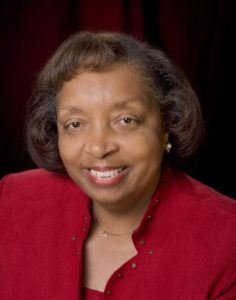
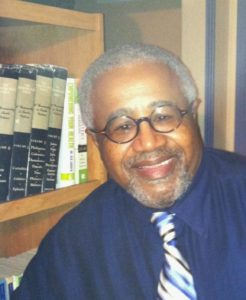
The 2018 Spring Great Debate shall be adjudicated by a panel of seven distinguished judges. The judges were chosen based upon their knowledge of the resolution and leadership. Among the judges are, alphabetically, Atty. Terry Clayton, Rep. Brenda Gilmore, Dr. Gloria Johnson, Rev. Howard Jones, Rev. Herbert Lester, and Professor Cydya Williams. The seventh judge will be introduced at the program. The number seven is significant both in that it should preclude ties as an odd number, and also there are seven principles in the Nguzo Saba, the principles of Kwanzaa which are foundational elements of The Great Debate program and The Great Debate Honor Society.
The Great Debate program consists of three rounds of debate: opening arguments, rebuttal arguments, and closing arguments. Interspersed within the program between rounds will be various performing art works, song, and spoken word by students from John Early school.
The TSU Africana Studies Department created at TSU in the 1990’s was eliminated, and now this major is offered at MTSU.
“With respect to land-grant reparations, TSU was not awarded land grant match funds by the state of Tennessee between 1958 and 2006,” according to the creator and founder of The Great Debate, Dr. Amiri Ya-Sin Al-Hadid. “Consequently, the university is owed more than $150,000,000 in unpaid land-grant monies by the state of Tennessee. Hopefully, this Great Debate can make the campus and the community aware of this systemic injustice in Tennessee higher education. The cultural alienation and arrested development are problems that are keeping TSU from becoming a world-class university.”
Attendees at the 2018 Spring Great Debate will have the opportunity to participate in the Africana Studies Survey. The Africana Studies faculty and supporters are working diligently to establish a free standing world class Africana Studies Department that offers a Major (BA & BS degrees) and Graduate Prgram (MA & PhD) with a Research Center. The Africana Studies Survey is intended to measure and statistically demonstrate that there is a strong iinterest or market demand for the proposed department and center.