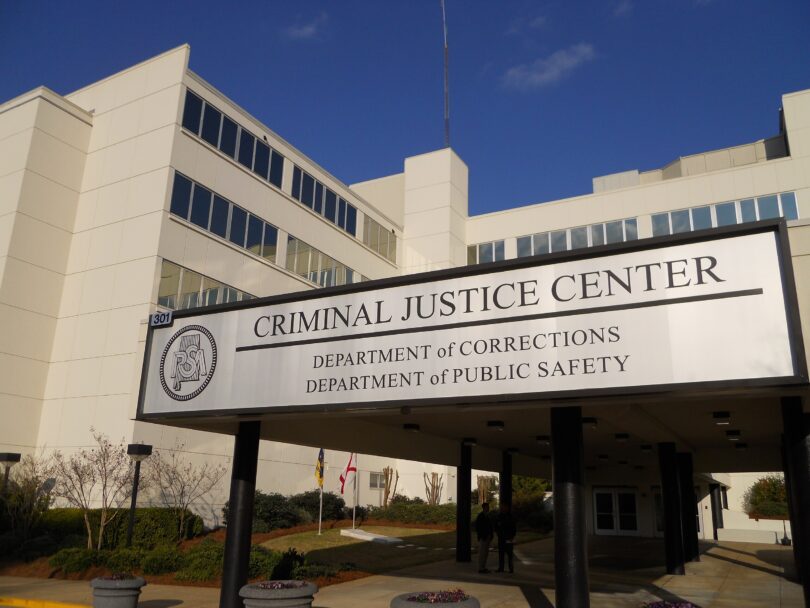
A group of current and former Alabama prisoners have filed a federal lawsuit, alleging that they were trapped in a “modern-day form of slavery” by being forced to work at fast-food chains for meager or no compensation. The comprehensive 129-page complaint, seeking class-action status, contends that the prisoners were victims of a “convict leasing” system, compelling them to work under exploitative conditions while the state of Alabama and its corporate partners reaped substantial profits.
The lawsuit, filed in the U.S. District Court for the Middle District of Alabama and first reported by the website Law & Crime, implicates over two dozen state officials, including Gov. Kay Ivey and Attorney General Steve Marshall, alongside numerous government agencies and private employers, including the Alabama Department of Corrections (ADOC). The plaintiffs argue that these entities have violated the Trafficking Victims Protection Act.

The complaint notes that while 26.8% of Alabama’s population identifies as Black or African American, double that percentage constitutes the Black incarcerated population. Drawing historical parallels, the group compares the alleged labor-trafficking scheme to the enslavement of individuals in Alabama’s cotton fields and subsequent sharecropping and convict leasing practices post-Civil War.
In a video statement, jailed activist Robert Earl Council, also known as Kinetik Justice, asserts that Alabama’s work programs are a continuation of pre-Civil War slavery. He accuses corporations and fast-food companies involved in these programs as complicit “slave masters,” condemning their participation in the exploitation.
The complaint alleges that Alabama generates an annual $450 million from forced labor, with inmates compelled to work against their will. At the same time, the ADOC claims 40% of gross earnings purportedly for the cost of incarceration. In a recent finding, the U.S. Department of Justice announced significant deficiencies in ADOC facilities, prompting a 2020 lawsuit against Alabama, citing widespread violence among prisoners and guards.
Individual plaintiff stories further underscore the harsh realities. Lakiera Walker, incarcerated from 2007 to 2023, recounted years of uncompensated work, including housekeeping, floor stripping, and employment at Burger King for a paltry $2 per day. Walker details enduring sexual harassment, being forced to work while unwell, and the intimidation preventing many women from speaking out.
The lawsuit contends that the work programs create a paradoxical situation where inmates are denied parole for public safety reasons while simultaneously working without supervision at local businesses. The plaintiffs demand justice for what they describe as forced labor and aim to expose and rectify systemic exploitation within Alabama’s prison system.