


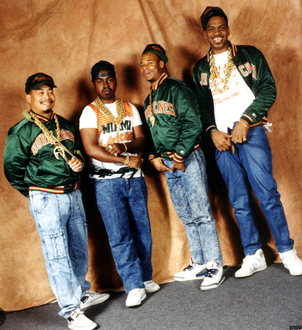
The pioneering rap group 2 Live Crew, known for pushing the boundaries of free speech, has successfully regained control of their iconic music catalog after a decisive court victory. Luther “Uncle Luke” Campbell, the group’s frontman, celebrated in a video posted to social media. “We got all of our [stuff] back from Lil’ Joe Weinberger,” Campbell exclaimed. “All of it.” The decision marks the end of a years-long battle over rights to some of the most controversial and influential music in hip-hop history, including albums such as As Nasty As They Wanna Be.
The legal journey began four years ago when Campbell and the heirs of former members Christopher Wong Won (aka Fresh Kid Ice) and Mark Ross (aka Brother Marquis) served a notice of termination to Lil’ Joe Records. Under copyright law, creators can reclaim ownership of their work 35 years after its release. With the backing of the heirs, Campbell sought to regain rights to the group’s groundbreaking albums, The 2 Live Crew Is What We Are, Move Somethin’, and As Nasty As They Wanna Be, which were initially released in the late 1980s.
Lil’ Joe Records, owned by Joseph Weinberger, acquired the group’s catalog in 1996 as part of Campbell’s bankruptcy proceedings. Weinberger contended that 2 Live Crew’s music was produced as “works for hire,” which would legally assign ownership to the label rather than the artists. Campbell and the heirs argued that the members were independent creators, not employees, and retained rights to their music.
In a critical ruling, Judge Darrin P. Gayles found that copyright termination rights are personal and cannot be assigned to a third party—even in a bankruptcy sale. The judge cited the Copyright Act, underscoring that Congress intended to protect authors’ rights against lopsided agreements. The decision paved the way for Campbell and the heirs to reclaim their catalog.
The verdict dismantles Lil’ Joe Records’ argument that Campbell and the other members were employees of Luke Records, the label they founded. Instead, the jury recognized the group members’ independent role in creating the albums, allowing them to reclaim control over their music.
Weinberger’s defense rested on a 1991 agreement that described 2 Live Crew as employees of Luke Records, but the jury heard evidence indicating that the artists maintained creative independence. Additionally, copyright registrations from the 1980s and 1990s listed the members as individual authors, further supporting the claim that they were not employees at the time of the original recordings.

“God is so good,” Campbell proclaimed. “You just gotta believe.”