For the third time this decade, no player who completed his college career at a Historically Black College or University was selected in the 2026 NFL Draft, a development that has once again raised concerns about visibility, evaluation and opportunity for HBCU athletes.
The absence comes despite clear evidence that HBCU programs continue to produce NFL-level talent. Several players with HBCU roots were drafted this year (but only after transferring to larger programs) highlighting how the modern college football landscape, particularly the transfer portal, is reshaping the path to the league.

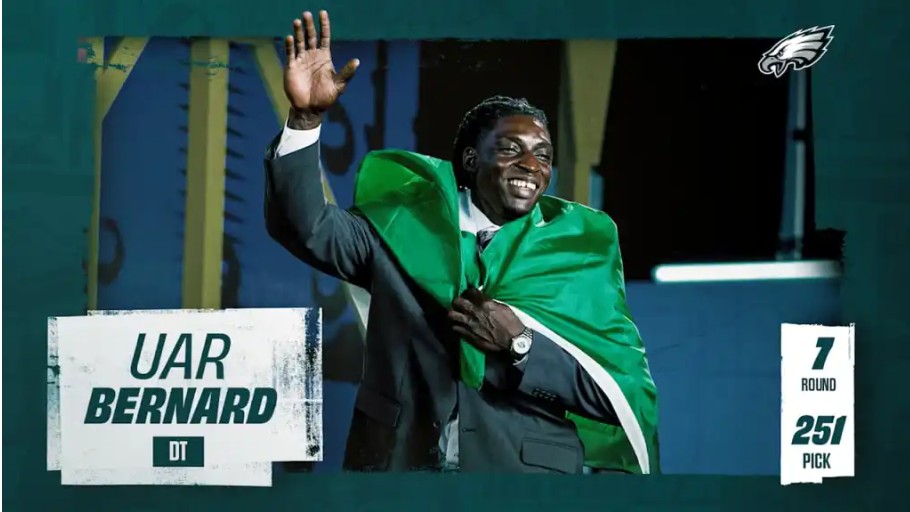
Adding a unique wrinkle to this year’s draft was the selection of Uar Bernard, a defensive tackle from Nigeria who was chosen in the seventh round by the Philadelphia Eagles through the NFL’s International Player Pathway Program. Bernard participated in the league’s HBCU Showcase but did not attend an HBCU (or any college program) making his selection both unconventional and symbolic of the expanding global reach of the NFL.
Still, Bernard’s path underscores the broader challenge facing HBCU prospects. Even as the league invests in initiatives like the HBCU Combine, Legacy Bowl and targeted scouting efforts, traditional pipelines such as the NFL Combine have seen declining HBCU representation in recent years.
NFL leadership has acknowledged the issue. Following a similar draft outcome in 2021, Troy Vincent said the league “must accelerate our efforts for HBCU players to make the transition to the NFL,” a statement that led to expanded scouting programs and increased access to film and evaluation opportunities.
Despite those efforts, this year’s results suggest more work remains. Advocates argue that the issue is less about talent and more about access, ensuring that HBCU players are consistently seen, evaluated and given equal opportunity alongside prospects from Power Four programs.
Rather than signaling a decline in HBCU football, the 2026 draft may represent a turning point—one that highlights the need for continued investment, broader scouting networks and a reimagined path to the NFL for players coming out of Black college programs.