

Toll lanes shifted to outside of interstate—property impacts questioned with $9.2 billion agreement
Tennessee’s controversial $9.2 billion Interstate 24 toll lane project is moving forward with significant design changes and a new construction timeline that would allow motorists to begin using portions of the privately operated highway expansion in late 2034.
The Tennessee Department of Transportation (TDOT) unveiled updated plans during public meetings Nov. 17 in Nashville and Nov. 18 in Smyrna, offering residents their first detailed look at the design proposed by DriveTN, the private consortium selected to develop and operate the 26-mile project between Nashville and Murfreesboro.
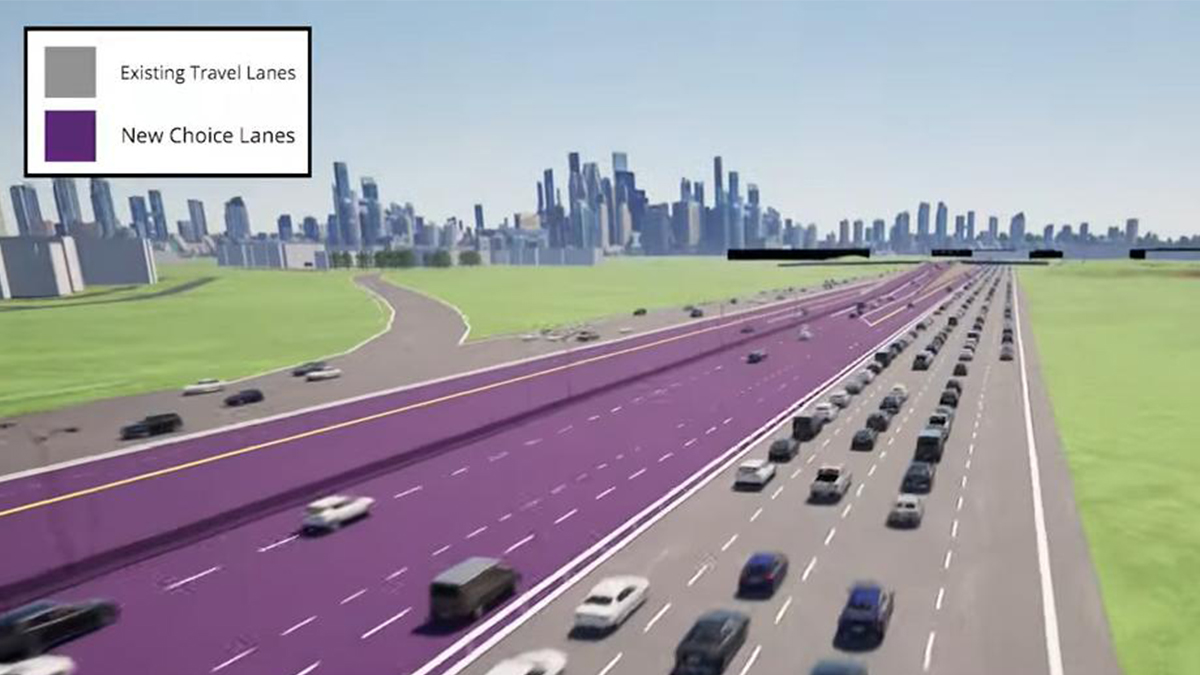
Among the most significant changes is a proposal to place the new toll lanes on the outside of the existing interstate rather than in the center, as originally envisioned by TDOT. State officials say the revised configuration could reduce construction disruptions and limit the number of homes and businesses affected.
However, the design is only approximately 15% to 20% complete, leaving considerable uncertainty about its ultimate impact on surrounding neighborhoods.
The project would add two dynamically priced toll lanes in each direction along I-24 between Interstate 40 near downtown Nashville and Interstate 840 near Murfreesboro. Motorists would have the option of paying to use the new lanes, while existing general-purpose lanes would remain toll-free.
Under the latest schedule, the first phase, extending approximately 11 miles from Old Hickory Boulevard in Antioch toward I-840, is expected to open Nov. 22, 2034. The remaining 15-mile section connecting the corridor to downtown Nashville is scheduled to open July 11, 2035.

TDOT officials say opening the less congested southern portion first would allow motorists and the private operator to become familiar with the state’s first Choice Lanes system before the more complicated northern section opens.
The revised design also includes elevated sections of roadway, accounting for approximately one-third of the project. These structures would allow additional lanes to be constructed within a narrower footprint in some locations.
For residents living near the interstate, the changes offer both potential relief and new concerns.
At Noble Place Townhomes, where earlier plans raised fears that approximately 20 of the community’s 91 units could be affected, the latest renderings suggest the buildings may be spared. However, an elevated roadway could run immediately alongside the development.
“We came out here today, and the renderings are showing that it doesn’t appear that they’re going to take any of the units, but we are going to have a raised, elevated road going right on the edge of our townhouse community,” resident Jerry Stankevich told NewsChannel 5.
Property acquisition remains another major concern. Earlier TDOT planning documents identified 51 potential residential and business relocations along the corridor. State officials now say right-of-way acquisition is underway for 17 properties, with additional acquisitions expected to begin in early 2027.
The revised design could reduce some of the previously anticipated property impacts, but officials caution that the plans are not final.
The latest developments follow months of controversy surrounding the selection of DriveTN and the financial structure of the project.
As previously reported by Urban Journal, the Tennessee Transportation Modernization Board selected DriveTN in August to design, build, finance, operate and maintain the toll lanes under a 50-year public-private partnership.
The consortium includes Cintra, Transurban, Tikehau Star/Infra/Capital, Ferrovial, Webber and AECOM. Several participating companies have been involved in previous toll-road projects that encountered bankruptcies, litigation or disputes over toll collection.
Those histories prompted questions about financial safeguards, consumer protections and the level of oversight Tennessee would retain throughout the agreement.
State Rep. John Ray Clemmons, chairman of the House Democratic Caucus, subsequently called on Tennessee Attorney General Jonathan Skrmetti to investigate the bidding and selection process, including potential conflicts of interest involving former state transportation officials.
Clemmons argued that the size and duration of the agreement warranted greater scrutiny before Tennessee committed to a half-century partnership.
The state has defended its selection process, saying DriveTN was chosen through a competitive evaluation that considered technical capabilities and financial proposals.
Since those earlier reports, the project has reached what officials call ‘commercial close,’ establishing the contractual framework for the partnership. Financial close, when financing arrangements are finalized, is expected during the third quarter of 2027.
The latest public meetings focused primarily on construction plans and property impacts rather than the financial controversies surrounding the agreement.
For commuters, another unresolved question is how much the toll lanes will cost. Prices are expected to fluctuate based on traffic conditions, with higher demand generally resulting in higher tolls. Specific toll rates have not been announced.
At the Smyrna meeting, resident Neil Bergman, who frequently travels I-24 for work, expressed skepticism about paying tolls but acknowledged the possibility that the additional lanes could benefit motorists who remain in the free lanes.
“I hate toll roads,” Bergman said. “I understand the need for them to be able to make money on this thing, but I still hate it.”
He added that major traffic disruptions might occasionally make paying the toll worthwhile.
Although TDOT has released projected opening dates, officials have not announced when construction will begin. Activity currently visible along the corridor consists of field investigations rather than actual construction.
The new design represents an important step toward development of Tennessee’s first privately operated Choice Lanes project. Yet significant questions remain about neighborhood impacts, construction disruptions, toll pricing and the long-term financial obligations associated with the agreement.
For motorists already enduring daily congestion between Nashville and Murfreesboro, meaningful relief remains at least eight years away.
And for residents whose homes and businesses lie near the proposed expansion, the coming years will determine whether the revised design delivers on the state’s promise of fewer disruptions and reduced property impacts.