I sat down with Gerald Brown the chief executive of Dismas House to talk about the success of the program, what inspires him, and what we can do as Nashville citizens to help.

Dismas, Inc.
For the formerly incarcerated, having a place to stay in a supportive environment is the first step toward successful re-entry to society. Studies show within those first 72 hours, they need a safe environment.

“Those three days are crucial,” Brown said. “Having a home, and not just a house, can make all the difference. That’s where Dismas House steps in. Eight out of 10 people who completed the program did not go to jail after three years of being released. Everyone deserves a second chance.”
Although he was never personally incarcerated, he saw it all around him as a youth. That was when he decided he didn’t want to go down that road and instead help people who have.
“God put me here and everyone here to have an impact on someone else’s life,” Brown said. “I’m just taking his guidance and support through Dismas. We all have an obligation, if you have been through something and are better off, to give back, to love.”
Upon their release, offenders who have been carefully screened, live at Dismas House as they transition back into the community. There, they find a safe haven living amid college students, staff and many volunteers who become part of their daily lives. Typically, residents live for 4-6 months in Dismas House. Professional caseworkers help to match them with resources to meet each person’s unique needs.
The goal of Dismas House is to uplift and support it’s residents. Nightly dinners take place every day from 5:30-7 pm, a tradition started by founders Father Jack Hickey and a group of Vanderbilt University students in 1974. After 7 pm is when financial advisors, AA meetings, life skills and computer classes take place. Residents hold each other accountable.
“If you want a program that nurtures you, then Dismas is the one,” said Brown.
According to Brown, there are a lot of psychological issues the former inmates deal with that we wouldn’t even think about. That’s why at the Dismas House they provide licensed counselors to talk to the residents every week.
These counselors (along with their caseworkers, a family atmosphere, clinical and health support) are all factors that aid in the process of the residents reentering back in to society.
“Life skills in action put in practice the things a lot of folks take for granted,” Brown said. “They are institutionalized. We take them to normal events and try to have them talk.“
But an even more important lesson Dismas House stresses is financial empowerment.
“We want to make [the residents] financially literate and apply their skills in the real world,” said Brown.
Brown believes his staff plays a big role in the program running smoothly. It’s important to him to create a strong bond with the clients and the staff and they have done just that. But even with the help of his great staff, there is always a need for more help.
“We need community involvement—volunteers giving their time, talents and treasures. There’s only so much a staff person can do,” said Brown.
With 140 people being released from incarceration everyday, there is a demand for places like Dismas House. The program receives 350 applications every year to serve 20 people in a five-month program.
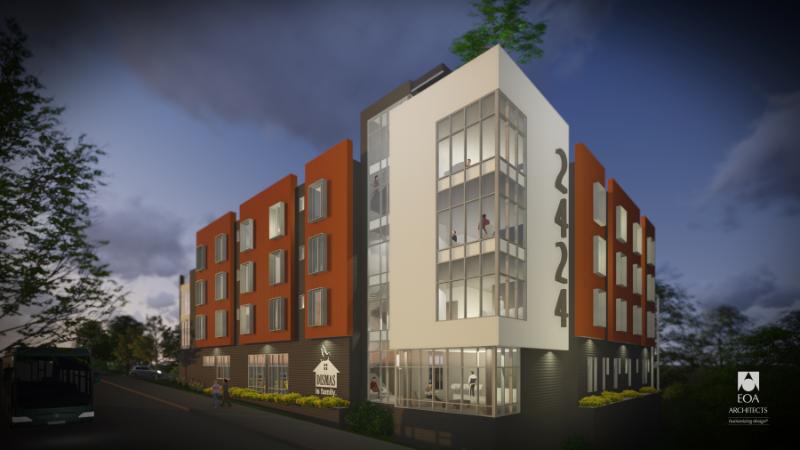
Currently Dismas House is located on 1513 16th Ave. South in Nashville, Tenn.; however, they are working on an expansion project.
The new building will be 2200 square feet with 76 beds (60 dual occupancy, 16 single occupancy). The rooms will be nicely sized and similar to that of a hotel room. The first floor will hold open meeting areas, offices and a cafeteria.
It will be much bigger than the current 16th Ave. location that only has eight beds. They plan to be done with the project by summer 2017 or 2018.
Every third Thursday from noon to 1 pm, Dismas House is open to the public for touring. It gives Nashville residents the opportunity to sit down with the residents, share stories and enjoy some food provided by the program.
For more information about the Dismas House, visit their website at www.Dismas.org