After Roy Moore’s defeat at the hands of Alabama voters (driven by Black voter turnout, especially the votes of Black women) we saw the celebration, credit taking, and meaning making that usually accompanies a progressive electoral victory. But one thing was different this time. This time, mainstream media and social media feeds flooded with messages acknowledging and thanking Black women for our role in the outcome.
Welcome to the reality Black women have known about (and named) for decades.

One of the hashtags that took off amid the Alabama election returns and the follow-ing days was #TrustBlackWomen. But what does it mean to trust Black women? What does it mean to advance a policy agenda that addresses the issues Black women face in this country?
Black women voters are not a monolith—we’re diverse, complex, and deeply engaged in national, state, and local policy debates. We don’t all agree. But there is a set of values and policies that most Black women hold close to our hearts: we want a future where we can live with respect, health, and justice. Where we can decide whether and when to have children, and raise those children without fear of hunger, violence, or discrimination. Where we can realize our dreams and highest human potential.
For a start, I hope that this election can finally put to rest the ludicrous question of whether a progressive agenda must include support for abortion access. (Yes, absolutely it must.) Not only are Black women overw-helmingly supportive of abortion access, but also nationwide, keeping abortion legal has the highest levels of support in decades.
Being able to make our own decisions about our bodies, pregnancy, and parent-ing is crucial to Black women’s dignity and self-determination.
Black women are already leading the way in reproductive health, rights, and justice policy. In 2015, after decades of work by Black women advocates, Rep. Barbara Lee (D-Calif.) led the introduction of the EACH Woman Act to repeal the Hyde Amendment’s Reign of Terror on poor women, and the bill today has 128 co-sponsors in the House, even in this incredibly hostile political moment.
In another show of leadership, women of color in the Senate and their colleagues sent a bold and defiant letter to Trump demanding that he strip the Hyde Amendment and other bans on abortion coverage from the budget. I doubt anyone is holding their breath for him to do the right thing, but that should never stop our leaders in Congress from taking a principled proactive stand.
But a reproductive health, rights, and justice platform that respects Black women must go beyond abortion. Black women in the U.S. are dying in childbirth at many times the rate of White women, a national health crisis that has gone largely ignored. Black women also suffer and die at disproportionate rates of reproductive cancers like breast and cervical cancer.
In addition to contraception and abortion care, we need access to quality affordable health care and coverage for the full range of reproductive care including cancer prevention, screening, and treatment, and prenatal, maternity, and postpartum care. The Affordable Care Act (a law Black women championed) was a monumental step in the right direction. Today, we’re fighting to hold on even to that, and we know a much more accessible and comprehensive solution is needed.
Every day in this country, Black women face nearly impossible odds to raise our children with dignity, love, and abundance. But the cruel anti-family budget and tax policies of the conservative GOP have decimated funding for nutrition, housing, and other necessities while lining the pockets of their wealthy donors—even as they have failed to reauthorize the Children’s Health Insurance Program also known as CHIP. We must do everything in our power to reverse this dangerous redistribution of wealth and well being from the poor to the super-rich.
Finally, we must address the ways in which police and prisons have been weaponized against Black Americans to rob us of our loved ones through mass incarceration and deadly police violence. Black lives matter is more than a hashtag, organization, or movement. It’s the urgent cry for justice from the mouths of mothers, sisters, wives, partners, and daughters.
Time and time again, Black women have been told to wait our turn. When male citizens (both White and Black) got the legal right to vote, we were told to wait our turn. When white women built a suffrage movement on our backs and out of our genius and then cut us out of it, we were told to wait our turn. And when Democrats and Republicans alike have taken our votes for granted while ignoring our needs, we have been told to wait our turn.
No longer. It’s time for this country to do more than thank Black women—it’s time to put our issues in the center of the political table and follow the leadership of Black women as we construct a new nation that affirms the human rights of us all.
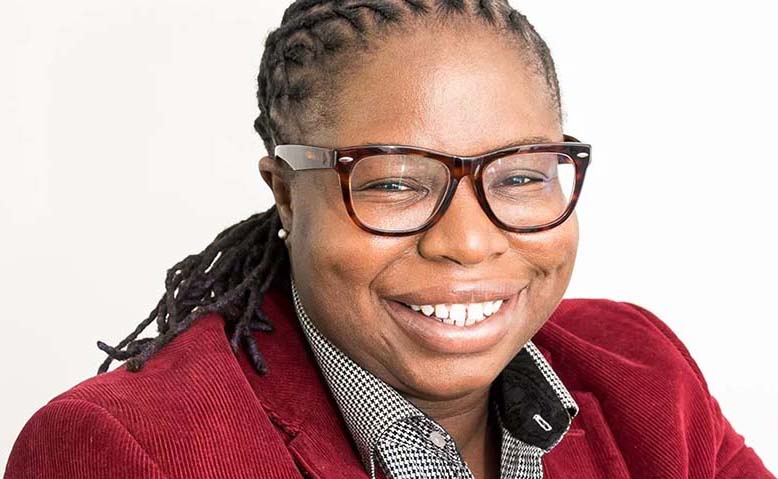
(La’Tasha D. Mayes, the founder and executive director of New Voices for Reproductive Justice, that presents a clear and compelling case for policies that center Black women’s health and needs. You can follow her on Twitter @duxfemfac.)