

Mississippi, a state described as having been suffocated by its history of racial prejudice, appears to be the only state where people are jailed while they work to pay off court-ordered debts.
An investigation led by The Marshall Project and the nonprofit Mississippi Today discovered that hundreds of Mississippi residents (the majority being Black) were sentenced to the state’s little-known restitution center.

“Basically, we discovered, Mississippi was running a modern-day debtors prison,” reporters Anna Wolfe and Michelle Liu, wrote of their investigation.
With Mississippi’s long and documented history of racism, the 14-month investigation found that African Americans are disproportionately punished. The infamous state penitentiary known as Parchman Farm was modeled after a slave plantation.
Black people are overrepresented at restitution centers, accounting for 49% of inmates, compared with 38% of the state’s population, the investigation found.
More than 60% of people in prison in Mississippi are Black.
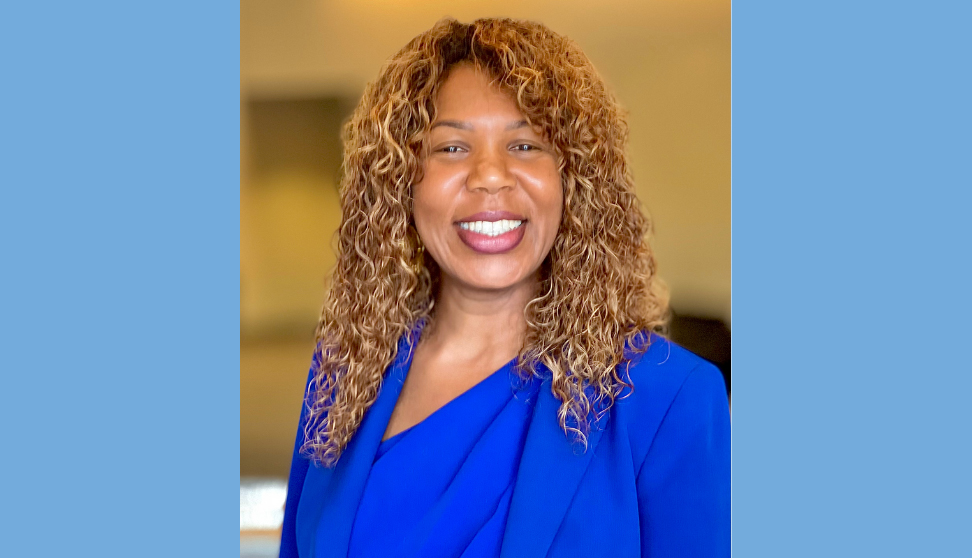
“The American legal system captures the poor and Black and twists them in conundrums that punish them beyond any criminal act,” attorney Kisha A. Brown, founder of Justis Connection, told NNPA Newswire.
“As a Black person, we have less access to legal resources than our white counterparts, and this has dire consequences on our physical and financial security,” Brown said.
The Mississippi investigation began on what Wolfe and Liu called an unlike tip: a woman in state prison was also working at McDonald’s and not voluntarily.
The reporters then found Dixie D’Angelo, a woman with court-ordered debts of $5,000 because she damaged a friend’s car. “She had been sentenced to something called a restitution center, where she worked four different restaurant jobs to try to earn enough to pay off her debts and get out of jail,” they said.
Ultimately, Wolfe and Liu found that hundreds of people were in similar situations.
They said they met with inmates and their employers across Mississippi, beginning at fast-food restaurants around Jackson, traveling to the Mississippi Delta and the Gulf Coast.
Half the people living in the centers had debts of less than $3,515. Though in arrears on fines and court fees, many didn’t need to pay restitution at all. At least 20% of the more than 200 people discovered in the investigation were convicted of drug possession.
However, inmates spent an average of nearly four months (and up to five years) at the centers, working at low-wage, and sometimes dangerous jobs, like slaughtering chickens or gutting catfish at processing plants.
Private citizens also hire them to work as handymen and landscapers at their homes.
Inmates found that their costs continued to balloon since they had to pay for room and board at the centers, transportation to their jobs, and medical care.
“They didn’t get paid much,” the investigators wrote in their report. “Between 2016 and 2018, workers at the centers made an average of $6.76 an hour in take-home pay.”
When inmates can’t get jobs, sometimes for medical reasons, they sit in the centers, accruing $330 a month in room and board costs, according to the investigators.
Further, just a quarter of all money earned by the inmates went to pay restitution, with the remainder going to the corrections department and the courts. In some cases, the courts added unrelated debts, such as child support. One man’s charge for meth possession turned into debt totaling $72,500, the investigation found.
Mississippi officials declined to comment.
“Debtors prisons are an effective way of collecting money, as is kidnapping,” Cliff Johnson, director of the MacArthur Justice Center at the University of Mississippi, told investigators.
“But there are constitutional, public policy and moral barriers to such regime,” he said.
The American people “would be horrified if they knew of just how many laws still exist which send poor people to prison over their inability to pay fines, court costs, and related expenses,” Matt C. Pinsker, an adjunct professor of the Homeland Security & Criminal Justice Department at the L. Douglas Wilder School of Government and Public Affairs at Virginia Commonwealth University, told NNPA Newswire.
“It is a tragedy and absurdity that we still essentially have debtors prisons here in the United States of America,” Pinsker said.