


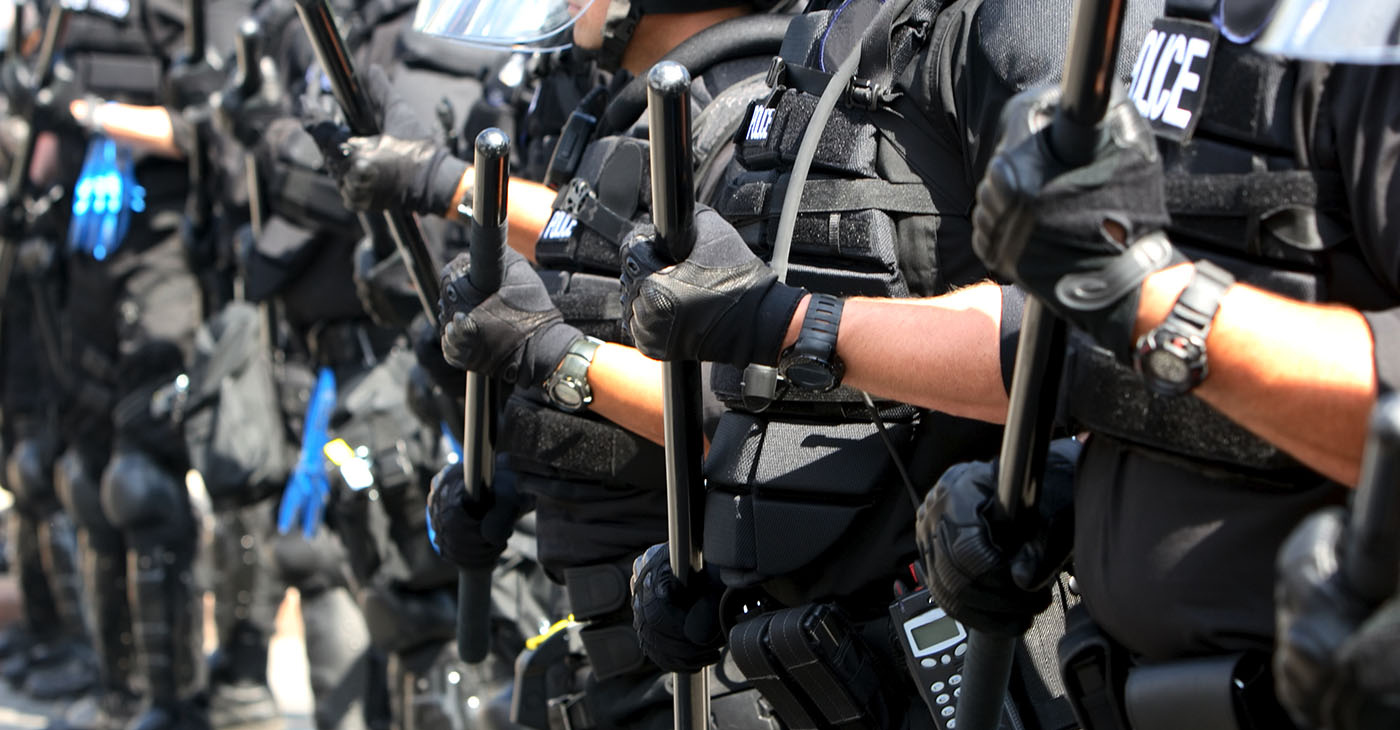
More than 1,000 people have died in the past decade after encounters with law enforcement, despite officers using non-lethal tactics, according to a recent investigation by The Associated Press, the Howard Center for Investigative Journalism, and PBS’ Frontline. The findings again show systemic issues within policing and raise questions about accountability and reform.
Each victim was unarmed and posed no immediate threat. Yet, they met tragic ends after police resorted to methods such as physical holds, Tasers, and body blows, which are typically meant to subdue individuals without causing harm. The investigation underscored the potential lethality of these tactics when misused, echoing the outcry sparked by the death of George Floyd in 2020.
In one of many examples, investigators highlighted an incident in South Boston, Virginia, where one of three officers who shocked a man rolling on a hospital sidewalk said a suspect’s actions (not Taser guidelines) dictate what to do. They noted that officers fired their Tasers a combined 20 times, even after handcuffing the man. “There are eight pages of warnings, and basically, if I read and abided by every single warning, I would not tase anyone,” the officer said in response to a civil lawsuit later settled out of court. Federal prosecutors said they didn’t see enough evidence to pursue civil rights charges against the three officers.
For the report, investigators filed thousands of requests for government documents and body-camera footage, unearthing over 700 autopsy reports or death certificates and uncovering video evidence in dozens of cases previously unreported.
The victims hail from diverse backgrounds (including Black Americans like Donald Ivy, Jr.) who were disproportionately affected, comprising a third of the fatalities despite representing only 12% of the population. A former three-sport athlete, Ivy, left an ATM alone one night when officers sized him up as suspicious and tried to detain him. The unarmed Ivy ran, and police tackled and shocked him with a stun gun, belted him with batons, and held him facedown. Like so many others, investigators said Ivy was not a threat to public safety: “Despite that, each died after police used a kind of force that is not supposed to be deadly and can be much easier to hide than the blast of an officer’s gun.”
Researchers also revealed a pattern of misconduct, with officers breaching established guidelines in approximately 45% of deaths. Many victims had underlying medical conditions or were under the influence of drugs or alcohol, factors that heightened their vulnerability to force.
Specific instances of misuse were highlighted, such as the widespread use of prone restraint, despite known risks of positional asphyxia. In numerous cases, individuals were pinned facedown for minutes beyond necessity, resulting in fatal outcomes. Similarly, researchers documented the excessive use of Tasers, with officers administering shocks beyond recommended limits, often with deadly consequences.
Researchers found that officers restrained someone face down in at least 740 of 1,036 deaths—usually with one, or sometimes more, using their bodyweight. In about half of the prone restraint cases, police didn’t turn the person over as soon as they were handcuffed or did so only after they had stopped responding. They noted a video showing a police officer in Ava, Missouri, handcuffing a man experiencing a drug relapse and restraining him in a prone position for eight minutes. The officer warned that he wouldn’t ease up until the man stopped kicking. Once still, the officer asked the man, “Are you going to be calm now?” He didn’t answer. Another two minutes passed before the officer realized the man didn’t seem to be breathing. A federal judge who reviewed the video ruled in the officer’s favor in a civil lawsuit, saying the law didn’t require police to stop prone restraint once a person quit struggling. Researchers said that legal interpretation was out of step with federal courts in other regions, which provide broad direction on the use of force.
“Every day, police rely on common tactics that, unlike guns, are meant to stop people without killing them, such as physical holds, Tasers, and body blows,” researchers concluded. “But when misused, these tactics can still end in death—as happened with George Floyd in 2020, sparking a national reckoning over policing. And while that encounter was caught on video, capturing Floyd’s last words of ‘I can’t breathe,’ many others throughout the United States have escaped notice.”