

November is officially designated as National American Indian Heritage Month, commonly referred to as Native American Heritage Month. This month is designed to provide a platform for Native people in the United States to share their culture, traditions, music, crafts, dance, and ways and concepts of life. Native people express to their community, both city, county, and state officials their concerns and solutions for building bridges of understanding and friendship in their local areas.
Native American Heritage Day is officially a civil holiday observed on the day after Thanksgiving in the United States. This year’s observance is Friday, November 29, 2024, a day to pay tribute to Native Americans for their many contributions to the United States.
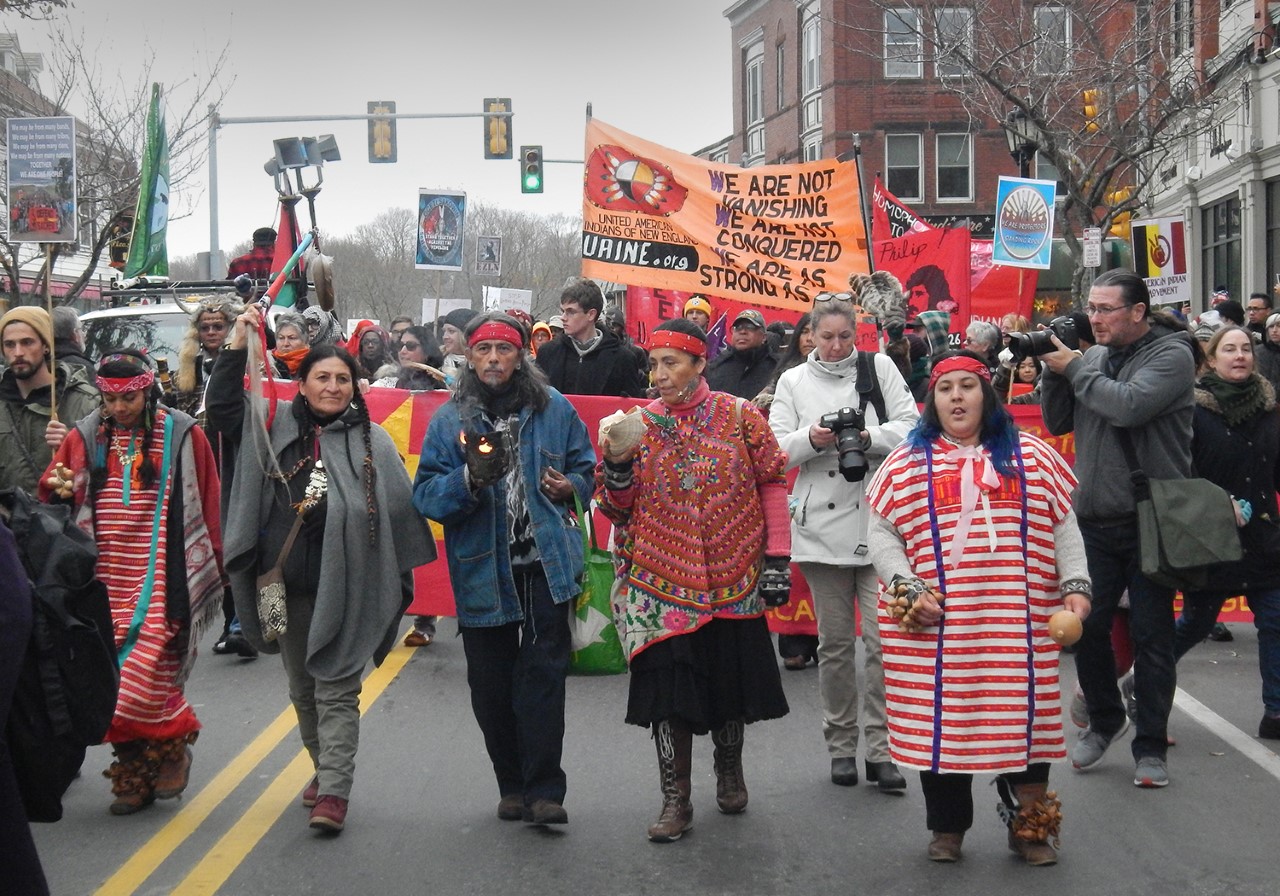
Thanksgiving Day to many is a reminder of the genocide of millions of Native people, the theft of Native lands and the erasure of Native cultures. Since 1970, Indigenous people & their allies have gathered at noon on Cole’s Hill in Plymouth to commemorate a National Day of Mourning on the US Thanksgiving holiday. Many Native people do not celebrate the arrival of the Pilgrims & other European settlers.
The 55th Annual National Day of Mourning is Thursday, November 28, 2024, beginning at 12:00 Noon EST at Cole’s Hill, Plymouth, MA. Participants in National Day of Mourning honor Indigenous ancestors and Native resilience. It is a day of remembrance and spiritual connection, as well as a protest against the racism and oppression that Indigenous people continue to experience worldwide. You can watch the National Day of Mourning livestream anytime on the United American Indians of New England / UAINE.org website: http://www.uaine.org/
Unthanksgiving Day (or Un-Thanksgiving Day) is held on Alcatraz Island in San Francisco Bay to honor the indigenous peoples of the Americas and promote their rights. Every year on the date of the United States Thanksgiving holiday, several thousand indigenous people and spectators travel to Alcatraz Island. Groups dance before sunrise, to honor their ancestors, while other groups demonstrate other aspects of their cultures and heritage and speak out for the rights of their people. The celebration is also open to the public. It is designed to commemorate the survival of Indian tribes following the European colonization of the Americas, in contrast and counter-celebration to the traditional American Thanksgiving in which the Pilgrims shared a meal with the Wampanoag tribe.
The first official “Day of Thanksgiving” was proclaimed in 1637 by then Massachusetts Governor Winthrop. He did so to celebrate the safe return of men from Massachusetts who had gone to Mystic, Connecticut to participate in the massacre of over 700 Pequot women, children, and men. About the only true thing in the whole mythology of Thanksgiving is that these pitiful European strangers would not have survived their first several years in their “New England” were it not for the aid of Wampanoag people. What Native people got in return for their help was genocide, theft of their lands, and never-ending repression.