

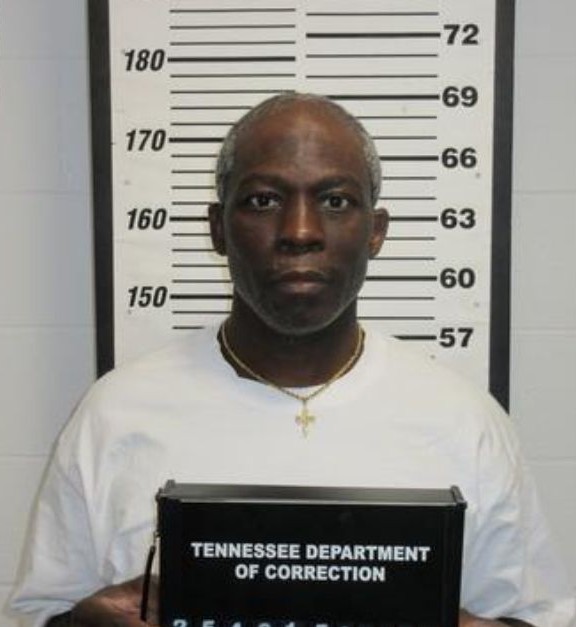
For nearly three decades, Kevin Burns has lived on Tennessee’s death row, steadfastly maintaining his innocence in a crime he insists he did not commit. At 54 years old, after 28 years of incarceration at Riverbend Maximum Security Prison, Burns continues to hold on to hope despite exhausting all legal appeals.
“This is the best day of my life,” Burns said in a phone interview with ABC News, reflecting an optimism that defies his circumstances.
Born and raised in West Memphis, Arkansas, Burns was a young man with promise. He graduated from high school and worked at Shoney’s while pursuing his passion for music with a rap group called S.I.R. But on April 20, 1992, his 23rd birthday, his life took a devastating turn. What should have been a day of celebration ended in a tragedy that altered the course of his future forever.
Burns says he believed he was heading to a recording studio with friends Derrick Garrin, Carlito Adams, Kevin Shaw, and two others. Unbeknownst to him, Adams had been in an altercation a few days prior and wanted to settle a score. Their car detoured to a Memphis neighborhood, where an encounter with four men in a parked vehicle escalated into a robbery and gunfire.
“I see Kevin Shaw extending his hand to me,” Burns said. “He had a gun in his hand. I asked, ‘What’s the gun for?’ Shaw said, ‘Just to make sure it’s a fair fight.’ Against everything, I made the most foolish decision of my life. I took that gun.”
Burns insists he never fired a shot. But in the chaos, two men: Damond Dawson, 17, and Tracey Johnson, 23 were killed. Burns was convicted in 1995 on two counts of felony murder. Despite not pulling the trigger, he was sentenced to death for Dawson’s murder and life in prison for Johnson’s.
The felony murder rule allowed for Burns’ conviction based on his participation in the robbery, regardless of whether he fired a weapon. However, during closing arguments and sentencing, the prosecution argued that Burns was the shooter, shifting their original narrative and sealing his fate.
Burns’ conviction has been riddled with controversy, including conflicting witness descriptions and unchallenged prosecutorial claims. Witness accounts described the shooter as having a Jheri curl hairstyle, a trait Burns did not have at the time. Another individual involved, also named Kevin, had a Jheri curl and a prior conflict with one of the victims—yet Burns’ defense attorneys failed to highlight these critical distinctions.
Further complicating the case, two other men convicted in the incident, Derrick Garrin and Carlito Adams, were sentenced to life in prison but have since been released on parole. Kevin Shaw, who distributed firearms before the shooting, avoided prosecution by cooperating with authorities. Burns remains the only one still incarcerated and the only one facing execution.
Burns’ legal team has long argued that he received ineffective assistance of counsel, particularly during the sentencing phase. His attorney failed to present crucial mitigating evidence that could have influenced the jury’s decision on whether he deserved the death penalty.
In April, the U.S. Supreme Court declined to hear Burns’ case. In her dissent, Justice Sonia Sotomayor, joined by Justices Elena Kagan and Ketanji Brown Jackson, condemned the decision.
“Burns now faces execution despite a very robust possibility that he did not shoot Dawson,” Sotomayor wrote. “The Court’s failure to act is disheartening.”
Sotomayor criticized the Tennessee courts for allowing an “egregious error” to stand, stating that Burns’ attorney failed to present evidence that another defendant was more likely the shooter. The justice emphasized that Burns’ role in the crime should have been a key factor in determining whether he deserved the death penalty.
Despite his grim circumstances, Burns has found purpose within the prison walls. He has become an ordained minister and now serves as the only death row pastor in the United States, leading ‘The Church of Life’ in Riverbend Maximum Security Institution’s Unit 2.
His faith remains unshaken, and his family continues to believe in his innocence.
“I believe that God is going to deliver him,” said his father, Rev. Obra Carter. “I’m praying that the whole world will get a chance to see his case and know that our son was falsely accused.”
With the courts no longer an avenue for relief, Burns’ last hope lies in the hands of Tennessee Gov. Bill Lee. The governor has the power to grant clemency, commuting Burns’ death sentence or pardoning him entirely.
Efforts to reach Gov. Lee’s office for comment on Burns’ case have gone unanswered. Meanwhile, faith leaders, legal experts, and activists are calling on him to intervene.
Attorney Richard Lewis Tennent, who represents Burns, expressed frustration with the justice system’s reluctance to correct what he views as a grave miscarriage of justice.
“Unfortunately, our modern federal court system is not designed to address matters of mercy and redemption, or even to correct errors of law,” Tennent said. “Now, it is up to Gov. Lee.”
As Tennessee moves forward with execution dates for multiple inmates, Burns remains on edge, waiting for a final decision. His execution date has yet to be set, but the state has formally requested one.
For now, Kevin Burns continues to pray, preach, and hope—for justice, for mercy, and for a second chance at life.