


A growing legal battle in Louisiana over suspended congressional elections is quickly becoming a national flashpoint in the fight over voting rights, redistricting and the future of fair representation in the United States.
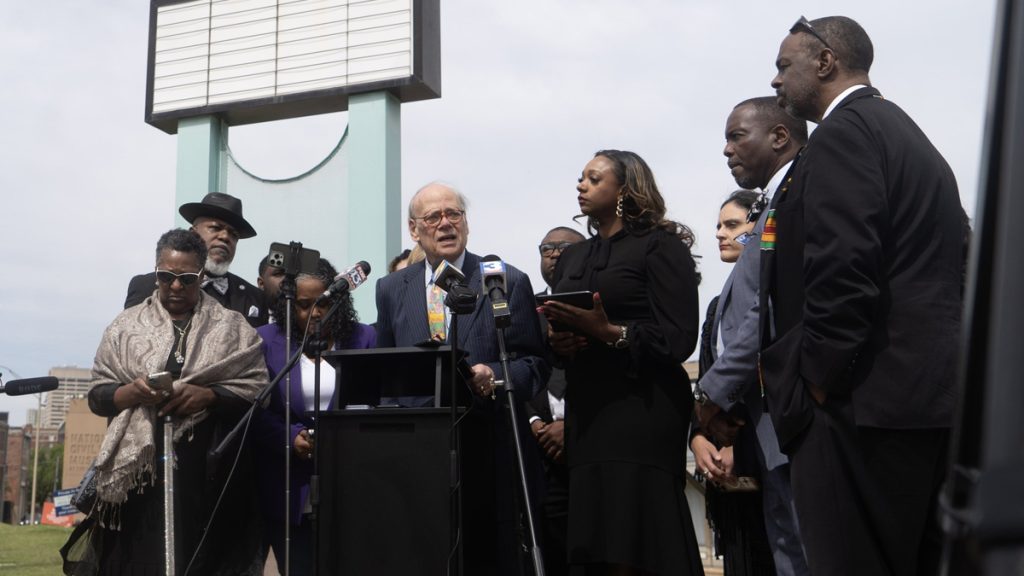
At the center of the dispute is a federal lawsuit filed by a coalition of candidates and voters, including U.S. Rep. Cleo Fields, challenging the state’s decision to halt its congressional primary elections after voting had already begun.
The lawsuit argues that stopping the election midstream violates constitutional protections under the 1st, 14th and 15th Amendments, raising serious concerns about whether states can change election rules after ballots have been cast.
“This case is about protecting the integrity of our democracy,” said congressional candidate Lindsay ‘Rubia’ Garcia. “You cannot change the rules in the middle of an election and expect voters or candidates to accept it.”
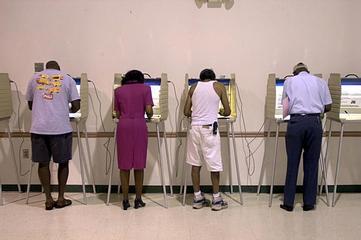
Early voting in Louisiana has continued despite the uncertainty, with voters casting ballots in an election whose outcome (and even legitimacy) remains in question.
The Supreme Court decision has national consequences. The controversy follows a major ruling by the U.S. Supreme Court in Louisiana v. Callais, which struck down the state’s congressional map that included a second majority-Black district.
The 6-3 decision significantly weakened Section 2 of the Voting Rights Act, a key provision that has long been used to challenge racial discrimination in voting and redistricting.
In the majority opinion, Justice Samuel Alito wrote that claims under the law must show clear evidence of intentional discrimination, a higher bar that critics say will make it far more difficult to challenge maps that dilute minority voting power.
In a sharply worded dissent, Justice Elena Kagan warned the ruling could have “far-reaching and grave” consequences, effectively rendering Section 2 “all but a dead letter.”
The impact of the ruling is already being felt beyond Louisiana. Several states, particularly across the South, are exploring or moving forward with redistricting efforts that could reshape political representation ahead of the 2026 midterm elections.
In Florida, lawmakers quickly approved a new congressional map that could shift multiple seats toward Republicans. Other states, including Mississippi and Virginia, are also considering changes, while additional legal challenges are expected nationwide.
Voting rights advocates warn that these developments could lead to a wave of mid-decade redistricting efforts aimed at reshaping congressional maps without the same level of federal oversight that existed in previous decades.
Civil rights organizations, including the American Civil Liberties Union and the NAACP, have filed separate legal challenges seeking to block Louisiana’s decision to suspend the elections, arguing that it creates chaos and risks disenfranchising voters who have already participated.
“Emergency powers are not a blank check to rewrite election rules after voting has begun,” a coalition of advocacy groups said in a joint statement.
Advocates say the situation highlights a broader concern: that weakening federal protections could allow states to redraw districts in ways that reduce the political influence of Black and other minority voters.
With Republicans holding a narrow majority in the U.S. House, even small shifts in congressional maps could have major implications for control of Congress. Analysts note that redistricting changes in just a handful of states could alter the balance of power in Washington.
But for many observers, the issue goes beyond partisan politics.
“This is bigger than any one campaign,” said plaintiff Eugene Collins. “This is about protecting the democratic process itself.”
The Louisiana case is now seen as an early test of how far states may go in redrawing districts (and how effectively courts will respond) following the Supreme Court’s decision.
For communities that have historically relied on the Voting Rights Act to protect their ability to elect candidates of choice, the stakes are especially high.
The now-invalidated Louisiana map had created a second majority-Black congressional district in response to earlier legal challenges that argued the state’s previous map diluted minority voting strength.
With that map struck down and new lines potentially on the horizon, advocates warn that gains made over decades could be reversed.
As legal battles continue in Louisiana and beyond, the outcome could help define the next chapter of American democracy—shaping not only who votes, but how much those votes ultimately count.