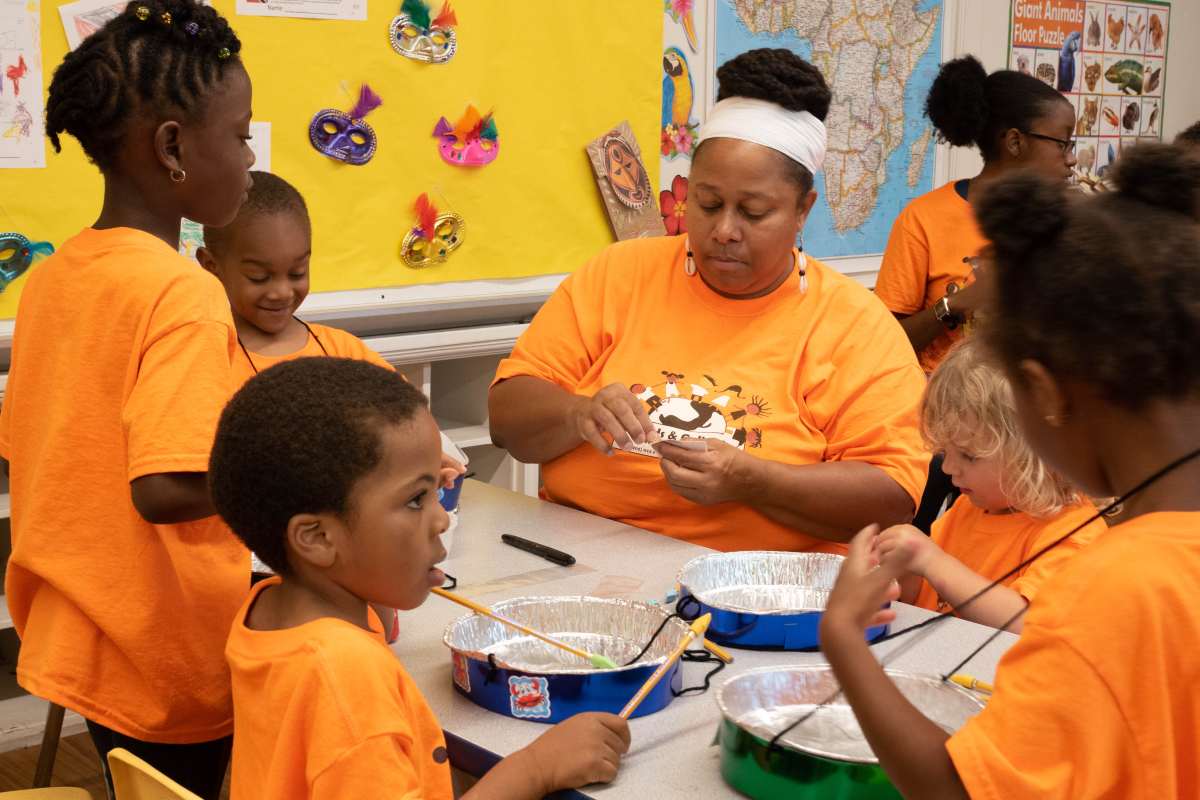
WASHINGTON, D.C. – Finding affordable summer programs for their children is a struggle for Black families across the United States. The parents of more than four million Black children want a structured summer program for them that offers a safe environment, knowledgeable and caring staff, and opportunities to build confidence and develop communications, teamwork, and critical thinking skills. But just 1.7 million of those children are enrolled. The barrier causing the others to miss out, most often, is cost.
‘Summertime for Black Families’ finds that 57% of Black children whose parents want summer programs for them are not enrolled. That compares to 62% of Hispanic children and 51% of U.S. children overall. It also finds that an overwhelming majority of Black parents who wereable to enroll their child in a summer program (95%) are satisfied with it, and 93% of the country’s Black parents favor public funding for summer learning. Summer programs are defined in the study as enrichment or sports programs, summer camps or school, or a job or internship.
The Afterschool Alliance released the study based on a survey conducted by Edge Research of 30,515 U.S. parents of school-age children who live in their households, including 4,377 Black parents.
“It’s unacceptable that nearly three in five Black children whose parents want summer learning experiences for them are missing out,” said Afterschool Alliance Executive Director Jodi Grant. “Just 22% of the country’s Black children are participating in structured summer experiences. That’s a missed opportunity to give the next generation a safe place to go, with fun, enriching activities that build confidence and skills, during the months when schools are closed. Finding affordable summer programs for their children is an enormous, sometimes insurmountable challenge for working families in the United States, but we can change that by investing in these programs at the federal, state, and local levels, with support from businesses and philanthropy. Children will be more successful, families more economically secure, and our economy stronger when we ensure there are affordable summer programs for everyone. There’s no time to waste.”
Other findings from the new study:
Affordability is the most common barrier preventing Black families from enrolling their child.
- 37% of Black families who do not have a child in a summer program cite cost as a contributing factor.
- 24% cite issues with programs’ location or transportation.
- 15% report having difficulty finding information on programs.
Black parents prioritize academic and other supports in summer programs more than parents overall.
- Two-thirds of Black parents (67%) prioritize preventing summer learning loss when choosing a summer program, compared to 43% of parents overall.
- Three in five Black parents (60%) prioritize opportunities for reading and writing, compared to 40% of parents overall.
- More than half of Black parents (52%) prioritize homework help, compared to 29% of parents overall.
- Sixty-three percent of Black parents prioritize affordability, or program costs, compared to fewer than half of parents overall (48%).
- A much greater percentage of Black parents (59%) prioritize snacks and meals, including healthy options, than parents overall (42%).
Black parents appreciate and want more funding for summer programs.
- 95% of Black parents, and 96% of parents overall, report being satisfied with the summer program their child attends—but many more Black parents (72%) than parents overall (63%) report being extremely satisfied.
- Nearly nine in 10 of the country’s Black parents (88%) agree that all young people deserve access to quality after school and summer programs.
- 93% of Black families favor public funding for summer learning opportunities, up from 89% in 2020 and including more than 90% of Black parents who are Democrats, Independents, and Republicans. Two-thirds of Black parents stronglyfavor public funding.
This is the Afterschool Alliance’s fifth national household survey. It includes 30,515 U.S. parents or guardians with a school-aged child living in their household, including 4,377 Black households. Conducted in English and Spanish, it used a mixed-mode methodology to reach as many households as possible. Data were collected from January 31 to April 21, 2025. The margin of error for the child- and household-level data is +/- 1.48%.
The summer findings are based on research funded by The Wallace Foundation.