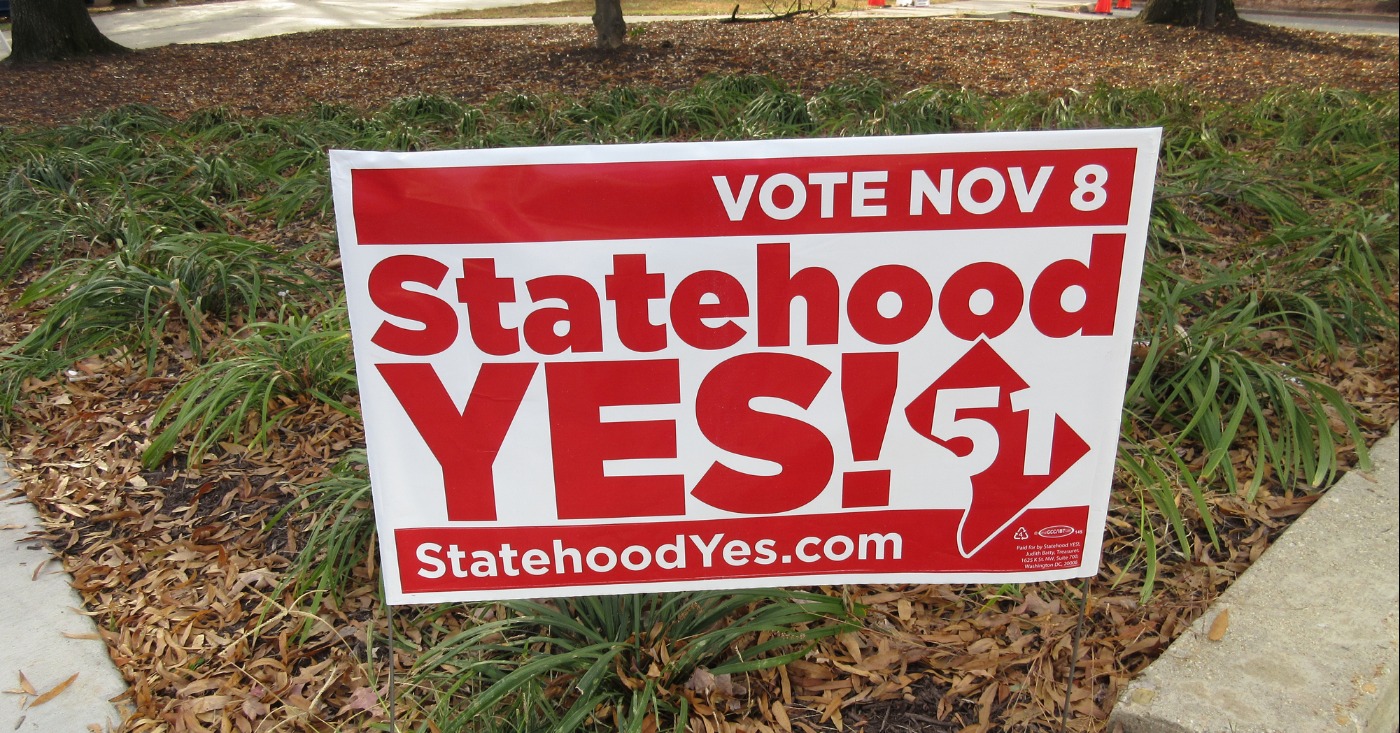
As Americans prepare to celebrate Juneteenth and the 250th anniversary of our nation’s founding, we should take pride in the extraordinary progress our country has made toward becoming a more perfect union. But these milestones also demand honesty. They require us to confront the Supreme Court’s recent gutting of the Voting Rights Act, one of the most consequential civil rights laws ever enacted, as well as another glaring contradiction that remains a hole in the soul of America: more than 700,000 citizens living in the nation’s capital are still denied full voting representation in Congress.
Juneteenth commemorates the day in 1865 when enslaved Black Americans in Texas finally learned they were free—more than two years after the Emancipation Proclamation. It is a reminder that freedom delayed is freedom denied, and that America has too often failed to extend its promises equally to all its people.

The residents of Washington, D.C., know that reality all too well.
The citizens of the District pay federal taxes, serve on juries, own businesses, volunteer in their communities, and fight in America’s wars. More than 200,000 veterans call the District home. D.C. residents contribute billions of dollars annually to the federal treasury. Yet they have no voting representation in either chamber of Congress. They are governed by lawmakers they cannot elect and whose decisions they cannot ultimately influence through the ballot box.
That reality violates the fundamental democratic principle that has defined our nation since its birth: no taxation without representation.
As America marks its semiquincentennial in 2026, we should ask a simple question: How can the world’s leading democracy justify denying full democratic rights to more than 700,000 of its own citizens?
The population of the District exceeds that of Wyoming and Vermont and is comparable to several other states. Yet residents of those states enjoy two U.S. senators and voting representation in the House of Representatives. The citizens of Washington, D.C., do not.
This is not merely a local issue. It is a national civil rights issue.
The denial of congressional representation falls particularly hard on communities of color. Nearly half of the District’s population is African American, and generations of Black Washingtonians have lived under a system that deprives them of the same democratic rights enjoyed by citizens elsewhere in the country. In a nation that has spent decades working to expand voting rights and dismantle barriers to political participation, the continued disenfranchisement of D.C. residents stands as a troubling exception.
The case for D.C. statehood is not only constitutional and moral; it is also practical.
Congress routinely intervenes in local District affairs despite the existence of an elected mayor and city council. Federal lawmakers from states thousands of miles away often seek to overturn local decisions on matters ranging from public safety to education and budgeting. No other American community faces such extensive congressional interference in its day-to-day governance.
Statehood would establish a clearer, more accountable framework for self-government while preserving a constitutionally required federal district that includes the Capitol, the White House, the Supreme Court, and other federal buildings. The proposal is straightforward and consistent with constitutional principles.
Statehood also makes economic sense. The District possesses a larger economy than many states, generates substantial tax revenue, and has demonstrated the capacity to govern itself responsibly. Residents contribute to the nation’s prosperity while being denied an equal voice in the legislative decisions that affect their lives.
Opponents sometimes suggest that the answer is retrocession – returning most of the District to Maryland – as part of the city was once returned to Virginia in the nineteenth century. But this argument ignores political reality and public sentiment.
Neither Maryland nor Virginia has expressed any serious interest in absorbing the District’s population and governmental responsibilities. Nor have D.C. residents demonstrated any desire to surrender their unique civic identity and become residents of another state. Retrocession is not a realistic solution to the democratic deficit facing the District.
More importantly, retrocession avoids the central question. The issue is not geography. The issue is citizenship.
The residents of Washington, D.C. are Americans. They deserve the same rights as other Americans.
Throughout our history, the nation has repeatedly expanded the circle of democracy. We abolished slavery. We adopted constitutional amendments guaranteeing equal protection and voting rights. Women gained the right to vote. The Voting Rights Act helped dismantle Jim Crow barriers that had excluded millions from political participation.
Each step represented an acknowledgment that democracy is strongest when it includes everyone.
As we celebrate Juneteenth and reflect on 250 years of American history, we should recognize the setbacks that threaten that progress. The Supreme Court’s recent decision in Louisiana v. Callais, which further weakened key protections of the Voting Rights Act, underscores how fragile democratic gains can be. At a moment when voting rights remain under attack, Congress should respond by restoring and strengthening those protections through passage of the John Lewis Voting Rights Advancement Act. Ensuring equal access to the ballot and guaranteeing full representation for the residents of Washington, DC., are complementary parts of the same democratic mission.
The unfinished work of freedom is not confined to history books. It lives in an ongoing effort to ensure that every citizen’s voice matters and every community is represented.
The continued disenfranchisement of more than 700,000 Americans in the nation’s capital is inconsistent with our highest ideals and our constitutional commitment to representative government. It weakens the credibility of our democratic example at home and abroad.
America’s 250th birthday should be more than a celebration of past achievements. It should be a call to complete the unfinished work.
On this Juneteenth, let us honor the generations who fought to expand freedom by addressing two of the most visible remaining democratic shortcomings. Let us pass the John Lewis Voting Rights Advancement Act, grant statehood to Washington, DC, and close the hole in the soul of America by finally extending full representation and equal citizenship to the residents of our nation’s capital.
After 250 years, democracy should leave no American behind.
Wade Henderson is a Past President of The Leadership Conference on Civil and Human Rights. He is a native Washingtonian and currently resides in DC.