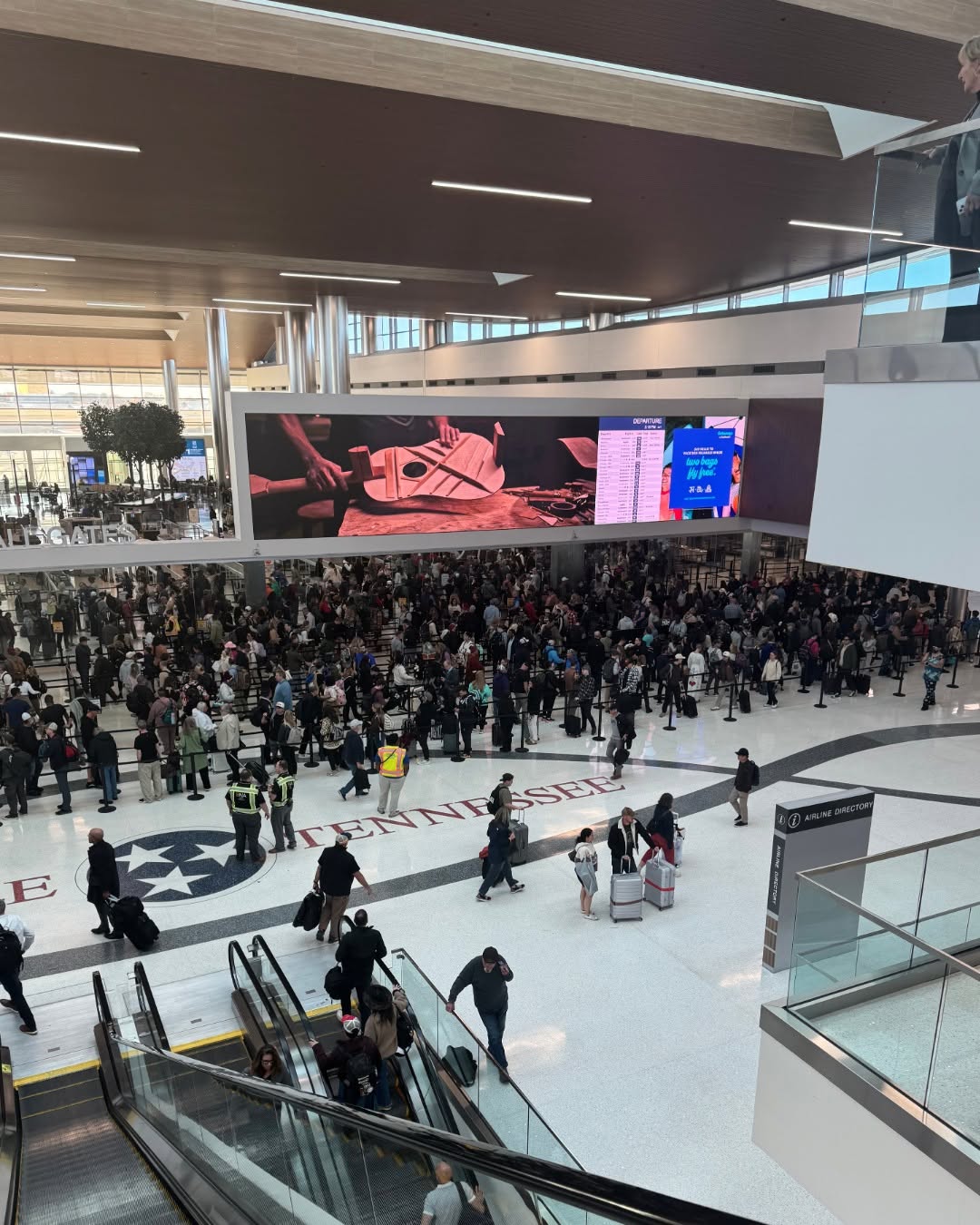
Metro Nashville and the Metropolitan Nashville Airport Authority (MNAA) have launched a new legal challenge against the state of Tennessee, escalating an ongoing battle over who should control one of the region’s most important economic assets.
Mayor Freddie O’Connell announced that he has directed Metro’s Department of Law to file a lawsuit challenging recently enacted state legislation that would give Tennessee greater authority over the governing boards of five airport authorities across the state, including Nashville International Airport.

The move comes just days after the Metropolitan Nashville Airport Authority Board voted to join the litigation, signaling a united front between Metro government and airport leadership.
The lawsuit marks the latest chapter in a dispute that began in 2023 when the Tennessee General Assembly passed legislation that sought to replace the locally controlled Airport Authority board with a state-appointed governing body. Metro challenged that law in court, arguing it violated longstanding legal protections and local authority over airport operations.
Metro prevailed in the initial case, winning a summary judgment that was later unanimously upheld by a three-judge panel of the Tennessee Court of Appeals. The matter is currently awaiting a decision from the Tennessee Supreme Court.
Despite those court setbacks, state lawmakers approved new legislation during the 2026 legislative session that grants the state authority over the Metro Nashville Airport Authority and four other airport authorities across Tennessee.
Mayor O’Connell criticized the latest effort as another attempt by state officials to take control of Nashville’s airport despite previous judicial rulings.
“I have asked Wally Dietz, our director of Law, to explore all possible steps to keep the Metro Nashville Airport Authority under local control,” O’Connell said in a statement. “We are asking the court to protect our legal rights because federal law says the FAA will not approve a change of sponsor if the current board does not consent to the change.”
O’Connell argued that the state’s latest action contradicts commitments made decades ago when airport authorities were created.
“This is a classic bait and switch by the state, which wrote in its 1969 law that the state would not take over airports transferred to authorities,” he said. “The success of our airport under local control is unquestioned, and in their quest for absolute control, state lawmakers have (we believe) again violated federal law.”
At the center of the dispute is the concept of ‘airport sponsorship,’ a designation recognized by the Federal Aviation Administration that determines who is legally responsible for operating and managing an airport. Metro officials contend that federal law prohibits the state from unilaterally replacing the airport authority without the consent of the existing sponsor.
Metro Director of Law Wally Dietz said recent federal legislation strengthened those protections.
“Federal law was passed in 2024 to address precisely this situation,” Dietz said. “Put simply, the state cannot take over our board without our consent. We are asking the court for an injunction blocking the implementation of the state board to avoid chaos at this critical asset Nashvillians rely on.”
Nashville International Airport has become one of the fastest-growing airports in the country over the past decade. The airport serves millions of passengers annually and has undergone extensive expansion projects to accommodate record-breaking travel demand. Airport leaders and local officials frequently point to that growth as evidence that the current governance structure has been effective.
Supporters of local control argue that decisions regarding airport operations, expansion projects and economic development should remain in the hands of local officials and board members who are directly accountable to the community. State lawmakers supporting the legislation have argued that airports are regional assets with statewide economic significance and therefore warrant broader state oversight.
The new lawsuit seeks to block implementation of the state’s law before a new board structure can take effect. Metro is expected to argue that the legislation conflicts with federal aviation requirements and violates legal agreements governing the transfer and operation of airport assets.
With the Tennessee Supreme Court already considering the earlier airport governance dispute, the latest legal challenge ensures that the battle over control of Nashville International Airport will continue for the foreseeable future.
The case could have implications not only for Nashville but also for the other airport authorities affected by the 2026 legislation, potentially shaping the balance of power between local governments and the state in the management of major transportation infrastructure across Tennessee.