

BATON ROUGE, La. — Concerns about the future of LSU’s African American Cultural Center are renewing a larger debate over the treatment of spaces that have historically served Black students at Louisiana’s flagship university.
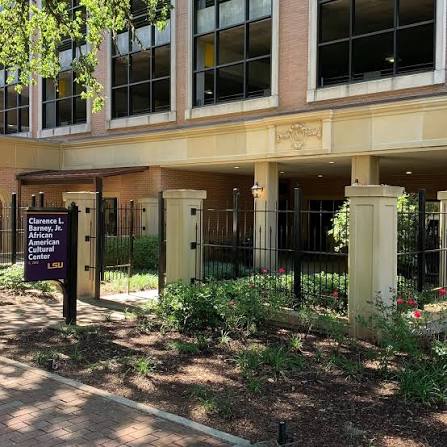
The latest controversy centers on the Clarence L. Barney, Jr. African American Cultural Center, which has served generations of LSU students as a place for cultural programming, education and community.
LSU’s chapter of the NAACP recently demanded answers from university officials after reports raised concerns about the center’s future. The organization said decisions affecting the center represented what it sees as a broader erosion of spaces created to serve Black students.
LSU, however, says the center has not closed.
University representatives said the buildings remain open to student organizations and that the NAACP and other groups have been contacted about changes and opportunities. Reports of a possible closure followed concerns over the elimination of staff positions connected with the African American Cultural Center and other campus cultural centers.
The distinction has become central to the dispute. While LSU says the physical space remains available, students are questioning what the center will become without the staffing and institutional structure they associate with its mission.
LSU continues to list the center among its student resources and describes its mission as providing educational, cultural and social activities addressing the needs of African American students while also giving the broader campus an opportunity to learn about African American culture, heritage and traditions.
The controversy carries additional weight because the center itself grew out of decades of efforts to establish a permanent Black cultural space at LSU.
According to LSU records, students began demanding such spaces during the 1960s and 1970s. LSU established Harambee House just off campus in 1972, but the facility deteriorated and closed soon afterward.
Black students, joined by the university’s Black Faculty and Staff Caucus and others, renewed calls for a center during the 1980s.
Clarence L. Barney, Jr., who in 1992 became the first African American chairman of the LSU Board of Supervisors, became a major advocate for the effort. LSU’s own historical account says Barney’s persistence was instrumental in winning approval and support for the African American Cultural Center, which became a reality in 1993.
In 2017, LSU named the facility the Clarence L. Barney, Jr. African American Cultural Center in his honor. Barney, who died in 2005, led the Urban League of Greater New Orleans for more than 30 years and was a prominent advocate for civil rights and economic opportunity.
That history helps explain why some students view changes involving the center as more significant than an administrative restructuring or reassignment of campus space.
The concerns also follow a highly publicized dispute last year involving Unity Field, a campus area that had become a traditional gathering and tailgating location for Black Greek organizations and other Black student groups.
LSU closed Unity Field to tailgating for the remainder of the 2025 football season after a series of game-day security incidents.
University officials said two shootings had been traced to activity associated with the tailgating area and said a student organization had attracted a large crowd without properly obtaining permission for its event. LSU also announced increased police presence and other security measures.
Then-interim LSU President Matt Lee rejected suggestions that the decision targeted Black students, saying the action was based on problems associated with the location rather than race.
Some students questioned that explanation.
Unity Field was the only tailgating area closed, and students interviewed after the decision noted that a shooting during LSU’s homecoming weekend had occurred on the opposite side of campus. They argued that closing a gathering place closely associated with Black students was excessive.
The issue has carried into the 2026 football season.
LSU changed its tailgating rules this year to place Greek organizations on the Parade Ground rather than dividing them between the Parade Ground and Unity Field. A map of the new arrangement has prompted additional questions from students who say Black Greek organizations appear concentrated in one section while predominantly white organizations occupy another. Students interviewed about the layout stopped short of universally characterizing it as segregation but said the arrangement raises questions.
Taken separately, LSU has offered administrative and public-safety explanations for the changes.
The university says the African American Cultural Center remains open. The Unity Field closure followed shootings and concerns about large, unsanctioned gatherings.
But for some Black students, the controversies are connected by a larger question: What makes a culturally significant campus space different from simply providing students another room or another field?
That distinction is at the heart of the current debate.
For students who regard the African American Cultural Center as the product of decades of advocacy (and Unity Field as a place where Black campus culture developed organically) continued physical access is not necessarily the same thing as preserving the identity and purpose of those spaces.
The dispute also comes as LSU continues to publicly identify the African American Cultural Center as a resource dedicated to African American students and the education of the wider university community.
Whether the latest changes amount to routine university restructuring or a gradual loss of culturally important Black spaces is now being debated by students, alumni and others watching the university.
(On the editorial section of this site, see the commentary: ‘How Much of Our Community Are We Expected to Give Up?’. It examines the controversy from the perspective of Black students and argues that the disputes over Unity Field and the African American Cultural Center raise broader questions about inclusion and belonging at LSU.)