Fisk University is offering its most detailed explanation yet of how its controversial proposed data center would benefit students, faculty and the surrounding North Nashville community, making the case that the facility could transform the historically Black university into a national leader in artificial intelligence, data science and high-performance computing.
The university’s proposal calls for a 100,000-square-foot, LEED-certified complex on five acres at the south end of Fisk’s campus. About 30,000 square feet would be devoted to classrooms, computer labs and collaborative academic space, while a 70,000-square-foot, 30-megawatt data center would operate alongside it.

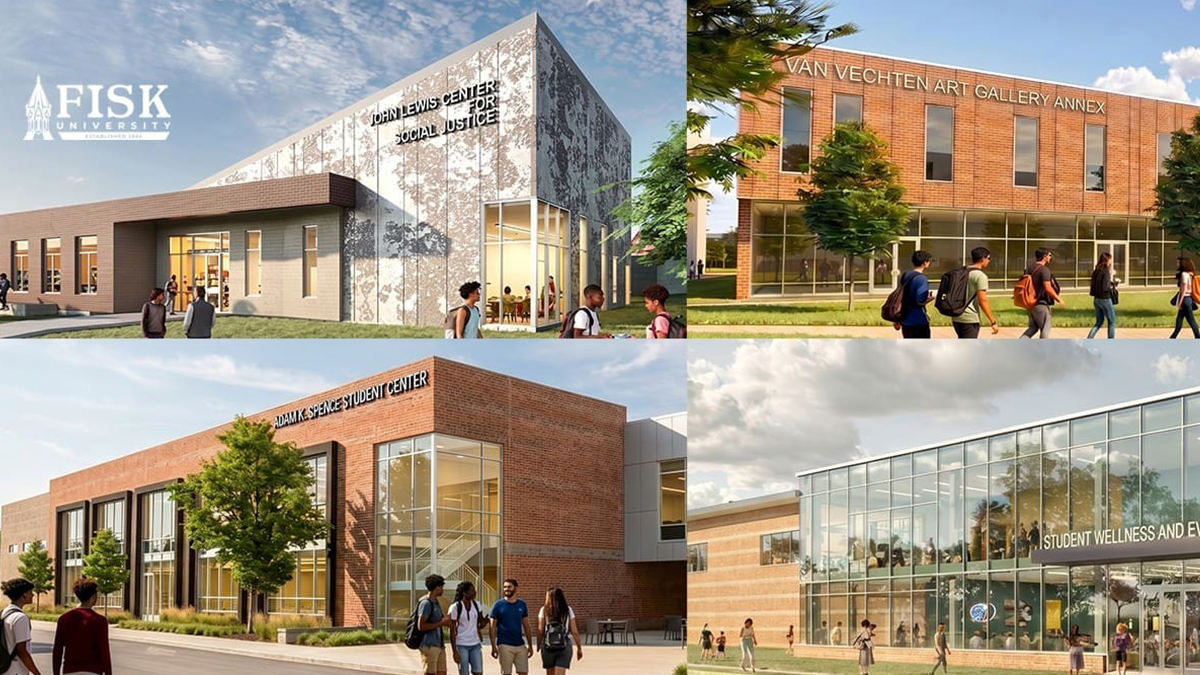
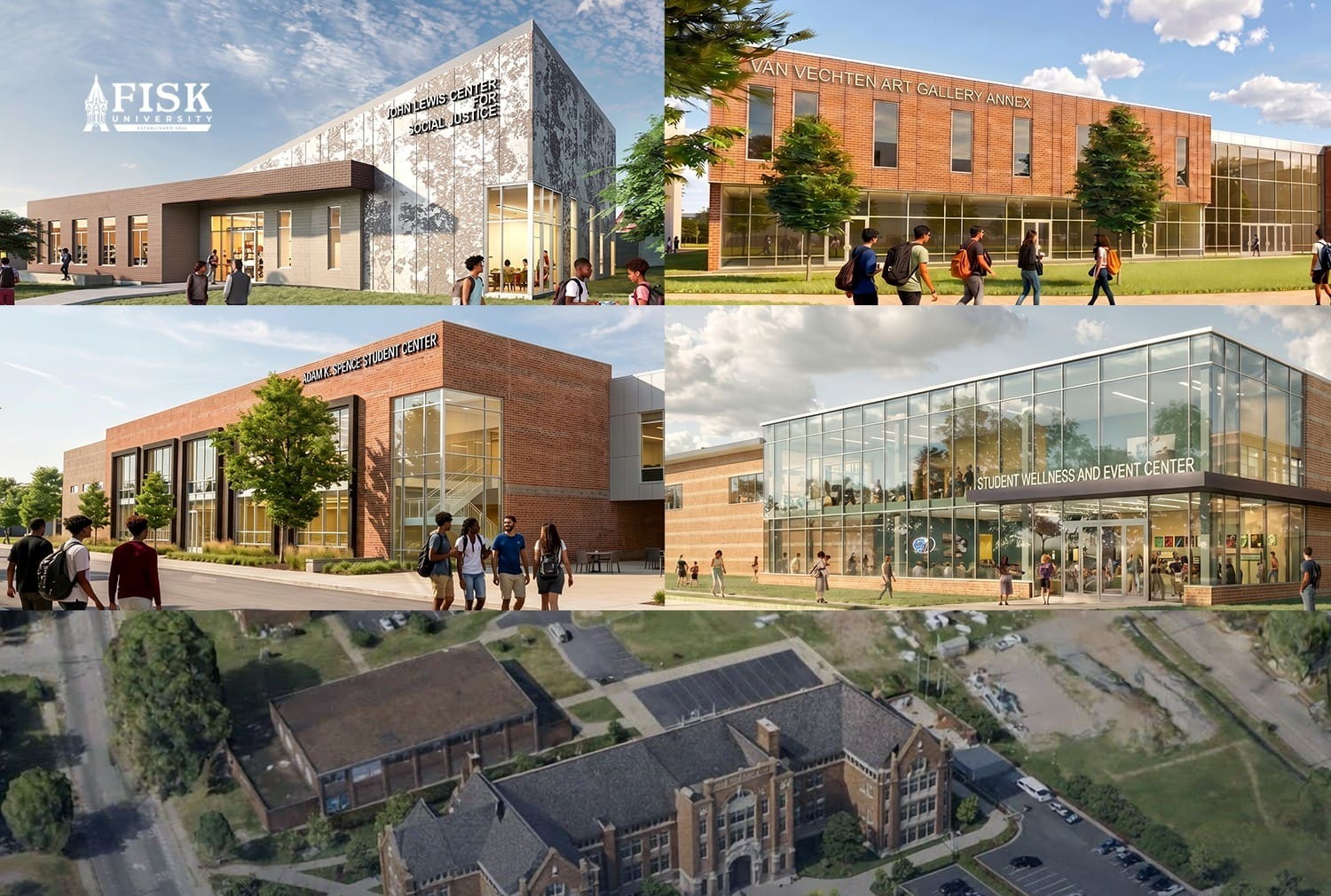
The project is part of Fisk’s larger Quantum Leap campus development plan, an ambitious effort that the university says will combine campus improvements with a $400 million Innovation and Technology Center. Fisk describes the technology center as the first of its kind owned by an HBCU.
The data center proposal, however, has generated opposition from some students, alumni and North Nashville residents who have raised questions about electricity and water consumption, noise, environmental effects and the role of a still-unidentified commercial partner.
In a recently released 12-page report titled ‘The Academic Benefit of a Data Center on the Campus of Fisk University,’ the university argues that having the technology physically located on campus could give Fisk students opportunities that partnerships with outside companies and institutions cannot fully provide.
At the center of that argument is a university-controlled supercomputer that would operate through the data center and be available to Fisk students and faculty for education and research. Students could receive hands-on experience in data science, computer science, networking, cybersecurity and data center management, while faculty could use high-performance computing for research.
The academic portion of the project would include classrooms, data innovation computer labs and technology-focused meeting areas. Fisk says access would not be limited to computer science students. The university envisions artificial intelligence and data applications being incorporated into disciplines ranging from biology, physics and business to the humanities and social sciences.
Fisk President Dr. Agenia W. Clark has framed the development as part of a broader effort to prepare the university and its surrounding community for a technology-driven future.
“We are building the infrastructure of the future here, on this campus, for this community—for the next 160 years,” Clark said in describing the Quantum Leap initiative.
Fisk argues that such access is becoming increasingly important as artificial intelligence and big data reshape employment and graduate education. The university says students entering the workforce will increasingly be expected not only to understand emerging technologies but to know how to use them.
The proposal could also provide internships and practical training through the company eventually selected to lease and operate the commercial portion of the data center. Fisk has not identified that corporate partner, an issue that has contributed to questions surrounding the project. The university says the eventual partner would be expected to share its commitment to educational and community benefits.
Fisk already has a foundation on which to build. Its computer science program is its largest undergraduate major, and the university also offers programs in data science and bioinformatics. Existing technology partnerships identified by Fisk include Google/CodePath, Equinix, Amazon Web Services, Asurion and Apple.
The project could also significantly expand research capabilities. Fisk says the computing resources could support work involving medical imaging, molecular simulations, cybersecurity and encryption, natural language processing and large language models. Other possible applications identified by the university include health care research, financial technology, astronomy, nuclear security and digital humanities.
University officials are also directly addressing environmental concerns that have surrounded the proposal.
Fisk says the facility would use a recirculating-water cooling system rather than requiring massive water consumption and would tap an existing 30-megawatt power line beneath university property. The university says electricity would be purchased through normal commercial arrangements with Nashville Electric Service and the Tennessee Valley Authority and maintains that residential customers would not experience higher rates or reduced access to electricity because of the project.
The building would be designed to achieve silver- or gold-level LEED certification, and Fisk says its exterior would resemble a neo-Victorian academic building compatible with the architecture of its historic campus. The university also says the design would seek to minimize noise.
Those assurances address some of the same issues raised by opponents of the project. Critics have questioned whether a data center belongs near homes and a college campus and whether its potential economic and technological benefits outweigh possible effects on the surrounding neighborhood.
Fisk argues its proposal differs from massive commercial data centers developed by outside corporations. The proposed facility would remain on university-owned land in the North Nashville Qualified Opportunity Zone, and Fisk says its more than 150-year relationship with the neighborhood gives the university both an interest and responsibility in protecting the community.
The university says the project could create jobs and eventually support technology and job training for North Nashville residents. It also envisions the campus becoming a place where the public can learn about AI and participate in discussions about bias, representation and the inclusion of historically marginalized communities in artificial intelligence and machine-learning systems.
The larger argument from Fisk is that the university should not watch the AI revolution from the sidelines.
Founded in 1866, Fisk has long viewed education as a means of expanding opportunities for Black Americans. University leaders contend that providing students direct access to the computing infrastructure powering the next generation of technology is a modern extension of that mission.
At the same time, the university acknowledges that data centers have generated legitimate questions involving sustainability, environmental effects, noise, energy and water consumption and the ethical use of data.
Fisk says its goal is to demonstrate that such a facility can be developed differently, with education and community benefit built into the project rather than added later.
If the university can deliver on that promise, Fisk argues, the North Nashville project could become a model for how communities that historically have been excluded from major technological shifts can instead have a place at the center of the next one. The university describes its broader goal as creating a replicable model for responsible, community-centered digital infrastructure.