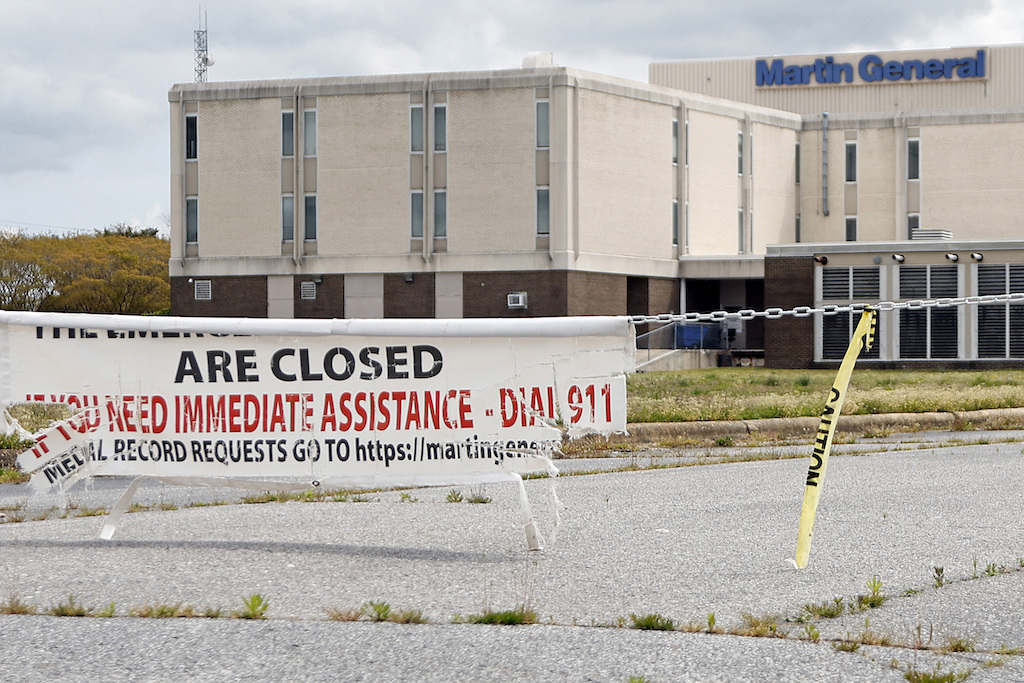
Rural Tennessee hospitals are facing mounting financial pressure as rising healthcare costs, insurance gaps and changes to Medicaid threaten access to care in communities already struggling to maintain medical services.
Health advocates warn that some hospitals could be at risk of closing in the coming years, potentially forcing rural residents to travel farther for emergency and routine care.

Dr. Amy Gordon Bono, a primary care physician, said rural hospitals are being squeezed from several directions. They frequently provide uncompensated care to uninsured patients, while Medicaid reimbursement rates may not cover the full cost of providing services.
Private insurance payments are also contributing to the problem, she said.
“We are now also seeing private insurers paying less than the cost of services delivered to privately insured patients,” Gordon Bono said. “This report shows that 36% of Tennessee’s rural hospitals are in serious financial trouble and that at least 12 hospitals are at immediate risk of closure over the next few years.”
The findings cited by Gordon Bono come from the Center for Health Care Quality and Payment Reform, which has studied the financial condition of rural hospitals nationwide.
Affordability and insurance coverage remain significant obstacles to healthcare in rural communities. Nationally, about 8.4% of rural Americans are uninsured.
Gordon Bono also pointed to Tennessee’s decision not to expand Medicaid under the Affordable Care Act. She said that leaves some low-income adults, including people working multiple jobs without employer-sponsored health insurance, without coverage.
Healthcare advocates are also raising concerns about provisions of the One Big Beautiful Bill Act that affect Medicaid funding and eligibility.
The Trump administration has said new Medicaid work requirements and other changes are intended to reduce waste, fraud and improper payments while preserving the program for vulnerable populations.
Katherine Hempstead, senior policy adviser for the Robert Wood Johnson Foundation, said projections indicate the Medicaid changes will reduce federal spending on the program by roughly $1 trillion nationwide over the next decade.
The federal Rural Health Transformation Program is intended to help states strengthen rural healthcare as the broader changes take effect. But Hempstead said its $50 billion in funding will not be enough to offset the impact of the Medicaid reductions.
“For one thing, it’s way too small,” Hempstead said. “$50 billion sounds like a lot of money but it’s only five percent of one trillion. And of that $50 billion, there’s a limit to how much can be spent to actually pay hospitals.”
She said much of the transformation funding is directed toward technology, research, new healthcare delivery models and pilot programs. While those investments could eventually improve rural healthcare, she said they do not necessarily address hospitals’ immediate cash-flow problems.
“This is a short-term solution,” Hempstead said. “The Rural Health Transformation fund is going to be gone in five years but the problems that have been created by the One Big Beautiful Bill Act are not going to be gone.”
Tennessee is using funding from the Rural Health Transformation Program to support 53 projects across 44 counties, according to the Tennessee Department of Health.
The projects are intended to expand healthcare access, improve health outcomes and strengthen the long-term sustainability of rural healthcare systems.
For rural communities, however, health advocates say the immediate challenge remains keeping existing hospitals financially viable while ensuring residents can afford and reach the care they need.