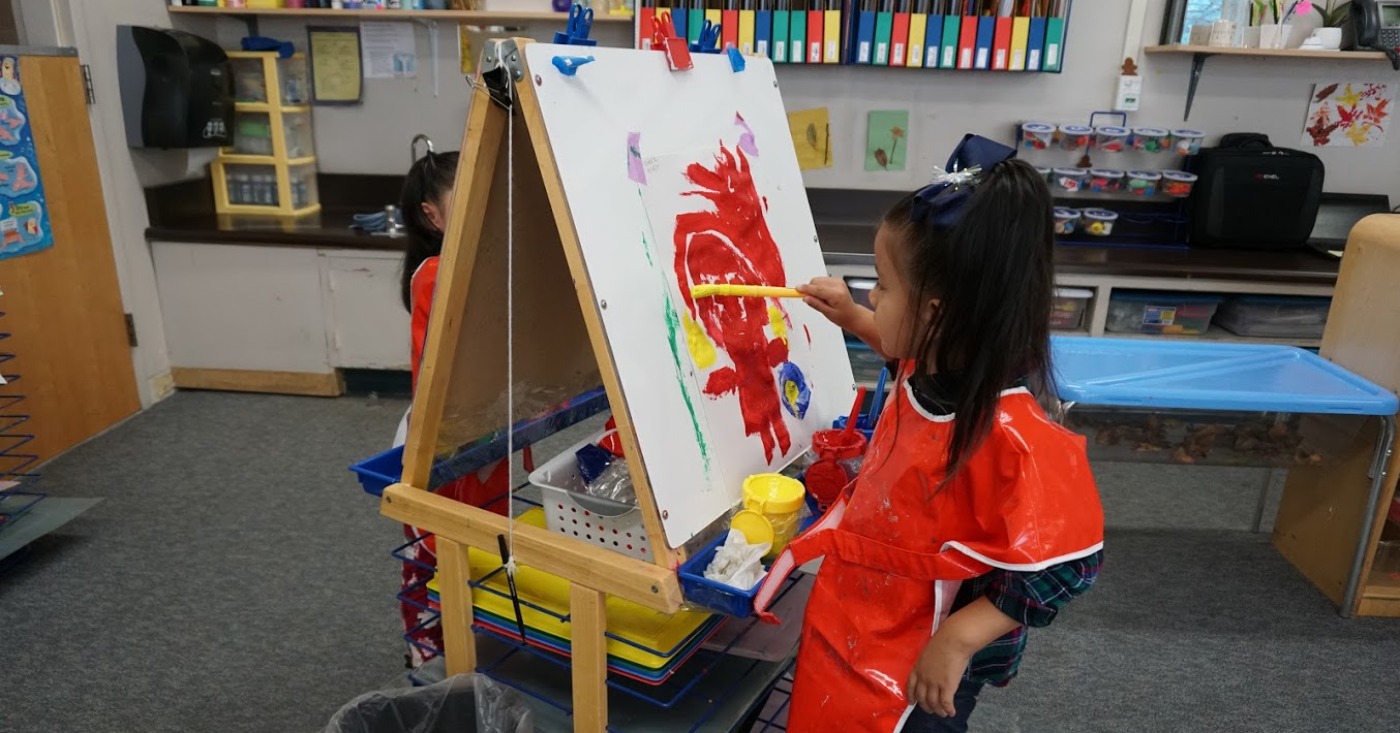
Singing the alphabet, building with blocks, painting pictures and playing make-believe may seem like simple childhood activities, but education researchers say they play an important role in developing the skills children need to succeed in school and beyond.
Studies increasingly show that creativity and play-based learning can strengthen literacy, mathematics, problem-solving abilities and social-emotional development. Educators say these activities are particularly valuable during early childhood, when children are naturally curious and eager to explore their surroundings.
“Children don’t just play; they learn fundamental skills through play,” said Daniel Mendoza, a visual artist and specialist in early childhood education art practices. “Children are in a creative mindset all the time.”
Arts education has long been a central part of preschool and early elementary classrooms. Drawing, painting, music and movement activities help children develop fine motor skills, improve hand-eye coordination and strengthen their ability to communicate and express ideas.
Researchers say the benefits extend beyond artistic development. Creative activities encourage children to experiment, make decisions, solve problems and work cooperatively with others.
Kathryn Hirsh-Pasek, a psychology professor at Temple University who studies the relationship between play and learning, said educational practices should reflect how children’s brains naturally develop.
“What if we taught children the way we know the brain learns?” Hirsh-Pasek asked.
Research suggests that combining structured instruction with opportunities for exploration can produce stronger learning outcomes than relying exclusively on traditional academic exercises.
A report supported by the LEGO Foundation, which analyzed 26 studies across 18 countries, found that children attending early childhood programs combining instruction and play demonstrated improvements in literacy, motor skills and social-emotional development.
Cindy Hoisington, an early childhood education expert at the Education Development Center, said play should not be viewed as separate from academic learning.
“This is not anything new, knowing that play is so critical to children, whether it’s dramatic play, building play, creative arts play or physical play,” Hoisington said.
She noted that opportunities for play often decline as children move from preschool into kindergarten and first grade, when classrooms become more focused on formal instruction.
“Play is something you get to do after you do the learning when, in fact, we know that play is an incredible vehicle for learning,” she said.
Hands-on activities can introduce young students to complex academic concepts in ways that are easier to understand and remember.
For example, children experimenting with objects that float or sink are learning basic scientific principles through observation and discovery. Counting blocks or other physical objects can help students understand mathematical relationships more effectively than relying solely on worksheets.
“Young children learn best by doing,” said Deborah Stipek, an early childhood education expert at Stanford University. “Counting objects is better than counting dots on a worksheet because they can move the objects to help them keep track of how many they have counted.”
Music also plays an important role in early learning. Familiar songs such as the alphabet song and ‘Old MacDonald Had a Farm’ help children develop vocabulary, recognize patterns and strengthen memory.
Pretend play can incorporate several academic and social skills simultaneously. A classroom activity involving an imaginary restaurant, for example, might require students to write menus, count money, take orders and communicate with classmates.
Such experiences combine reading, writing, mathematics and cooperation in a single activity.
The American Academy of Pediatrics has also emphasized the importance of play in healthy brain development. In a clinical report, the organization explained that play supports executive functioning, including attention, self-regulation, planning and the ability to pursue goals while managing distractions.
These skills are essential for academic achievement and long-term development.
Researchers also point to the importance of creative learning opportunities for children from historically underserved communities. Access to quality early childhood programs that incorporate art, music, exploration and guided play can help strengthen school readiness and support developmental growth.
The benefits of creativity are not limited to preschool students. Education specialists say older children also need opportunities for artistic expression, physical activity and independent exploration.
However, increasing emphasis on standardized testing and academic performance can sometimes reduce classroom time devoted to these activities.
Some researchers have expressed concern that the decline in opportunities for play may contribute to student disengagement, particularly as schools continue addressing learning disruptions and attendance challenges that emerged during the COVID-19 pandemic.
Educators say balancing direct instruction with creative activities can help students remain engaged while developing essential academic skills.
As technology and artificial intelligence continue to transform the workplace, researchers also emphasize the growing importance of skills such as creativity, adaptability, collaboration and critical thinking.
Hirsh-Pasek said preparing children for the future requires more than teaching them to memorize information or perform well on standardized tests.
“We need kids who don’t just memorize and take tests well, which AI will do better than our kids ever will,” she said. “We need kids to be explorers and problem solvers.”
For educators and parents, the research reinforces the value of incorporating music, art, movement and imaginative activities into children’s daily routines.
Rather than treating play as a break from learning, early childhood specialists increasingly recognize it as an important part of how children develop the knowledge, confidence and skills needed for future academic success.