As America turns 250, we keep asking what kind of country we will hand to the next generation. But young Americans are not waiting to inherit this nation. They are already navigating its challenges, and their experiences differ significantly from those of older generations.
The National Collaborative for Health Equity’s fourth annual Heart of America Survey, involving 1,322 Americans, reveals a striking contradiction: Young and older Americans share many of the same hopes for the country, but they experience its realities differently.
Despite widespread perceptions of generational conflict, Americans agree on many fundamental issues.
Eighty-three percent of adults ages 18 to 34 and 89% of those 65 and older believe the country is more divided than ever. Yet roughly seven in 10 in both groups remain hopeful that Americans can overcome their differences.
More than eight in 10 want leaders who look beyond political labels and divisive tactics. About two-thirds believe immigration strengthens the country, while nearly nine in 10 support teaching America’s full history, including slavery and racism.
These findings suggest that political affiliation, rather than age, is often the stronger source of ideological division.

The most significant generational differences emerge around discrimination, voting rights and economic pressures.
Seventy percent of young adults report personally experiencing racial discrimination, compared with 34% of seniors. Three in 10 young adults say they frequently encounter racism or discrimination, while fewer than one in 10 older Americans report the same.
Younger respondents were also considerably more racially diverse, with white Americans representing 30% of the younger group compared with 82% of seniors.
Voting presents another divide. Eighty-eight percent of seniors consider it very important that every eligible American can vote, compared with only half of young adults. Seventeen percent of Gen Z respondents say voting access is not important.
The generations also identify different obstacles to national progress.
Seventy-four percent of seniors cite political divisiveness as a major barrier to equal opportunity, compared with 34% of younger adults. Younger Americans are more likely to identify racism, gender discrimination, police brutality and over-incarceration.
Perhaps the widest disagreement concerns reparations. Three in four young adults consider reparations for descendants of enslaved Americans important, compared with just over one in three seniors.
Economic pressures further distinguish their experiences. While all generations struggle with grocery and health care costs, 75% of young adults worry about finding stable, well-paying employment, compared with 35% of seniors. Younger adults also report substantially greater pressure from childcare expenses.
These differences demonstrate how housing, employment, discrimination and economic opportunity influence both individual health and the nation’s civic well-being.
Younger Americans are not a single ideological group.
Millennials emerged as the survey’s most optimistic generation. Seventy-eight percent believe Americans can find common ground, and 70% are confident the country can overcome its divisions.
Gen Z expresses considerably less confidence. Only 46% say they are proud to be American, compared with approximately two-thirds of older generations.
Just 64% of Gen Z respondents believe Americans have more in common than not, compared with 79% of Millennials, Gen X and Baby Boomers.
Young adults also experience division more personally. Seventy percent worry about disunity within their communities, compared with 46% of seniors.
Yet younger Americans are more likely to seek conversations with people whose views differ from their own, suggesting a willingness to bridge divides despite their frustrations.
The findings carry particular significance as the November 3 midterm elections approach.
According to Pew Research Center, voters 50 and older represented nearly two-thirds of the 2022 midterm electorate. Meanwhile, the fall Harvard Youth Poll found that only one-third of adults under 30 say they will definitely vote this year.
These differences in political participation could influence which concerns receive attention from elected officials.
Older Americans tend to emphasize political stability, compromise and protecting democratic institutions. Younger generations place greater importance on addressing structural inequality, affordability, housing and employment.
The challenge for future leaders will be connecting these priorities rather than treating them as competing demands.
Young adults increasingly favor leaders who understand systemic problems and pursue meaningful change. Yet 84% also want leaders capable of seeing the world in new ways.
The survey offers both a warning and an opportunity.
America’s shared values remain strong, but younger generations’ attachment to national institutions and traditional expressions of patriotism appears weaker.
Addressing that divide requires more than appeals for unity. It demands meaningful progress on the economic and social conditions shaping people’s daily lives.
At the National Collaborative for Health Equity, we recognize that the conditions influencing physical health (housing, employment, belonging and freedom from discrimination) also shape the health of democracy.
Younger Americans are asking for greater opportunity and fairness. Older Americans emphasize preserving the institutions that sustain the nation.
America’s next chapter depends on recognizing that both perspectives matter.
As the country enters its next 250 years, the goal must be a nation where every generation can see itself reflected in the American promise.
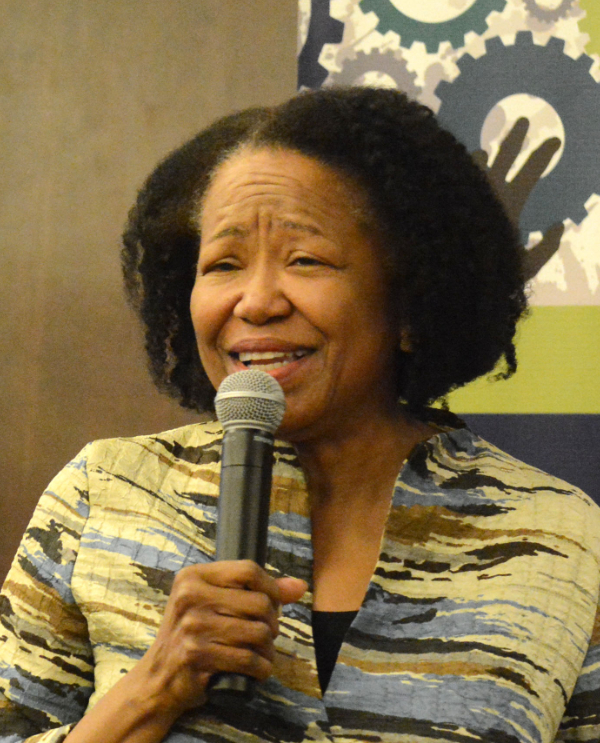
(Dr. Gail C. Christopher is executive director of the National Collaborative for Health Equity and senior scholar at George Mason University’s Center for the Advancement of Well-Being.)