
New York Democrat wins overwhelming support from colleagues following party’s midterm election victories
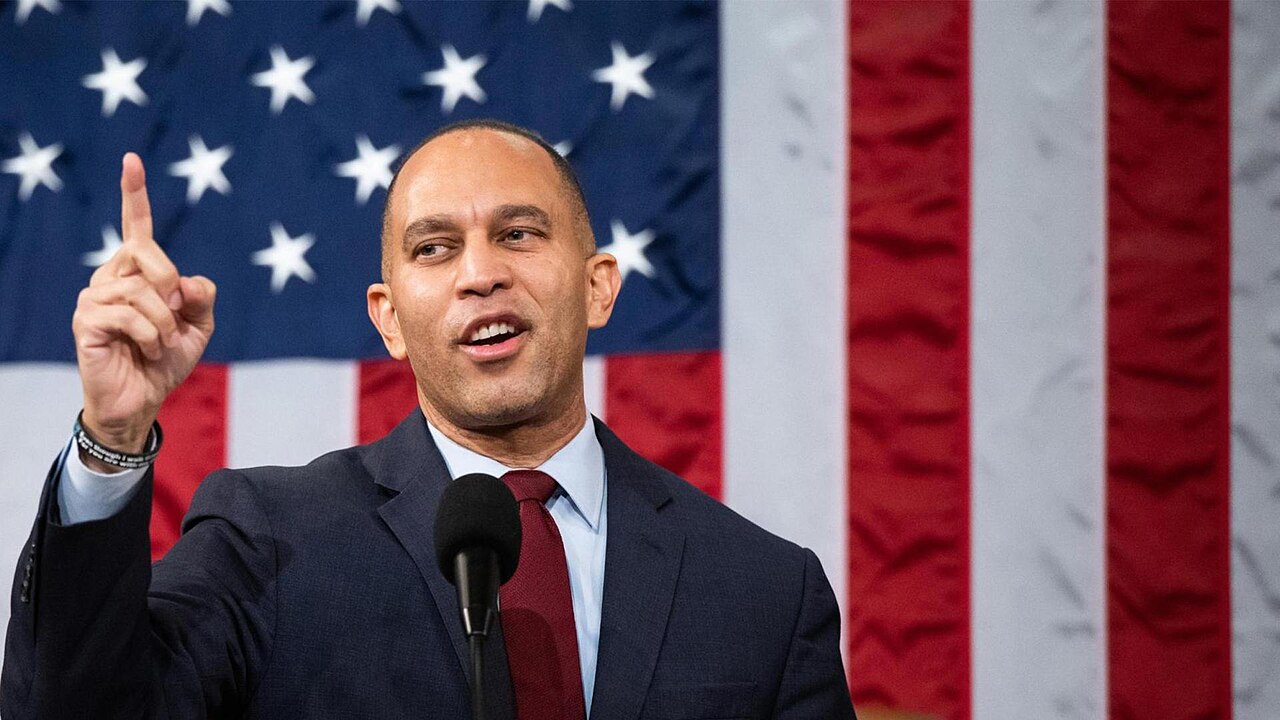
WASHINGTON, D.C. — Rep. Hakeem Jeffries of New York moved closer to making American history Wednesday after House Democrats overwhelmingly nominated him to become the nation’s first African American speaker of the U.S. House of Representatives.
Jeffries received 251 votes during a closed-door Democratic leadership election on November 18, with just 11 members opposing his nomination. The vote positions the 56-year-old lawmaker to lead the House when the new Congress convenes in January, following Democratic victories in the November 3 midterm elections.
If elected by the full House, Jeffries would become the first Black American to hold one of the most powerful positions in the federal government. The speaker presides over the House, plays a central role in determining its legislative agenda and stands second in the presidential line of succession, behind the vice president.
The historic nomination represents another milestone for African American political leadership in Congress, where Black lawmakers were once excluded from positions of authority and have spent generations working to expand their influence.
Jeffries already made history in 2023 when he became the first African American to lead either major political party in Congress, succeeding Nancy Pelosi as the House Democratic leader.
His nomination follows an election in which Democrats regained control of the House and Senate. Democrats are expected to enter the new Congress with at least 257 House seats, giving the party a substantial majority.

“It’s a high honor and a distinct privilege to stand before the American people today as the Democratic nominee to be the next speaker of the United States House of Representatives,” Jeffries told reporters following the vote.
The significance of the moment was underscored by Rep. Jim Clyburn of South Carolina, a longtime leader of the Congressional Black Caucus and one of the most influential African American lawmakers in Congress.
Clyburn delivered an endorsement of Jeffries during the leadership meeting and later described the nomination as “very historic.”
Despite the overwhelming support, Jeffries faced opposition from a small group of progressive Democrats who sought stronger commitments on issues including universal health care, campaign finance reform and U.S. policy toward Israel.
Seven incoming progressive lawmakers issued a joint statement saying they opposed his nomination while continuing discussions about the party’s legislative priorities.
Jeffries sought to minimize the divisions, telling reporters: “Our job is to fight MAGA extremism, not each other.”
He has also expressed support for expanding Medicare benefits, lowering the program’s eligibility age and establishing universal health coverage for children.
The incoming Democratic leadership team will mark several additional milestones. Rep. Katherine Clark of Massachusetts is set to become the first woman to serve as House majority leader, while Rep. Pete Aguilar of California will become the first Latino to serve as House majority whip.
Rep. Lauren Underwood of Illinois was also elected Democratic caucus vice chair, positioning her to become the highest-ranking Black woman in Congress.
Jeffries must still win a formal vote of the full House when the new Congress convenes January 3. With Democrats holding a substantial majority, the party has enough seats to elect him without Republican support, provided its members remain sufficiently united.
For African Americans, the prospect of a Black speaker carries particular historical significance. From the Reconstruction-era election of the first Black members of Congress to the establishment and growing influence of the Congressional Black Caucus, African American lawmakers have steadily expanded their representation in the nation’s legislative branch.
Jeffries’ elevation would mark the first time an African American has held the House’s highest leadership position in its more than 200-year history.
Beyond the historic first, Jeffries will face the challenge of uniting a diverse Democratic majority while advancing the party’s agenda on economic affordability, health care and other issues that shaped the midterm elections.