
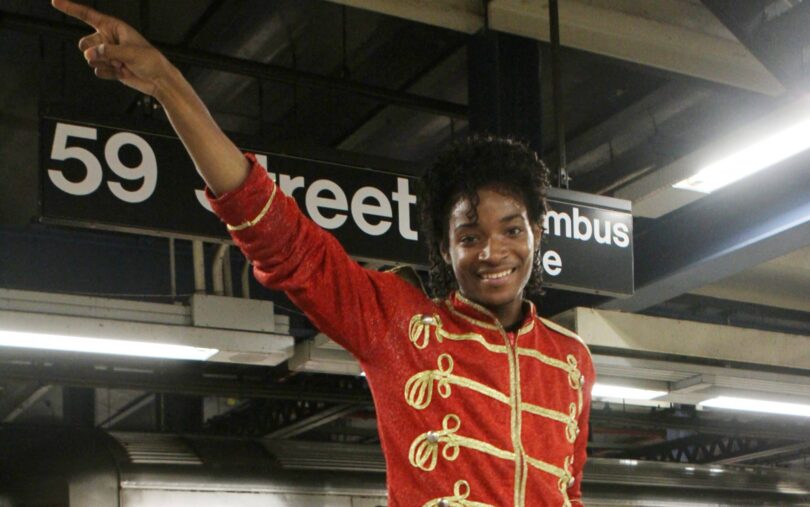
A widely shared video showing a former Marine placing a man in a chokehold aboard a New York City subway train will be at the heart of the trial of Daniel Penny, who faces charges in the death of celebrated Michael Jackson performer Jordan Neely. The video, which has sparked nationwide debates on race and public safety, shows Penny restraining Neely in a chokehold until his death.
Penny, 26, is charged with manslaughter and criminally negligent homicide and has pleaded not guilty. He faces a maximum of 15 years in prison if convicted of the top charge. The trial has begun and is expected to last six weeks, with the defense and prosecution planning to rely heavily on the four-minute video to make their case. Penny’s attorneys argue that he did not apply enough force for the chokehold to be fatal, while prosecutors contend that he used excessive and unjustified force against Neely, a 30-year-old Black man who had been struggling with homelessness and mental health issues.

According to the New York City chief medical examiner, Neely died from compression to his neck, and the death has been ruled a homicide. The incident has become another flashpoint in discussions about racial justice, the treatment of homeless individuals, and the safety of New York’s subway system. Following Neely’s death, police initially questioned Penny and then released him without filing any charges—a move that received harsh criticism from activists and elected officials.
Outside the Manhattan courthouse this week where the trial will take place, supporters of Neely continue to call for justice. In the wake of Neely’s death, those who knew him personally have shared his life story with many people. One of those voices is Moses Harper, a professional dancer who wrote a tribute to Neely for The Marshall Project titled ‘My Friend Jordan Neely Was Homeless and in Mental Distress. But He Was Not Expendable.’
“I first met Jordan in 2009, after Michael Jackson died,” Harper wrote. “He was in Times Square performing with a couple of his friends, and I was coming out of a dance studio where I’d been teaching the ‘Thriller’ dance moves. Jordan, who was 16 at the time, was surrounded by tourists, engaging with all different types of people. He picked me out of the crowd and said: ‘Come here, let’s do this! Don’t be scared.’”
Harper recalled how Neely was always full of life when performing but faced immense personal challenges. Neely’s mother was murdered when he was 14, a trauma that Harper said deeply affected him. “That kind of hurt is indescribable,” Harper wrote. “Performing as Michael Jackson was his escape.”
Despite his talent, Neely struggled with mental health and homelessness in the years leading up to his death. Harper reflected on how Neely often felt invisible and ashamed of his circumstances, even as he tried to maintain his dignity through his performances. “There is too much pressure put on Black men to hold a certain type of posture and profile,” Harper wrote. “For Jordan, I’d imagine he felt like, ‘The last time you saw me, I was dressed up like the greatest entertainer in the world. Look at me now.’”
Harper noted the broader systemic failures of individuals like Neely, who are often neglected by society. “The system failed Jordan,” he wrote. “He didn’t have a diploma; he was homeless; and he was dealing with mental health issues. On top of all of that, when he performed, he would get antagonized by people who hated Michael Jackson.”
As the trial moves forward, the video of the fatal incident will serve as a key piece of evidence in determining whether Penny’s actions were justified. But for those who knew Neely, the trial is about more than just a legal verdict. It is about the value of a life lost too soon.
“When I think of Jordan Neely, I think of a gifted, kind, young soul who was trying to find some joy and peace in this world,” Harper wrote. “He was priceless.”