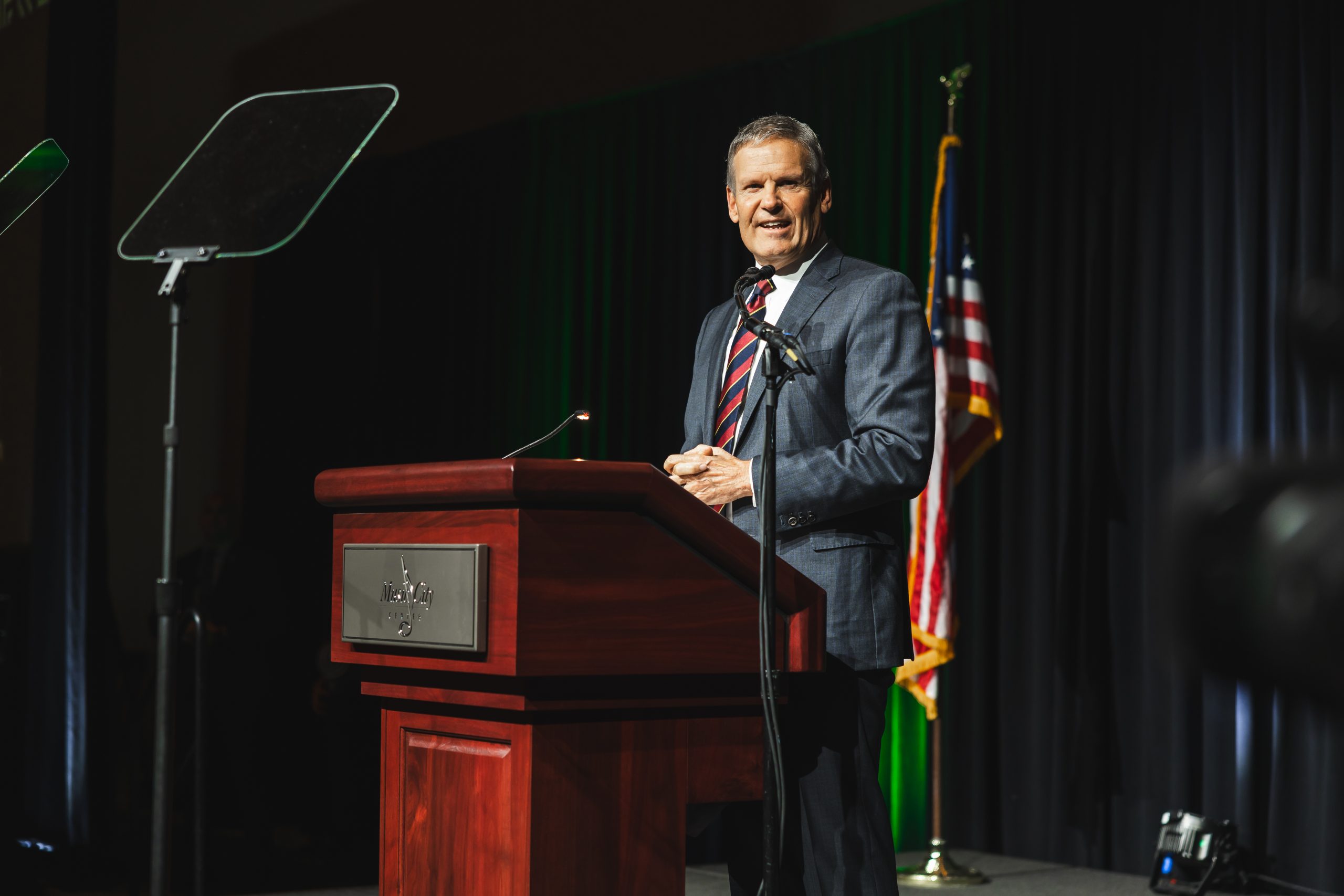
On Monday, Gov. Bill Lee delivered his seventh State of the State address, outlining plans for Tennessee’s future with a focus on economic growth, education, infrastructure, and energy. His proposals, while ambitious, reflect ongoing debates about the direction of state policy.
Acknowledging the devastation from Hurricane Helene, which inflicted $1.2 billion in damages in East Tennessee, Lee highlighted the response of state agencies and local leaders. He pointed to the General Assembly’s emergency relief measures and pledged continued support for recovery efforts, though some communities remain concerned about the speed and sufficiency of aid.

“Our initial response was immediate and substantial,” Lee said. “State agencies have been on the ground for months helping with recovery efforts. Still, there is a long road ahead.”
The governor also reiterated his commitment to border security and crime prevention, calling for stricter immigration enforcement. He announced additional investments in local crime prevention grants in the upcoming budget, but details on the effectiveness of similar past efforts were not provided.
Lee touted Tennessee’s recent expansion of universal school choice and investments in public school facilities. Looking forward, he proposed the Tennessee Works Scholarship, aimed at covering tuition, fees, and equipment costs for students attending Tennessee Colleges of Applied Technology (TCATs). He also announced an expansion of the Tennessee Youth Employment Program, aiming to double participation and provide young Tennesseans with real-world job experience.
To address childcare affordability, the governor proposed an $11 million investment in the Boys and Girls Club and enhancements to the Smart Steps Child Care Program. While these measures aim to support working families, some critics argue they do not go far enough to address broader childcare challenges.
Lee emphasized Tennessee’s economic success, citing $40 billion in capital investment and 234,000 new jobs created during his tenure. To sustain momentum, he announced $80 million in strategic Economic and Community Development (ECD) grants, aimed at attracting start-ups and fostering technological innovation. However, questions remain about how these grants will be distributed and their long-term impact.
In transportation, Lee proposed an additional $1 billion for the Tennessee Department of Transportation (TDOT) to modernize and maintain infrastructure. He also highlighted Tennessee’s leadership in energy, proposing an additional $10 million for the Nuclear Energy Fund and $50 million for the development of the Clinch River nuclear site, positioning Tennessee as a hub for nuclear energy development. While these investments signal a push toward energy innovation, concerns persist about environmental impacts and long-term feasibility.
Addressing environmental concerns, Lee announced the creation of the Alexander Institute for Environmental Education and the Sciences, honoring former governor and U.S. Senator Lamar Alexander. He also committed $100 million to preserve the Duck River and proposed the Farmland Conservation Act, offering grants to farmers who voluntarily preserve agricultural land.
With Tennessee experiencing record population growth, housing affordability remains a challenge. Lee introduced a $60 million Starter Home Revolving Loan Fund to provide zero-interest construction loans for new single-family homes. Additionally, he proposed a Rural and Workforce Housing Tax Credit to expand affordable housing access across the state. While these initiatives address some affordability concerns, critics argue they do not fully address the systemic issues driving housing costs.
Lee reaffirmed Tennessee’s commitment to limited government and fiscal responsibility, noting that the state’s Rainy Day Fund will grow to $2.2 billion. While he framed this as a sign of financial strength, some question whether more funds should be directed toward immediate infrastructure and social service needs.
“Tennessee has the opportunity to lead the nation into the future,” Lee said, urging lawmakers to embrace innovation while staying true to the state’s values. “If we think big and act boldly, there is no limit to what we can achieve.”
With a vision centered on economic and technological advancement, Gov. Lee’s proposals reflect his policy priorities, though debates continue over their long-term impact and effectiveness.
Rep. John Ray Clemmons calls for a government that works for all Tennesseans
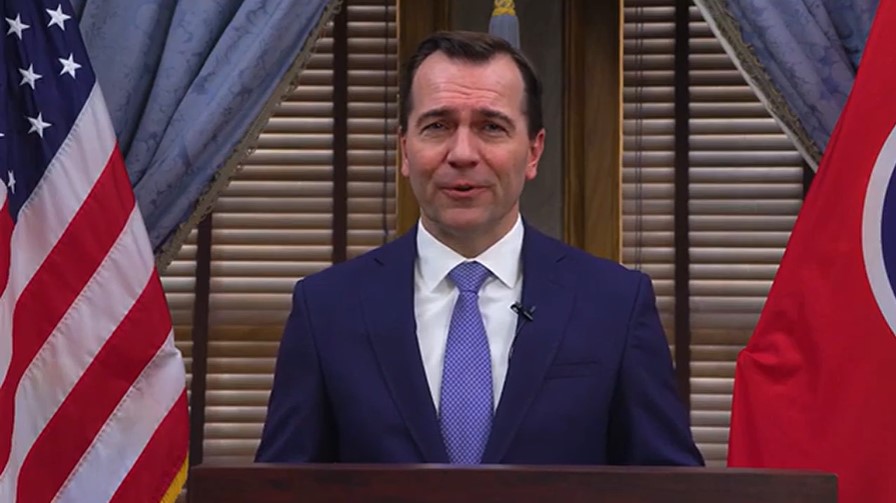
As Gov. Bill Lee prepared to deliver his State of the State address, State House Democratic Caucus Chair John Ray Clemmons (D-Nashville) offered a starkly different perspective on the condition of Tennessee. In a public address, Clemmons, who serves as the chairman of the House Democratic Caucus, criticized the Republican-led state government, arguing that while Tennessee’s leadership claims economic prosperity, many working families are struggling.
Clemmons, a Wilson County native, emphasized that despite the governor’s expected claims of progress, the reality for many Tennesseans is far different. He highlighted issues such as rising costs for healthcare, housing, and groceries, along with underfunded public schools, deteriorating infrastructure, and hospital closures in rural communities.
“After 14 years of total Republican control of our state government, Tennessee families are less safe and less secure,” Clemmons stated. “Tennesseans are working harder than ever but still struggling to make ends meet.”
Clemmons accused Republican lawmakers of prioritizing tax breaks and financial handouts for the wealthy while neglecting crucial infrastructure investments. He pointed to a $78 billion backlog in road, bridge, and water system projects, arguing that state leadership has mismanaged funds, leaving local governments to bear the financial burden. He also criticized recent tax policies, arguing that while the governor claims to have cut taxes, working families are paying over $1 billion more in fees since he took office.
“Our state budget has doubled in the past 14 years, and yet they claim we can’t afford to invest in our roads and schools,” Clemmons said. “Instead, they hand out billions to corporations while our public services crumble.”
Laying out an alternative vision, Clemmons called for policies aimed at supporting working families. Among his key proposals were eliminating Tennessee’s grocery tax, increasing funding for public schools, raising the minimum wage, expanding access to affordable healthcare, and modernizing the state’s transportation infrastructure, including a push to bring back passenger rail service.
“Tennessee remains one of the few states that still taxes groceries, something Democrats have fought to repeal for years,” he said. “We need to get back to basics and rebuild Tennessee’s middle class.”
Clemmons also took aim at recent Republican-backed education policies, including a school voucher program that he claims diverts funding from public schools to private institutions that primarily serve wealthier families.
Beyond critiquing Republican leadership, Clemmons urged Tennesseans to demand better governance. He warned against divisive political distractions such as book bans and attacks on educators and healthcare professionals, arguing that they do nothing to improve everyday life for working families.
“We can continue down this path of failed leadership and fiscal recklessness, or we can demand a government that works for all Tennesseans,” Clemmons said. “It’s time to focus on what truly matters: safe communities, strong schools, and an economy that works for everyone.”
As Tennessee moves into another legislative session, Clemmons’ remarks set the stage for continued debate over the state’s direction, with Democrats advocating for policies aimed at directly addressing the economic and social challenges facing middle-class families.