NASHVILLE — Tennessee voters will head to the polls Thursday, Aug. 6, for an election that will help shape the state’s political direction for years to come, with races for governor, U.S. Senate, Congress and the Tennessee General Assembly topping the ballot.
While presidential elections typically draw the most attention, political observers say the August primary and general election may have a more immediate impact on the daily lives of Tennesseans. The officials chosen this year will make decisions on education funding, healthcare, public safety, transportation, criminal justice, taxes, housing, economic development and other issues affecting communities across the state.
In Davidson County, voters may cast ballots in the State and Federal Primary Election, the State and County General Election, and, for residents living within city limits, the Oak Hill Municipal Election. Because legislative and congressional districts vary by address, the offices and candidates appearing on each voter’s ballot will differ.
The marquee contest on the Republican side is the race to succeed Gov. Bill Lee, who is term-limited after serving two four-year terms. The Republican gubernatorial primary features U.S. Sen. Marsha Blackburn, U.S. Rep. John Rose, and state Rep. Monty Fritts. The winner will enter the November general election as the favorite in a state that has consistently elected Republicans to statewide office for nearly two decades.
Democratic voters will choose from a field led by Jerri Green, a Memphis City Council member, and Carnita Atwater, a longtime Memphis community leader and former gubernatorial candidate. Also seeking the Democratic nomination are Tim Cyr, Adam “Ditch” Kurtz, and Kevin Lee McCants.
Another closely watched statewide contest is the race for the U.S. Senate. Republican incumbent Bill Hagerty is seeking another six-year term, while Democratic voters will decide among several candidates, including former U.S. Senate nominee Marquita Bradshaw, whose 2020 campaign made history as the first Black woman nominated by a major political party for the U.S. Senate in Tennessee. Bradshaw is joined in the Democratic primary by Maria Brewer, Civil Miller-Watkins, Diana Onyejiaka, and Kevin Lee McCants.
Beyond the statewide races, voters across Davidson County will also select nominees for the U.S. House of Representatives, the Tennessee Senate and Tennessee House of Representatives. Those legislative races will determine who helps write state laws governing education, healthcare, criminal justice, economic opportunity, infrastructure and the state budget during the next legislative session.
The election also includes county general election contests and judicial races that were advanced through the May primary. Residents of Oak Hill will additionally elect municipal officials.
Election officials are reminding voters that Tennessee operates under an open primary system. Unlike many states, voters are not required to register with a political party. Instead, they choose either the Republican or Democratic primary ballot when they vote. Once that choice is made, however, they may vote only in that party’s primary contests.
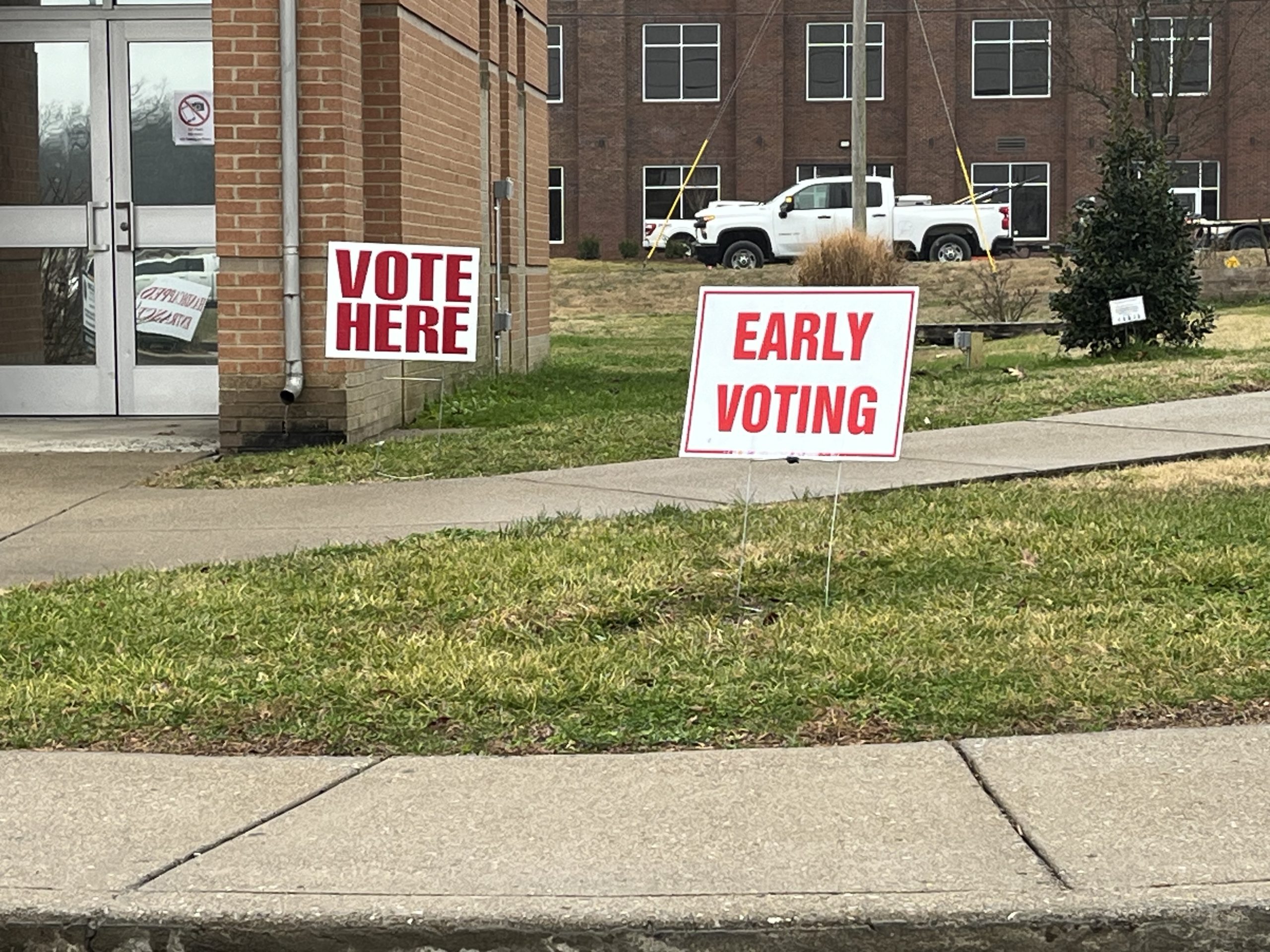
For those who prefer to avoid Election Day lines, all Davidson County early voting locations will be open from Friday, July 17, through Saturday, Aug. 1. Voting hours vary by day, with polls generally open from 8 a.m. to 5:30 p.m., extended until 7 p.m. on Tuesdays and Thursdays, and operating from 8 a.m. to 4:30 p.m. on Saturdays. Early voting is available at 15 locations across the county, including the new Davidson County Election Commission Office, Bellevue Library, Casa Azafrán Community Center, Hermitage Library, Southeast Library, Metro Office Building and other neighborhood sites.
Polls will be open from 7 a.m. until 7 p.m. on Election Day. Voters must present an acceptable government-issued photo identification, such as a Tennessee driver’s license, Tennessee photo ID, U.S. passport, military identification or another qualifying government-issued photo ID. Election officials also encourage voters to verify their polling location before heading to the polls, as some precincts and district boundaries have changed because of redistricting.
Community leaders continue to encourage strong voter participation, noting that many of the decisions affecting neighborhoods are made not in Washington but in Nashville and local government. Funding for public schools, healthcare, affordable housing, transportation improvements, economic development, criminal justice policy and community investment are all influenced by the officials elected in state and local races.
“Most people scroll past everything below the top of the ticket,” said State Senator Charlane Oliver. “But the down-ballot races are often the ones that shape your life the most directly — the state legislature is where child care rules, school funding, healthcare access, and housing policy actually get written and voted on, bill by bill, the same way the Child Care Red Tape Reduction Act became law this month.”