Lawsuits challenge Tennessee congressional map—critics call redistricting an attack on Black voting power

Civil rights groups and Democratic leaders have filed federal lawsuits challenging Tennessee’s newly approved congressional map, arguing the Republican‑backed redistricting dismantles Memphis’ only majority‑Black district, dilutes Black voting power statewide, and represents a racially discriminatory “Jim Crow”‑style gerrymander that could become a national test case for future voting rights battles.

Screenshot of Tenn. State Rep. Justin Jones burning a Confederate flag to protest Tennessee Republicans approving a new Congressional map.

Civil rights groups, Democratic leaders and voting rights advocates are mounting legal challenges against Tennessee’s newly approved congressional map, arguing the Republican-led redistricting effort unlawfully weakens Black political representation in Memphis and threatens voting rights across the state.

The lawsuits, filed in federal court by the Tennessee Democratic Party, the NAACP Tennessee State Conference and other plaintiffs, seek to block implementation of the new congressional districts approved during a special legislative session called by Gov. Bill Lee.

Critics say the map dismantles Tennessee’s only majority-Black congressional district by splitting Memphis’ heavily Black population among multiple Republican-leaning districts.

“This is not only racist, it’s reckless,” Tennessee Democratic Party Chair Rachel Campbell said in a statement. “Changing the rules midstream will create chaos for voters and throw communities into upheaval.”

The redistricting fight has quickly become one of the most heated political battles in Tennessee in years, sparking protests inside the State Capitol, accusations of racial gerrymandering and warnings from civil rights leaders that Tennessee could become a national test case for future voting rights disputes.

Republican lawmakers openly acknowledged that the map was designed to strengthen GOP political power ahead of the 2026 midterm elections.

“The goal of this legislation is to support the National Republican Party’s ability to defend the Republican majority in Congress,” state Sen. John Stevens said during debate on the legislation.

Democrats and civil rights advocates argue the plan intentionally fractures Black voting strength in Memphis, where approximately 64% of the population is Black.

“What is being proposed right here is not just a redrawing of districts, it’s the breaking apart of a people,” said state Sen. Raumesh Akbari of Memphis during debate on the measure. “It’s a fracturing of history. It’s the dilution of a voice that generations of people bled for, marched for, and died to build.”

The controversy intensified after lawmakers approved the map during a rapid three-day special session that followed a recent U.S. Supreme Court ruling in Louisiana v. Callais, a decision critics say weakened protections under the Voting Rights Act.

The Legislature approved the new districts May 7, and Gov. Lee signed the measure into law the same day.

The plan also drew criticism because it was advanced mid-decade rather than following the traditional census-based redistricting process. Lawmakers additionally approved changes affecting voter notification requirements and election timelines.

The NAACP said the new map represents a direct assault on Black political representation in Tennessee.

“A democracy without Black representation is not a democracy,” said Kristen Clarke, the NAACP’s general counsel. “We’re outraged that the state, rather than seeking a more just and fair system, is seeking to roll Tennessee back to a time when many of us didn’t have equal rights.”

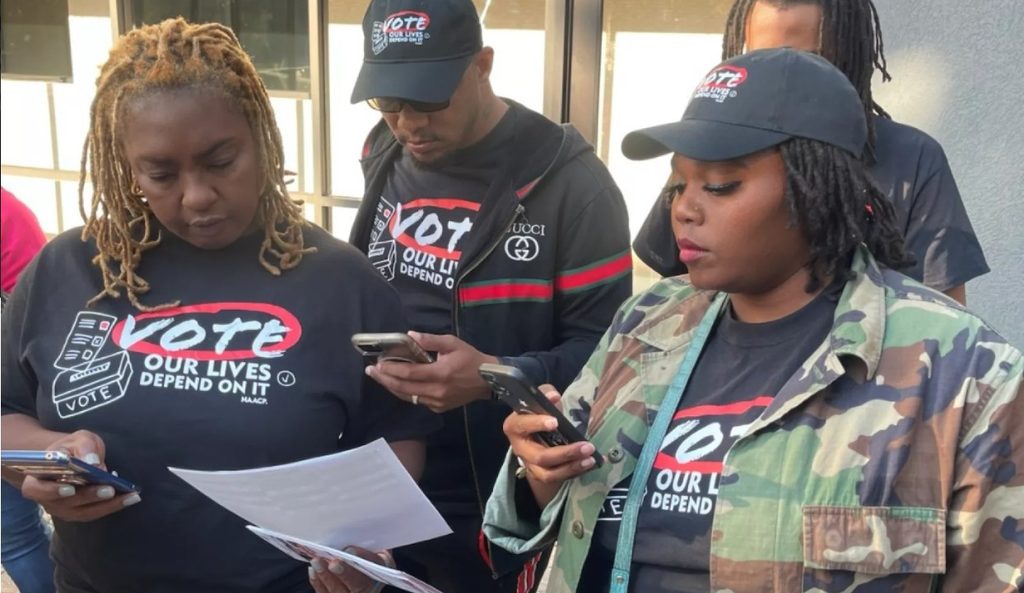
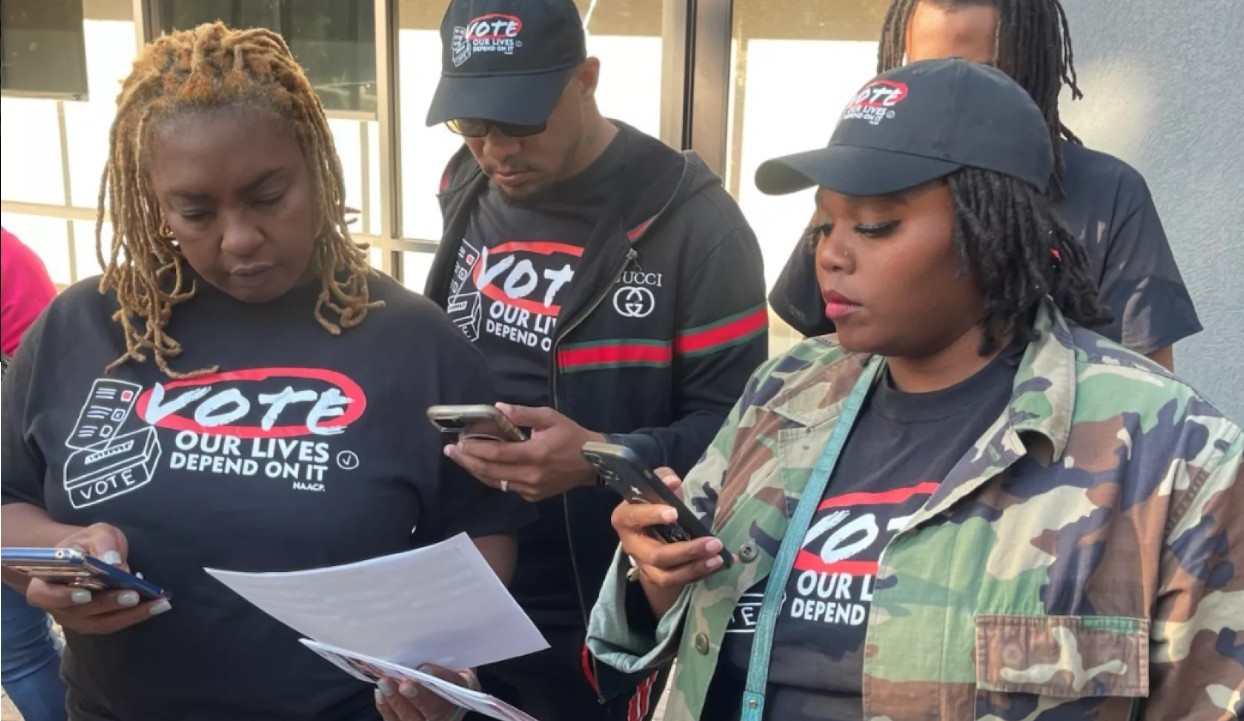
The Tennessee State Conference of the NAACP also organized voting rights events and rallies in Memphis and Nashville as opposition to the map intensified.

“There is a long history and contemporary pattern of unfair redistricting practices in rural West Tennessee that have harmed Black political representation,” said Gloria Sweet-Love. “We will stand up to make sure that Black voters retain their voting power.”

Inside the Capitol, protests erupted during final debate and voting on the measure. Democratic lawmakers staged demonstrations on the House and Senate floors while activists in the galleries shouted chants, held signs condemning ‘Jim Crow’ maps and interrupted proceedings.

State Rep. Justin Jones later burned a Confederate flag image inside the Capitol rotunda following the vote, calling the redistricting effort an act of racial discrimination.

Meanwhile, state Rep. Bob Freeman criticized the map as an abuse of political power that would cost taxpayers millions while weakening minority representation.

House Democratic Caucus Chair John Ray Clemmons warned that Tennessee’s actions could become a model for similar redistricting efforts nationwide.

“This was never about fairness or the people of Tennessee,” Clemmons said. “It was about race.”

Legal challenges seeking to block the map are expected to continue as opponents attempt to prevent the districts from taking effect before the 2026 congressional elections.

Leave a Reply

Parkinson calls for Memphis ‘secession’ debate

Tennessee Rep. Antonio Parkinson is calling for a national conversation about Memphis’ political future—including the possibility of “secession” from Tennessee—after a Republican‑backed redistricting plan divides

Musicians Corner free concert series returns to Music City                

Musicians Corner, Nashville’s beloved free concert series, returns to Centennial Park for its 17th year with five weeks of multi‑genre live music starting May 15,

Death row exonerees, innocence advocates urge Gov. Lee to halt Tony Carruthers execution

Death row exonerees and innocence advocates are urging Tennessee Gov. Bill Lee to halt the scheduled execution of Tony Carruthers while courts consider new requests

Automatic draft registration raises questions among young Americans

As the federal government moves to automatically register men ages 18 to 25 for the Selective Service using existing databases, young Americans are raising questions