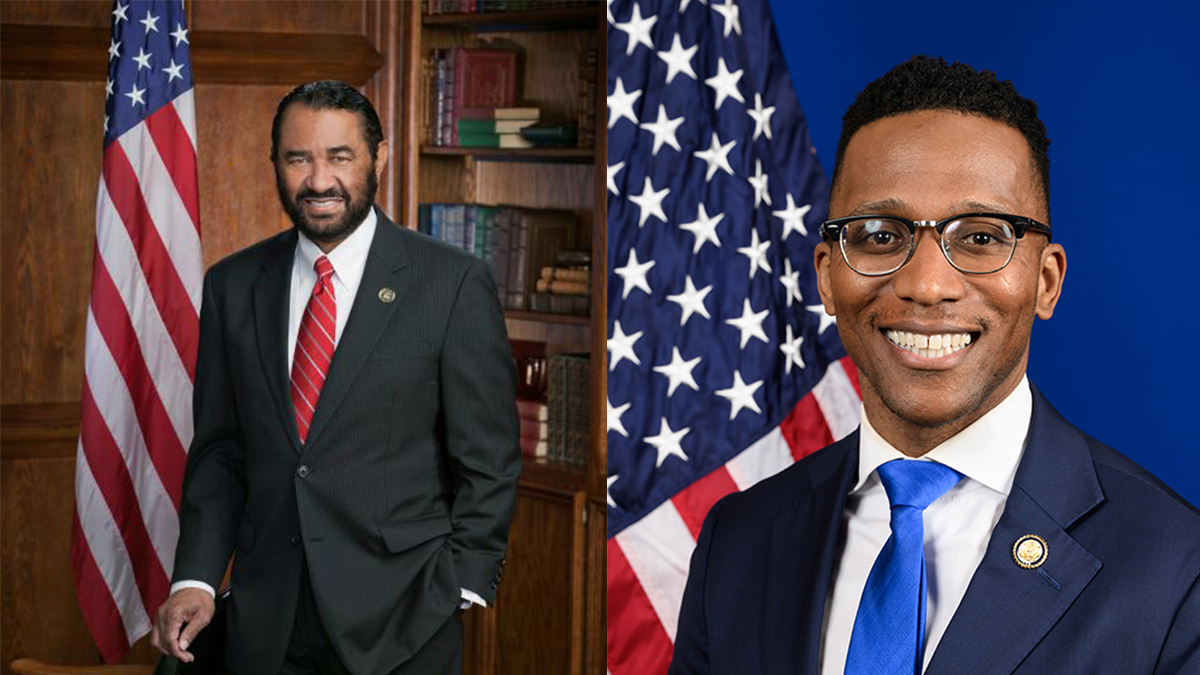
A closely watched Democratic primary runoff in Texas has ended with a changing of the guard in Congress, but supporters of longtime U.S. Rep. Al Green argue the outcome was shaped as much by redistricting as by voters.
On May 26, Rep. Christian Menefee defeated Green in the Democratic runoff for Texas’ newly configured 18th Congressional District, ending Green’s two-decade tenure in Congress. However, political observers note that the race took place only after Republican lawmakers redrew congressional boundaries, forcing two Black Democratic incumbents into the same district.

Green, who first won election to Congress in 2004 and represented Texas’ 9th Congressional District since 2005, saw much of his longtime political base removed during a mid-decade redistricting effort approved by the Republican-controlled Texas Legislature. The new map shifted the district’s boundaries and placed many of Green’s traditional supporters into the newly configured 18th District, where Menefee was already serving after winning a special election earlier this year.
The result forced Green to choose between retirement and a difficult primary challenge against another Democrat.
Critics of the redistricting effort argue the new boundaries weakened decades of political organizing in minority communities by forcing established Black leaders to compete against one another rather than allowing voters to choose between candidates from separate districts. Supporters of the changes maintain the new maps comply with state law and population shifts.
Green leaves office with a lengthy record of public service. Before his election to Congress, he served for 26 years as a Harris County Justice of the Peace and led the Houston branch of the NAACP, where he helped expand membership and community engagement. In Congress, he became a leading voice on fair housing, lending practices and economic equity as a member of the House Financial Services Committee.
Green also advocated for strengthening the Community Reinvestment Act, supported affordable housing initiatives and worked to secure federal resources for underserved communities in the Houston area. Following Hurricane Harvey and other major flooding events, he pushed for disaster relief funding in neighborhoods that residents said had historically been overlooked. He also helped direct support to community health centers serving uninsured and underinsured residents.
“That is unacceptable,” Green said at the time. “It’s racist. And we have to confront racism, even when it emanates from the highest office in the land.”
Nationally, Green gained attention as the first member of Congress to introduce articles of impeachment against President Donald Trump. Throughout his congressional career, he remained active on civil rights issues, voting rights protections and efforts to address police misconduct and hate crimes.
At 78, Green’s defeat has prompted some observers to frame the race as a generational transition, with the 38-year-old Menefee representing a younger generation of leadership. Others contend the election was less about age and more about the impact of redistricting on minority political representation.
While Green’s congressional career may be ending, supporters say his legacy will continue through the policies, relationships and advocacy efforts he developed over more than 20 years in public office. Menefee now inherits a district shaped by that history as he prepares to represent the newly drawn 18th Congressional District.