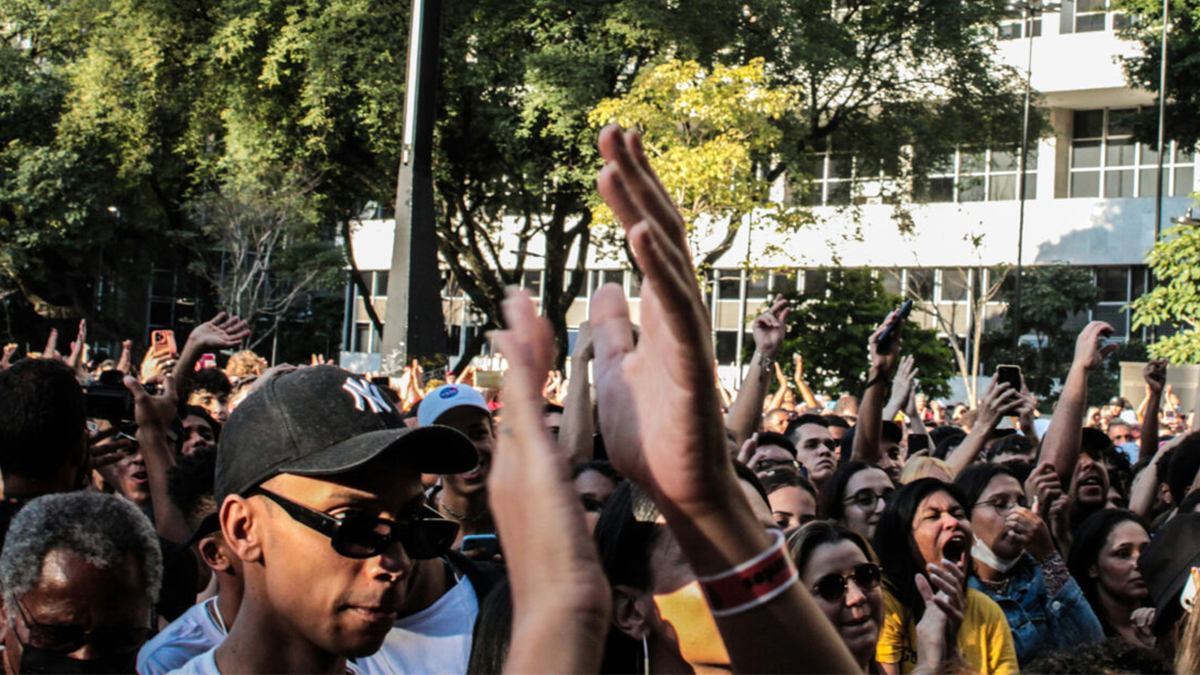
Black voters across the South entered the November 3 midterm elections facing renewed concerns over voting rights, political representation and economic inequality, joining Latino, Asian American, Native American and other minority communities in a broader push for civic participation.
The election unfolded amid heightened political tensions, immigration enforcement concerns and debates over federal policies affecting communities of color. For many voters, the stakes extended beyond individual candidates to questions about civil rights, economic security and the future of political representation.
During an American Community Media briefing held ahead of the election, journalists representing Black, Latino, Asian American, Arab American and Native American communities discussed the issues motivating voters and the obstacles threatening participation.
Much of the discussion centered on Black political mobilization in the South, where longstanding struggles over voting access, redistricting and representation remain central to electoral politics.
Dr. Edelia J. Carthan, a contributing writer for The Mississippi Link and CEO of Carthan Enterprises, LLC, described growing frustration among Black residents over efforts to dismantle diversity, equity and inclusion initiatives and changes to voting districts.
Mississippi, which has the nation’s highest percentage of Black residents, has not elected a Black candidate to statewide office since Reconstruction. Although two Black men represented Mississippi in the U.S. Senate during the Reconstruction era, the state has not elected another Black U.S. senator since that period.

Carthan traced the state’s history of political exclusion to the Mississippi Plan of 1875 and the 1890 state Constitution, which helped disenfranchise Black voters through intimidation, discriminatory voting requirements and violence.
“Intimidation surrounding civic participation is still a problem here in Mississippi,” Carthan said.
Economic challenges have added to those concerns. Carthan pointed to Mississippi’s refusal to expand Medicaid, which has left many low-income residents without access to affordable health coverage. Food deserts, rising grocery prices and persistent poverty have further intensified economic pressures.
The concerns expressed by Black voters were echoed by representatives of other minority communities across the country.
Nestor Fantini, co-editor of <HispanicLA.com>, said economic survival had become a major motivating factor among Latino voters in California. Rising housing costs, utility bills, insurance premiums and grocery prices have placed increasing pressure on working families.
Immigration enforcement also emerged as a significant concern. A September survey by the Latino Community Foundation found that more than 65% of California Latino voters worried about immigration enforcement officers appearing at polling locations.
In New York, Rong Xiaoqing, a reporter for the Chinese-language Sing Tao Daily, described strong early voting participation and growing concern about immigration policies.
“Like many people, they realized that these were very consequential elections,” Xiaoqing said.
She noted that fears surrounding deportations have affected businesses in Chinese American neighborhoods, including Flushing and Sunset Park, where some restaurants and transportation services have experienced declining customer traffic.
Mandana Kumar, publisher of India Currents in San Jose, described increasing hostility toward Indian Americans in Silicon Valley, while Osama Siblani, publisher of The Arab American News, expressed similar concerns about discrimination directed toward Arab and Muslim Americans.
Native American communities also faced concerns over federal policy. Lori Ann Edmo, editor of Idaho’s Sho-Ban News, highlighted worries about proposed reductions in tribal program funding and changes to federal racial and ethnic data collection that could affect tribal representation and resources.
Despite the challenges, participants emphasized that political engagement extends beyond casting a ballot.
“We all know that fear can silence people,” Kumar said.
She noted that many residents who are not eligible to vote still contribute to civic life by following public policy, attending community meetings, sharing information and encouraging others to participate.
The November elections underscored the continuing importance of minority political engagement, particularly in Southern states where Black voters have historically played a critical role in struggles for civil rights and equal representation.
For communities confronting economic hardship, discrimination and uncertainty over federal policies, the election represented more than a contest between political parties. It offered another opportunity to demand accountability and influence decisions affecting their families and communities.
As newly elected officials prepare to take office, advocates say the challenge will be turning political participation into meaningful changes in voting protections, economic opportunity, healthcare access and civil rights.