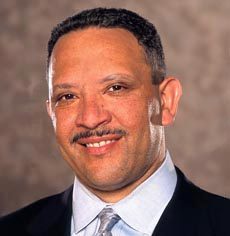
by Marc H. Morial
(TriceEdneyWire.com) — “We are not aware of any other case in which a state legislature, faced with a federal court order declaring that its electoral plan unlawfully dilutes minority votes and requiring a plan that provides an additional opportunity district, responded with a plan that the state concedes does not provide that district” – U.S. District Court, Northern District of Alabama, Southern Division.
After giving Alabama legislators nearly two years to comply with its order and fix the state’s illegal, racially gerrymandered Congressional map, a federal court has selected a non-discriminatory map for them. Despite rebuke after rebuke Alabama Attorney General Steve Marshall has vowed to keep fighting to restore the racist map. But for the 2024 election, at least, Black voters in Alabama voters will have the opportunity to elect a candidate of their choice in two of the state’s seven districts.
This is thanks to the unflagging efforts of plaintiffs Evan Milligan, Khadidah Stone, Letetia Jackson, Shalela Dowdy, Greater Birmingham Ministries, and the Alabama State Conference of the NAACP and the attorneys representing them: Legal Defense Fund, American Civil Liberties Union, ACLU of Alabama, Hogan Lovells LLP, and Wiggins, Childs, Pantazis, Fisher and Goldfarb. They are to be commended, and the National Urban League will continue to stand with them should A.C. Marshall follow through on his threat.
The U.S. Supreme Court surprised most legal observers in June when it struck down Alabama’s map after allowing the state to use it for last year’s Congressional elections. Despite being ordered to create a map with “two districts in which Black voters either comprise a voting-age majority or something quite close to it,” Alabama legislators in July passed a new map that maintained a single majority-Black district.
In response, the District Court judges wrote: “We are deeply troubled that the state enacted a map that the state readily admits does not provide the remedy we said federal law requires.” The Court ordered a special master to draft new maps, and after the Supreme Court rejected Alabama’s emergency appeal last month, the District Court selected a new map last week.
Throughout Alabama’s nearly two-year crusade to adopt a map that blatantly violates Section 2 of the Voting Rights Act, the state has insisted that the gerrymandered map could not be in violation because none of the two million its expert witness randomly generated using a ‘race-neutral’ algorithm contained more than one majority-minority district.
As the Supreme Court noted in its June decision, one problem with Alabama’s argument is that the expert witness used outdated census data (from 2010 instead of 2020) and ignored certain traditional districting criteria, such as keeping together communities of interest, political subdivisions, or municipalities.
The expert herself testified that when using the correct census data, the “randomized algorithms” she employed “found plans with two majority Black districts in literally thousands of different ways.”
The other problem is that the number of possible districting maps in Alabama that can be randomly generated is at least in the “trillion trillions.”
“Two million maps, in other words, is not many maps at all,” Chief Justice John Roberts wrote. “And Alabama’s insistent reliance on that number, however powerful it may sound in the abstract, is thus close to irrelevant in practice. What would the next million maps show? The next billion? The first trillion of the trillion trillions? Answerless questions all.”
It’s appalling that Alabama had any expectation that such a bad-faith argument would succeed before the highest court in the nation, and a victory for both democracy and logic that it did not.