As the Black Press approaches its 200th anniversary, its role as a voice for African American communities remains as vital today as it was nearly two centuries ago. Founded on March 16, 1827, with the launch of Freedom’s Journal, the Black Press was born out of necessity—a platform created to ensure that Black stories were told accurately and authentically.
Established by John Russworm and Rev. Samuel Cornish, the publication carried a clear and powerful mission from its first edition: “We wish to plead our own cause. Too long have others spoken for us.” That declaration still resonates in 2026, as Black-owned media outlets continue to navigate challenges while advocating for equity, justice, and representation.

Throughout its history, the Black Press has endured significant obstacles. Early publishers and journalists faced intimidation, violence, and destruction of property. One notable example came in 1892, when the offices of The Free Speech and Headlight, co-owned by activist Ida B. Wells, were burned to the ground. Despite such threats, publications persisted, determined to document the truth and uplift their communities.
In the decades that followed, scrutiny continued. During the 1940s, several Black newspapers were surveilled by FBI Director J. Edgar Hoover, who sought grounds to charge members of the Black Press with sedition. Yet even under pressure, these outlets remained steadfast, informing readers and helping mobilize movements for social change.
Today, nearly 199 years since its founding, the Black Press continues to serve as a critical institution. Journalists, editors, photographers, and publishers work daily to document history, highlight disparities, and provide a platform for stories often overlooked by mainstream media. While the format and technology have evolved, the mission remains unchanged.
Dr. Frances ‘Toni’ Draper, publisher/CEO of the AFRO, emphasized that many of the issues covered by the Black Press have persisted over time. She noted that while reporting methods have changed, systemic challenges such as racism, health disparities, and educational inequities remain central concerns.
“The issues of today really have not changed,” Draper said, pointing to ongoing inequities affecting Black communities. Economic disparities and access to resources continue to shape coverage priorities, reinforcing the need for dedicated Black-owned media outlets.
Draper also stressed the importance of perspective. Mainstream outlets, she explained, are not always positioned to fully capture the nuances of Black experiences. This gap underscores the continued relevance of the Black Press in delivering news that reflects the interests and realities of its audience.
Washington Informer Publisher Denise Rolark Barnes echoed that sentiment, highlighting the responsibility of today’s media professionals to carry forward a legacy built on resilience. She described the work of earlier generations as a roadmap, encouraging current journalists to remain committed to the mission while preparing the next generation to take the reins.
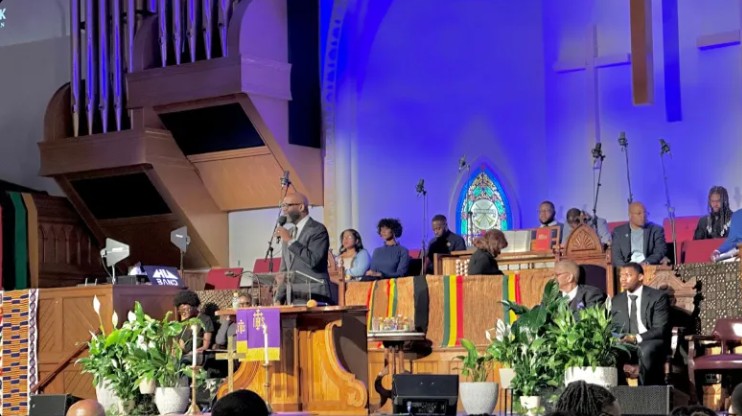
That theme of continuity and mentorship was central during this year’s Black Press Sunday, held March 15 at Metropolitan AME Church in Washington, D.C. The event, part of Black Press Week, celebrated the longstanding connection between the Black Church and Black media—two institutions historically aligned in informing and empowering communities.
Rev. William H. Lamar IV, pastor of Metropolitan AME Church, described the relationship as “symbiotic,” noting that the Black Press has documented both the triumphs and challenges of the Black Church and broader community. He emphasized the importance of truth-telling and accountability, values that have defined the press for generations.
The service also focused on preparing future leaders. Drawing from the biblical story of Elijah and Elisha, Lamar encouraged seasoned professionals to invest in training and mentorship, ensuring the continued strength of Black media institutions.
Philip Lewis, president of the Washington Association of Black Journalists, said he found encouragement in the message, noting the importance of supporting young journalists as they enter the field. He emphasized that the Black Press remains essential, particularly in times of division, as a space for community-focused storytelling.
As the milestone anniversary approaches, reflections on the past are paired with a forward-looking perspective. Draper suggested that the founders of the Black Press would be proud of its longevity and impact, especially given the limited resources available in its early years.
Their message, she said, would likely be simple: use what you have, tell meaningful stories, and continue to uplift and inform the community.