

Even the most cynical observers knew this day would come.
Since Donald Trump returned to the White House in January, the dog whistle has become a bullhorn. The whitewashing of American history is no longer implied—it’s spelled out in ink, signed into law, and backed by a government that is now openly in the grip of White supremacist power. In his latest executive order, President Trump has targeted the Smithsonian Institution and the National Museum of African American History and Culture, calling for the erasure of what he deems “divisive race-centered ideology.” He has directed Vice President J.D. Vance to eliminate these so-called “divisive” elements from the Smithsonian’s 21 museums, educational and research centers, and even the National Zoo. The executive order is chillingly titled ‘Restoring Truth and Sanity to American History.’ It declares that the Smithsonian, once a symbol of ‘American excellence,’ has become tainted by narratives that portray “American and Western values as inherently harmful and oppressive.”
“Museums in our nation’s capital should be places where individuals go to learn, not to be subjected to ideological indoctrination or divisive narratives that distort our shared history,” the order states. The directive goes further, instructing Vance, along with Vince Haley, assistant to the president for Domestic Policy, and Lindsey Halligan, special assistant to the president, to work with Congress to block all federal appropriations for Smithsonian exhibitions or programs that “degrade shared American values, divide Americans based on race, or promote programs or ideologies inconsistent with federal law and policy.” The order also aims at the American Women’s History Museum, demanding that no future appropriations “recognize men as women in any respect,” and calls for new citizen members to be appointed to the Smithsonian Board of Regents—individuals committed to enforcing the president’s vision. This is not an isolated move. Since returning to office, Trump has issued a barrage of executive orders aimed at dismantling every vestige of diversity, equity, and inclusion across the federal government. He terminated all DEI programs, calling them “illegal and immoral discrimination.” The National Endowment for the Arts Challenge America initiative (long dedicated to uplifting historically underserved communities) has been gutted. The Pentagon’s website erased the stories of Navajo Code Talkers. A ‘Black Lives Matter’ mural in the heart of Washington, D.C., was demolished. Perhaps most brazenly, the Department of Defense Education Activity banned Black History Month observances at military base schools and ordered the removal of any book or material that mentions slavery, the civil rights movement, or the treatment of Native Americans.
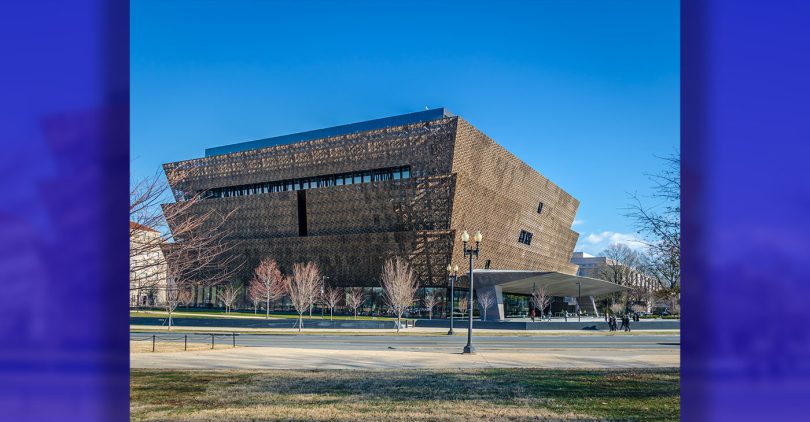
Now, the National Museum of African American History and Culture (which opened to national fanfare in 2016) is in the crosshairs. “In an almost surprising fashion, the Smithsonian has been outside of the bounds of political wrangling,” said Samuel Redman, a history professor and director of the public history program at the University of Massachusetts at Amherst. “It’s not as though there hasn’t been political influence—but just in terms of overall funding and support for the Smithsonian, it’s been remarkably consistent.” That consistency has now been shattered. Trump’s executive order doesn’t just attack the museum. It hints at restoring what many hoped America had buried: Confederate monuments, White supremacist names on federal buildings, and the reinstallation of statues that were taken down during the country’s reckoning after the murder of George Floyd.
What the president calls “shared American values” is beginning to resemble a national doctrine rooted in erasure and oppression. The Smithsonian Institution, the world’s largest museum, education, and research complex, was founded on increasing and diffusing knowledge. Established by Congress with funds left by James Smithson, a British scientist, the institution spans 21 museums and the National Zoo, with 11 of the museums located along the National Mall in Washington, D.C. Now, it faces its greatest threat yet—not from budget cuts or neglect, but from a government determined to rewrite history at the expense of truth. The stakes have never been clearer as the country watches these moves unfold. The battle over American history isn’t theoretical. It’s happening now, in plain sight, with executive orders, political enforcers, and the full weight of the federal government behind it. “This is about power,” said a Smithsonian staffer who asked not to be named out of fear of retribution. “They’re not hiding it anymore.”