




Metro Social Services (MSS) has released its 2024 Community Needs Evaluation, painting a sobering picture of Nashville’s deepening economic inequality and the cascading impact of low wages on the city’s residents. The report, unveiled May 14, focuses on what it calls “the high cost of low wages,” and outlines how large portions of the local workforce are trapped in jobs that don’t pay enough to meet basic living expenses.
According to MSS, about 200,000 workers in Davidson County earn below the city’s estimated living wage of $52,858 for a single adult—more than triple the federal poverty guideline of $15,650. Using data from the MIT Living Wage Calculator, the report stresses that the federal measure is outdated and fails to reflect Nashville’s high cost of living.
Among the most revealing findings: 20 of the 25 most common occupations in Nashville (including food service, retail, health services, and transportation) pay a median wage below the living wage. This means that 326,000 workers in these roles are considered underpaid. The largest group, nearly 38,000 freight and stock laborers, earn a median of just $39,350 per year.
The consequences of this economic shortfall extend well beyond take-home pay. The report links low wages to poorer health outcomes, higher rates of food insecurity, and reduced educational attainment. Nearly one in five children in Nashville doesn’t have enough to eat, and 16.2% of workers earning between $25,000 and $50,000 lack health insurance. Children in low-income households are more likely to experience poor health, drop out of high school, and later face reduced college enrollment and increased contact with the criminal justice system.
“These challenges are not abstract statistics,” said MSS Executive Director Renée Pratt. “They’re real struggles impacting families, seniors, and even middle- and upper-middle-class residents who are now increasingly turning to us for help.”
Indeed, Pratt noted a shift in MSS’s client base, pointing to an evolving crisis that now affects broader segments of the population. “Thankfully, our department closely monitors these trends and develops trauma-informed, data-driven solutions to support Nashville residents,” she said.
The report also highlights what it describes as a “trickle-down economy,” where high-paying corporate jobs bring rising housing costs and service-sector job growth, but few benefits for workers in those sectors. As those wage earners climb slightly above poverty thresholds, many lose access to critical public assistance programs in what’s known as the ‘benefits cliff.’
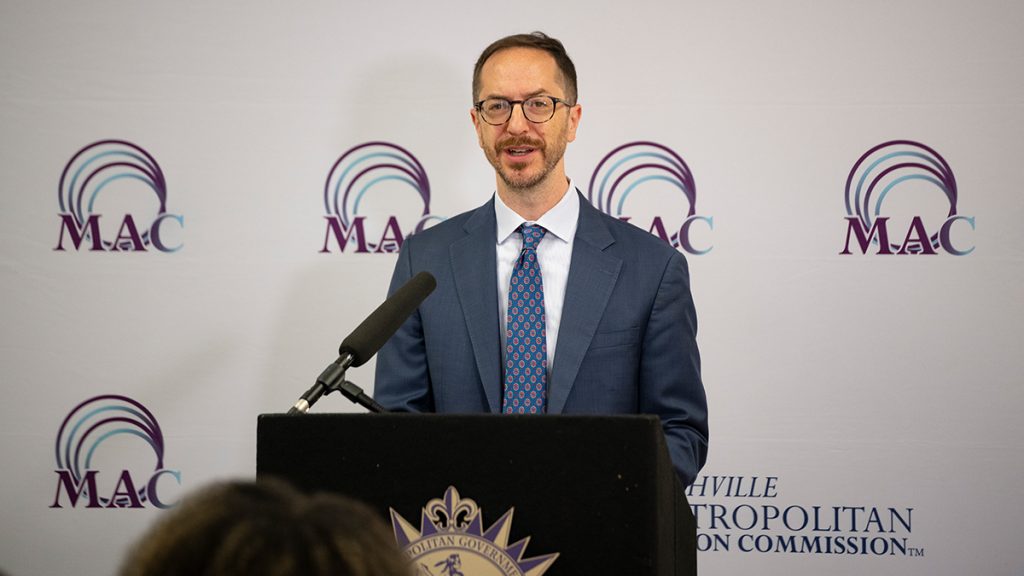
Mayor Freddie O’Connell acknowledged the systemic challenges during the report’s release. While he emphasized Metro’s limited ability to influence private-sector wages, he announced a minimum wage increase for Metro employees from $20 to $21.44 an hour in fiscal year 2026 and reiterated his administration’s focus on affordable housing through a new unified housing strategy.
“This report underscores that building a better Nashville requires a broad coalition,” O’Connell said. “We are committed to addressing these disparities and ensuring that economic opportunity reaches all corners of our community.”
MSS continues to offer a range of services, including food pop-ups, senior welfare calls, and workforce development programs, which aim to connect residents with job training and placement opportunities. More information is available on the Nashville Government website.











Stephen A. Smith calls NABJ award a ‘personal hit job’