

A new report released by the Foundation for Individual Rights and Expression (FIRE) finds that students and student groups across the country (including in Tennessee) are increasingly being investigated or disciplined for constitutionally protected speech. The report, titled Students Under Fire, documents 1,080 incidents between 2020 and 2024 in which students faced attempts to suppress their speech, with 63% resulting in some form of administrative punishment.
The research highlights growing concerns about free expression on college campuses, particularly around controversial issues such as race and the Israeli-Palestinian conflict. In Tennessee, campuses like Vanderbilt University and the University of Tennessee Knoxville were among those that saw protests and encampments related to these issues, particularly in 2024 during a wave of pro-Palestinian activism.
Nationwide, the report identifies 637 cases where students or student organizations were formally punished or investigated by university officials. The consequences ranged from suspensions and expulsions to loss of student group funding and housing. In one case, a student was suspended for distributing a mental health survey to classmates. In another, a student was removed from university housing and forced to sleep in his car.
The shift in enforcement has been notable. According to FIRE, while most censorship efforts on campuses used to be student-driven, college administrators have increasingly taken the lead. In 2020, just 27% of reported speech suppression incidents were initiated by administrators. By 2024, that figure had risen to 52%.
“Every instance of censorship threatens students’ ability to engage in a free exchange of ideas,” said Logan Dougherty, a senior researcher at FIRE. “Open minds and free debate, not self-censorship and punishment, must be the standard across our nation’s campuses.”
The report also notes that both liberal and conservative students have been subject to scrutiny, though the context varies. Students expressing views on racial justice, particularly in the aftermath of George Floyd’s murder in 2020, were more often challenged by those on the political left. More recently, students speaking out in support of Palestinians have faced criticism and disciplinary actions from the political right, especially following Hamas’s Oct. 7, 2023 attack on Israel and the subsequent military response.
FIRE’s chief research adviser, Sean Stevens, said that growing political polarization has contributed to the increase in speech-related disciplinary actions. “Almost everybody is facing these threats,” Stevens said. “There’s now a broader awareness that censorship can come from many directions, including from institutional leadership and government entities.”
Recent political rhetoric has also intensified the issue. Former President Donald Trump, for example, has supported visa revocations for international students involved in pro-Palestinian protests, referring to such activists as “pro-terrorist” and “antisemitic.”
Among the student groups most frequently targeted nationwide were Students for Justice in Palestine (75 cases), Turning Point U.S.A. (65 cases), and College Republicans (58 cases), underscoring the bipartisan nature of campus speech controversies.
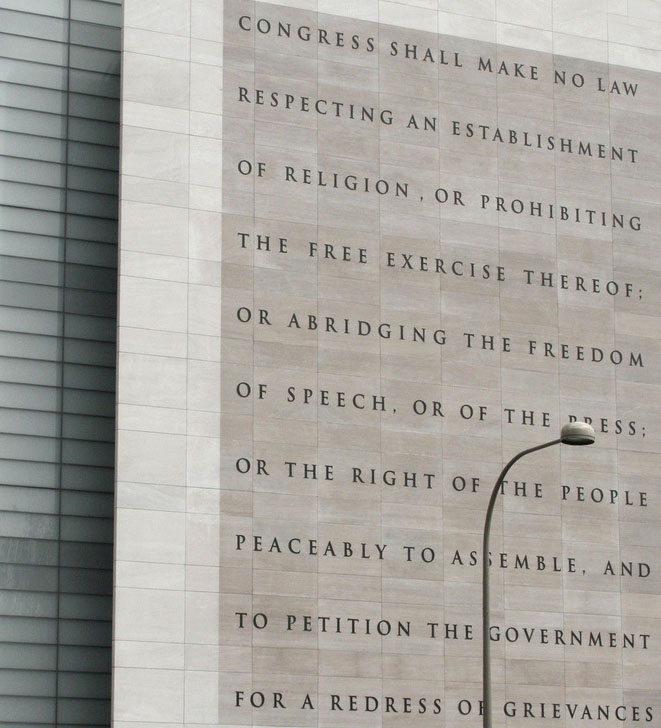
While the First Amendment protects students at public universities from being punished for protected speech, the report found that legal safeguards are not always upheld. Private institutions, though not bound by the First Amendment, often make their own institutional commitments to free speech, which FIRE argues should be honored.
FIRE, a nonpartisan nonprofit organization, provides legal assistance to students who believe their free speech rights have been violated. The group has also launched an interactive database to track incidents of campus speech suppression and make them publicly searchable.
As debates around race, gender, and international conflicts continue to unfold, FIRE warns that vigilance is necessary to ensure students’ rights to free expression are not diminished—regardless of political viewpoint.
For more information or to report a case, students can visit <www.thefire.org>.