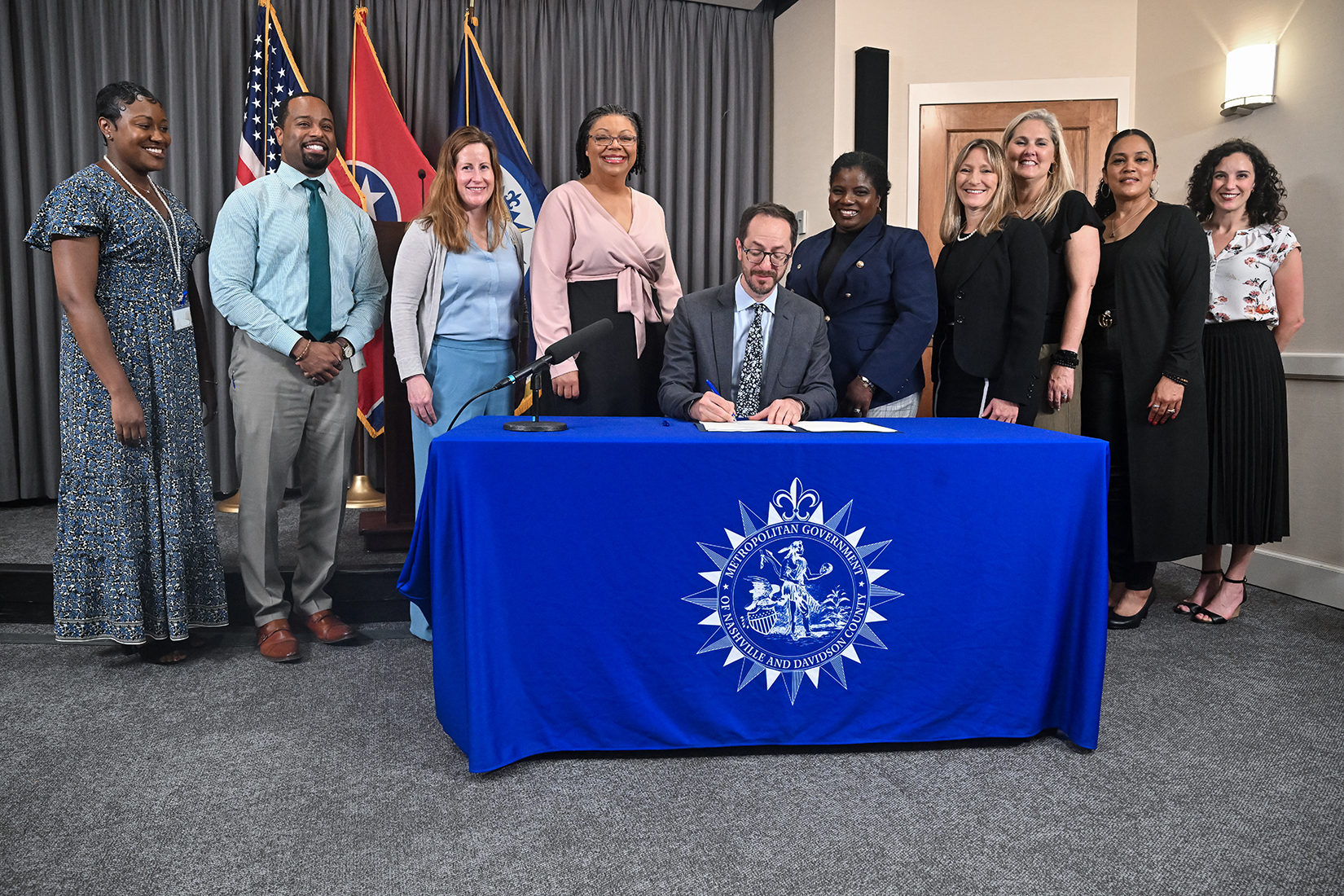
Mayor Freddie O’Connell signed Nashville’s Fiscal Year 2026 budget this week, joined by Metro Council Budget and Finance Committee Chair Delishia Porterfield and Vice Chair Kyonzté Toombs. The $3.8 billion operating budget reflects the mayor’s Community Improvement Program, focusing on quality schools, essential services, housing, and neighborhood safety.
“We’re moving forward with a balanced, common-sense budget that delivers on the quality schools, reliable services, and safety Nashvillians deserve,” O’Connell said. He also praised Metro Council for helping shape a fiscally responsible budget designed to stabilize city finances amid uncertain economic conditions.

The budget process began months ago with department-level assessments of staffing, revenue, and expenditures, followed by Metro Council hearings and public input before final approval. It includes a combined property tax rate of $2.814—the lowest since the Metro government was formed and among the lowest in major U.S. cities.
Vice Mayor Angie Henderson and Council Chair Porterfield commended the collaborative effort across departments, emphasizing the shared goal of addressing diverse community needs. “This budget laid the foundation for progress in areas like employee pay, education, and affordable housing,” said Porterfield.
Following a record-high graduation rate, the budget continues funding for several education initiatives that were at risk with the expiration of federal COVID-era funds. This includes $64.5 million for school mental health supports, summer tutoring, college and career readiness, safety ambassadors, and school nurses.
To maintain competitive teacher pay, the budget includes a three percent cost-of-living adjustment and fully funded step increases. It also funds 23 additional school resource officers and new school safety technology.
Youth programs also receive a boost, including mentorship through the Nashville After Zone Alliance and early literacy initiatives such as Begin Bright, which provides mini-libraries in daycare centers.
The budget emphasizes quality-of-life improvements, such as enhanced lighting and security in parks and expanded trash and recycling services through the new Waste Services Department. Other additions include night time code inspectors and expanded maternal and infant health services through Nashville Strong Babies.
Transit also receives dedicated funding for the first time through the voter-approved ‘Choose How You Move’ program.
Housing is a central focus, with $45 million allocated toward affordable housing and homelessness prevention. The investment aligns with the city’s new Unified Housing Strategy and spans efforts from rapid rehousing to anti-displacement programs, such as home repairs for older residents.
The city will expand the Payment In Lieu of Taxes (PILOT) program to encourage affordable housing development and will increase funding for the Barnes Housing Trust Fund. A new housing coordinator will help unify efforts across departments and agencies.
The budget includes expanded emergency and law enforcement resources, particularly in South Nashville. Funding will support the launch of a new fire truck company and operational costs tied to the Southeast Nashville police precinct opening later this year.
To improve emergency response, the budget expands the Fire Department’s REACH program, which pairs responders with mental health clinicians, and makes permanent MNPD’s D Unit, a flexible response team addressing high-need areas. It also supports MNPD’s transit security efforts through the ‘Choose How You Move’ initiative.
New crime prevention initiatives include establishing a Mayor’s Office of Violence Reduction, which will work alongside the Office of Youth Safety. The Office of Family Safety will gain six new staff to assist survivors of violence and abuse.
Metro’s financial position remains strong, bolstered by a $74.9 million budget sustainability reserve to buffer against unexpected costs or economic downturns. Director of Finance Jenneen Reed noted the budget is designed to withstand inflation, market volatility, and changes in federal funding.
The FY26 budget goes into effect July 1, and runs through June 30, 2026. The full budget is available at <Nashville.gov>.