A bipartisan group of lawmakers has introduced legislation aimed at providing significant federal funding to modernize and rebuild aging infrastructure at historically Black colleges and universities (HBCUs) across the nation.
U.S. Reps. Alma Adams, a Democrat from North Carolina, and French Hill, a Republican from Arkansas, recently introduced the Institutional Grants for New Infrastructure, Technology, and Education for Historically Black College and University Excellence Act, known as the IGNITE HBCU Excellence Act. Companion legislation was introduced in the Senate by Chris Coons and Tim Scott.
The legislation would authorize federal investment to help HBCUs address decades of deferred maintenance and modernize campus facilities, including academic buildings, research laboratories, student housing and technology infrastructure. Advocates of the bill say many HBCUs continue to face the effects of historic underinvestment despite their longstanding contributions to higher education and workforce development.
“For generations, HBCUs have educated students who went on to lead in every corner of our country, often while operating with far fewer resources than their peer institutions,” Adams, founder and co-chair of the Bipartisan HBCU Caucus, said in a statement. “The IGNITE HBCU Excellence Act is about making sure these institutions have the facilities and infrastructure needed to continue serving students and competing in today’s higher education landscape.”
Adams said the legislation would make long-term investments that strengthen campuses, support workforce development and expand opportunities for future generations.
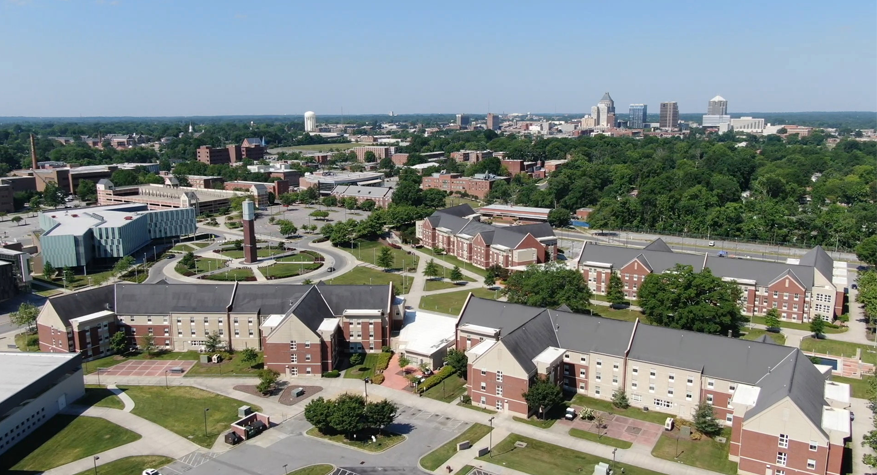
The measure could have a significant impact in North Carolina, which is home to 10 accredited four-year HBCUs—the most of any state. Adams’ district includes Johnson C. Smith University, and she is a graduate of North Carolina A&T State University, the nation’s largest HBCU with more than 15,000 students enrolled.
Supporters of the legislation say the need for investment extends well beyond North Carolina. South Carolina is home to seven four-year HBCUs and one private two-year institution, while Arkansas has four HBCUs serving students throughout the state.
“HBCUs have long been engines of opportunity, but for far too long, too many have been asked to do more with less,” Scott said. “The IGNITE for HBCU Excellence Act will help modernize campuses, expand research and workforce training opportunities, and ensure students are prepared to succeed in a 21st-century economy.”
Although HBCUs represent only about three percent of four-year colleges and universities in the United States, they produce 17% of bachelor’s degrees and 27% of science, technology, engineering and mathematics degrees earned by Black Americans. HBCUs also generate an estimated $16.5 billion in economic activity in their surrounding communities.
Hill said the legislation would help ensure that the quality of campus facilities matches the excellence of the students enrolled at HBCUs.
“I have seen firsthand the difference these institutions make for their students and communities,” Hill said. “The IGNITE HBCU Excellence Act is a meaningful step toward addressing long-standing infrastructure needs and ensuring these institutions have the resources they need to continue transforming lives.”
If approved, the legislation would represent one of the most significant federal efforts in recent years to address infrastructure challenges at HBCUs and support their continued growth and impact.