Every year, my office oversees the disbursement of more than $700 billion in public funds. That’s more than 66 million payments supporting everything from public schools and health care to roads and essential government services.
Let that number sink in. Seven hundred billion dollars.
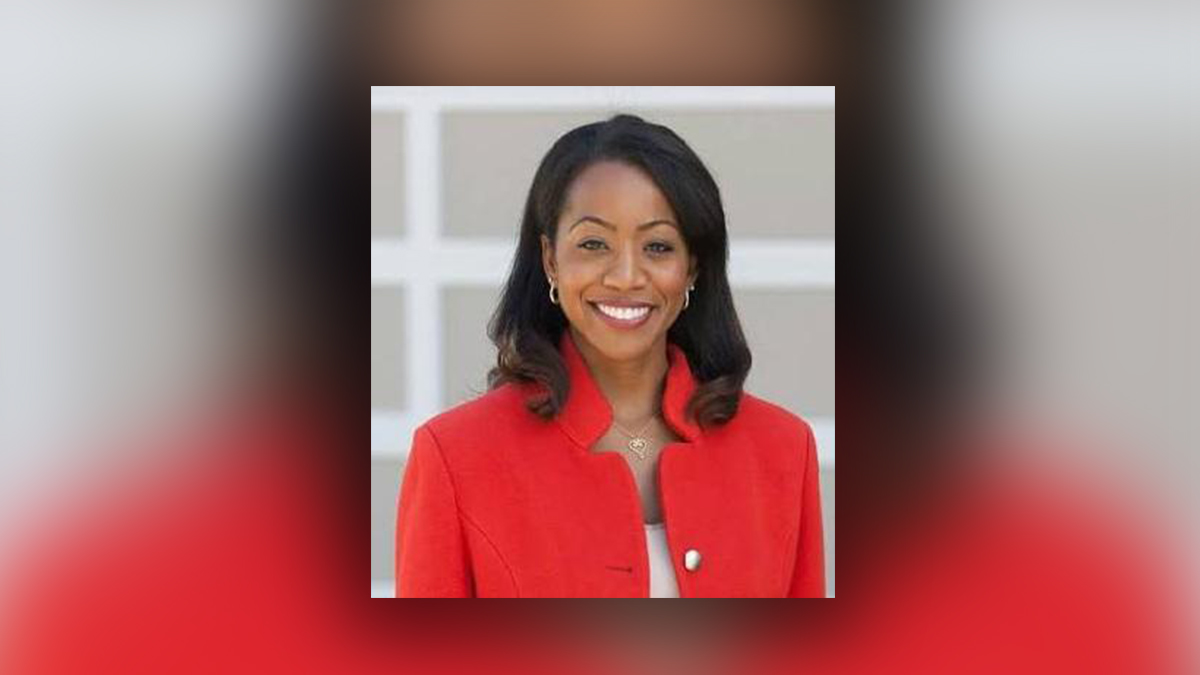
As California’s state controller (who is honored to have just been elected to a second term), I serve as the chief fiscal officer of the fourth-largest economy in the world. My responsibility is to safeguard public money, ensure payments are properly authorized and protect taxpayers from waste, fraud and mismanagement.
It’s an enormous responsibility. And as the first Black woman elected to this position, I understand that my presence represents something bigger than me.
But I didn’t grow up dreaming about financial reports. I dreamed about public service.
I was raised in San Francisco, the eldest of five daughters. My parents grew up there, too. My grandparents came from the South in the early 1920s seeking opportunities for the generations that would follow.

When I was in third grade, my class visited San Francisco City Hall. I remember walking into that magnificent building and realizing that important decisions were being made inside those walls. That day, then-Mayor Dianne Feinstein spoke about public service. She told us someone in our class might become mayor one day.
I took her seriously.
By high school, I was participating in the Mayor’s Youth Program, earning a paycheck as a city employee and learning how government worked. I wandered City Hall’s corridors, imagining my name on an office door. Sometimes I’d sit in the Board of Supervisors’ chamber and picture myself giving a speech.
I didn’t know how I’d get there. But I believed I belonged. My Christian faith taught me service. ROTC taught me discipline and teamwork. I still make my bed with military corners.
I also remember watching the Anita Hill hearings and seeing how a Black woman’s credibility could be attacked publicly. Experiences like that shaped my commitment to fairness and justice, and taught me that progress requires challenging the status quo.
My path eventually led to the San Francisco Board of Supervisors, where I served as president, and later the California State Board of Equalization. I worked on affordable housing, public health, economic opportunity and removing barriers to employment and housing for people with criminal records.
I learned that government could change lives. But almost every conversation about opportunity eventually came back to money. We talk a great deal about civil rights, and rightly so. But what about financial justice?
What does fairness mean to a family that can’t afford a home? To a student attending an under funded school? To someone rebuilding a life after incarceration but unable to find employment?
Money determines access to opportunity. It can open doors or reinforce barriers that have existed for generations. That realization drew me to the controller’s office. I saw another way to advance fairness and justice: by following the money.
Today, my office administers approximately $31.5 billion in annual payroll for public employees and manages California’s Unclaimed Property Program, which holds roughly $15.5 billion in forgotten assets and returns approximately $1.5 million daily to people who successfully claim their money.
We review transactions, conduct audits and produce financial reports that help Californians understand how their government manages public resources. We establish reporting standards for local governments throughout the state.
I also serve on boards and commissions whose decisions affect public pensions, affordable housing, land management and major investments. These responsibilities may sound removed from everyday life, but they shape the economic future of millions.
The stakes are high. Over the past decade, the controller’s office has identified $9.4 billion in fraud, waste, abuse and fiscal mismanagement. Every dollar lost is a dollar that cannot serve the public.
When I took office, California was years behind in producing its annual comprehensive financial reports. We made catching up a priority, delivering four reports in two years. We’ve also worked to modernize financial systems, strengthen oversight and improve the accuracy and reliability of state payroll.
This work isn’t glamorous. But good government depends on getting it right.
I often think about the neighborhoods I represented in San Francisco. When you’re responsible for hundreds of billions of dollars, it’s easy to lose sight of the people behind the numbers. I don’t have that luxury.
Behind every budget line is someone depending on government to do its job. A teacher waiting for a paycheck. A senior relying on public services. A family hoping for affordable housing. A community expecting its tax dollars to be spent responsibly. That makes this work personal.
Being a Black woman in leadership has taught me about expectations and perseverance. When I was elected controller in 2022, I focused on winning and doing the job. The historical significance didn’t fully register until I took the oath.
I was entering a role no Black woman had held before in California—or the nation.
There’s pride in that distinction, but also responsibility. People are watching. Your words carry weight, and your decisions may be scrutinized differently. You learn not to let others’ expectations define your capabilities.
I’ve never believed leadership was supposed to be comfortable. A mentor once taught me to listen to the people I serve and respond with urgency. Accountability isn’t simply identifying problems. It’s taking responsibility for fixing them.
I think about the trailblazers I read about in Jet and Ebony, including Douglas Wilder and Carol Moseley Braun, who helped me imagine possibilities beyond what I’d seen. And I think about my daughter, growing up in a world where a Black woman overseeing hundreds of billions of dollars can be part of her understanding of leadership.
When young people ask for advice, I tell them to understand their why. Titles and recognition are fleeting. Purpose sustains you when the road becomes difficult. Mine has always been fairness, justice and service.
I sometimes think about that third grader walking through City Hall, imagining herself among the decision-makers. She couldn’t have imagined my responsibility today. But she understood something that has guided me ever since: Leadership is about service.
Being the first Black woman in this role is part of my story. What matters most is the work I do, the trust I earn and the doors that remain open for those who follow.
I intend to make every dollar, and every opportunity, count.
(Malia M. Cohen is California’s state controller and the first Black woman to serve in the position. She previously served as president of the San Francisco Board of Supervisors and chair of the California State Board of Equalization.)