




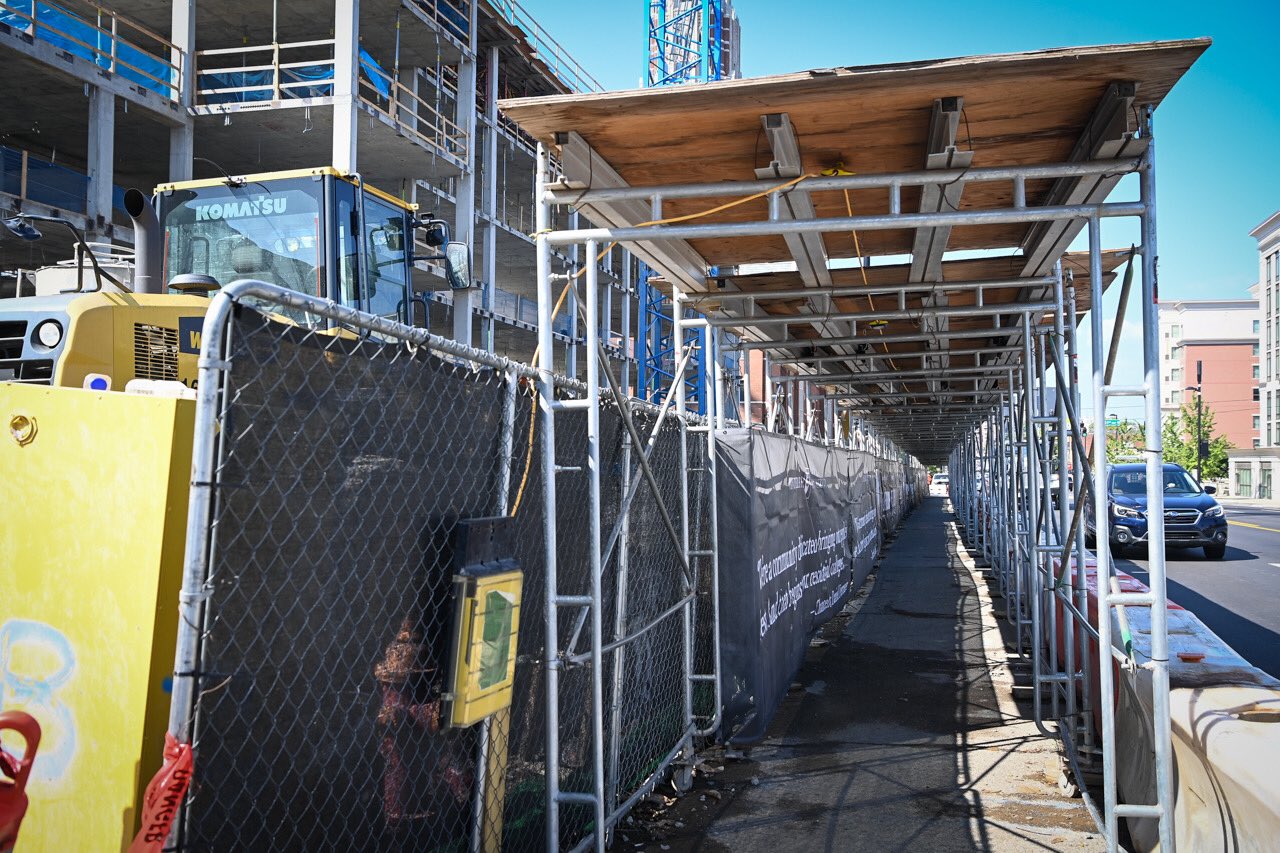
A new Metro Nashville policy has been announced restricting the closure of sidewalks and bikeways for construction purposes. The announcement was held on the campus of Vanderbilt University, adjacent to a protected pedestrian path installed as part of ongoing construction on West End Avenue.
“Making Nashville a more walkable, bike-friendly, livable city for all neighborhoods is critical for a city on the move like ours,” said Mayor John Cooper. “These new regulations will ensure that as Nashville grows, construction projects can no longer keep sidewalks and bike lanes closed for weeks and weeks at a time. Protecting Nashvillians’ ability to safely and easily travel around town is essential, and through today’s policy change and eventually additional Council legislation, we will dramatically reduce the amount of time development project sites can obstruct the public right-a-way without a plan to protect pedestrians and cyclists.”
The policy (attached) sets a seven-day maximum permit length for construction-related closures of ‘multimodal infrastructure’ across the city for projects that have not implemented a solution to keeping the right-of-way open, such as a scaffolding structure over a sidewalk. It applies to all new permit requestors, as well as those seeking to renew expiring permits. The policy also sets forth a variance application process for developers and contractors who maintain a longer-term closure necessary for the completion of construction activities. Those variances will be considered by a governing body tasked with assessing temporary encroachments into the right-of-way.
“Keeping sidewalks open during construction projects when possible will benefit all residents and I’m proud to support setting this new standard for projects in Nashville,” said President of Giarratana, LLC and Nashville Developer Tony Giarratana. “As those of us in the industry build high quality developments that enhance our streets, we want to protect and keep open the existing infrastructure.”
The Multimodal Access Closure Policy is part of a renewed effort by Metro to keep sidewalks and bikeways accessible to all. Subsequent legislation in the coming weeks is expected to codify this policy change, and extend to other right-of-way obstacles such as special events. In addition to regulations limiting the length of construction-related multimodal infrastructure closures, NDOT has recently brought on new right-of-way inspectors, adding 16 additional inspectors in 2022. The additional staffing has more than doubled the amount of right-of-way enforcement in the city.
“Keeping public right-of-way accessible to all is a huge priority for our department,” said NDOT Director Diana Alarcon. “Safety for people walking, biking, and using transit is critical to our mission, and we’re glad to partner with Mayor Cooper on such an important policy to ensure Nashville stays a great place to live. We’re also grateful to partners in the development community, including Vanderbilt University, who are taking action to ensure this policy is adhered to.”