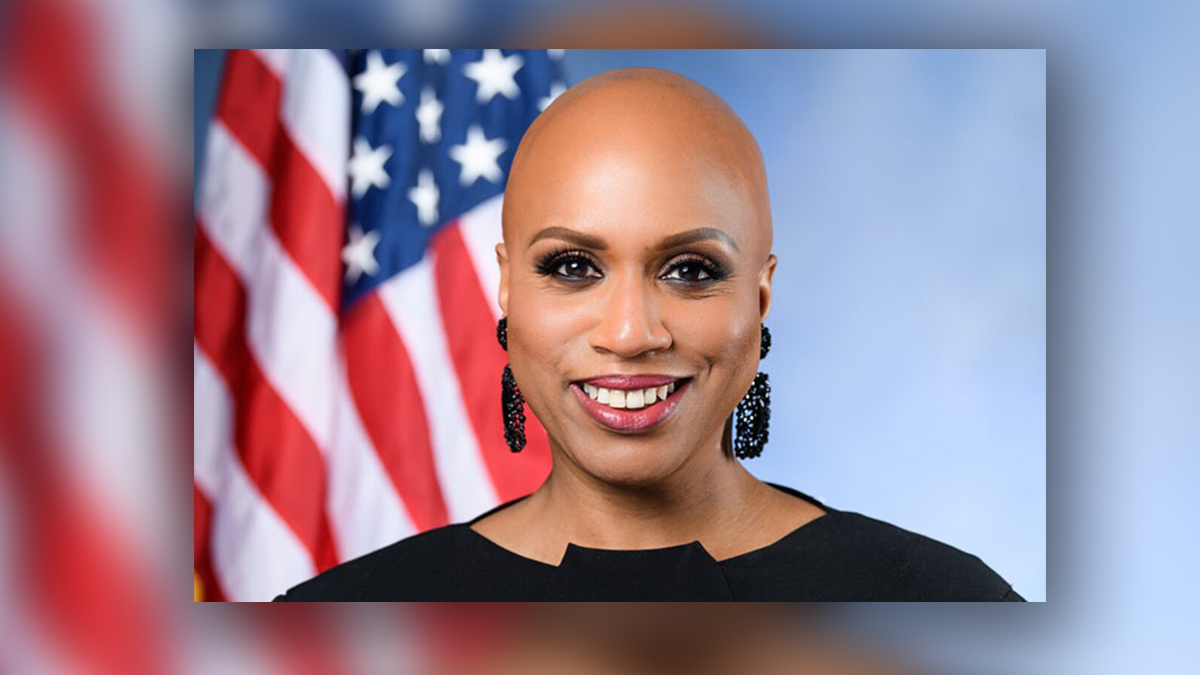
by Dr. Gail C. Christopher,
Executive director,

National Collaborative for Health Equity
The decision by the U.S. Supreme Court to end affirmative action in higher education is much more than just a bad ruling. This is an embarrassment on a global scale.
It’s based on the misguided notion that the Constitution, and even our society today, is color blind. That’s so far from the truth. In reality, what we have is a judicial authority that is in denial, e.g., denial of racism, denial of facts, denial of the consequences of this decision, denial of the harm to the people affected, and denial of the hierarchy of human value that this nation was built upon and still reigns supreme in too many minds and institutions today.
Writing for the majority, Chief Justice John Roberts concluded that the approach used by Harvard University and the University of North Carolina violated the 14th Amendment and “cannot be reconciled with the guarantees of the Equal Protection Clause.” That is duplicitous because that clause was designed to remedy the harm caused by denying rights and protection to people of color over centuries. For this court to use it to deny educational opportunities to people of color in the 21st century is hypocrisy at best and cruel at worst. Their decision lacks empathy and compassion for millions.
Our Constitution was conceived in an environment of racial hierarchy. It was dedicated to the proposition that some people were not human. Blacks could be enslaved and had no human rights. During the 1787 United States Constitutional Convention, the infamous ‘Three-fifths Compromise’ relegated enslaved people to be counted as 3/5th of Whites in a state’s population.
That created an inequitable and unfair American society. Harvard Professor Roland G. Fryer, Jr. has quantified the consequences. Relative to Whites, Blacks earn 24% less, live five fewer years, and are six times more likely to be incarcerated on a given day.
Hispanics make 25% less than Whites and are three times more likely to be incarcerated. At the end of the 1990s, there were one-third more Black men under the corrections system’s jurisdiction than those enrolled in colleges or universities.
Despite improvement by Blacks and Hispanics, there remain stark differences in access to quality education and opportunity that education affords. In a recent NCHE recent paper, Susan Eaton, director of the Sillerman Center for the Advancement of Philanthropy at the Heller School for Social Policy at Brandeis University, cited the racial disparity in poverty nationwide. About 24% of Native Americans, 20% of Blacks, and 17% of Latinos live in high-poverty neighborhoods compared to just four percent of Whites. Disparities in schools are even more extreme, with 74% of Black and Latinos, 70% of Native Americans, and just 32% of Whites attending schools where at least half of the students qualify for free and reduced lunches.
Clearly, American society remains far from a color blind state where equity and equality are spread across all communities, rich and poor, Black, White, and Brown. It’s astounding that the Supreme Court chose to ignore centuries of racism that has created a society where Blacks, Native Americans, and other people of color are forced to confront bias daily in their everyday lives, at school, at work, at play, and in their communities.
But there is hope for America. This Supreme Court is not a reflection of the people. This Court represents the opinions of a minority of our population.
That has been demonstrated by the political uprising after the Court’s rejection of a woman’s right to her own reproductive decisions. We may see a similar reaction to this Court’s decision limiting access to the nation’s top educational institutions to people qualified to attend but have faced discrimination because of their skin color every day since birth. NCHE has conducted research, which will soon be released, demonstrating that the American people want to put racism and political divisiveness behind us and move forward to create equitable communities.
America made tremendous progress after the murder of George Floyd. A watershed of honesty and sincerity opened up to address the realities of police brutality and the legacy of denial of humanity. Anytime there is a moment creating a seismic wave in society, one representing a transformation from the norm, there will be resistance. In this case, the opposition has a high level of authority and power, but it contradicts the minds and hearts of the majority of America.
The march towards an equitable society will continue.