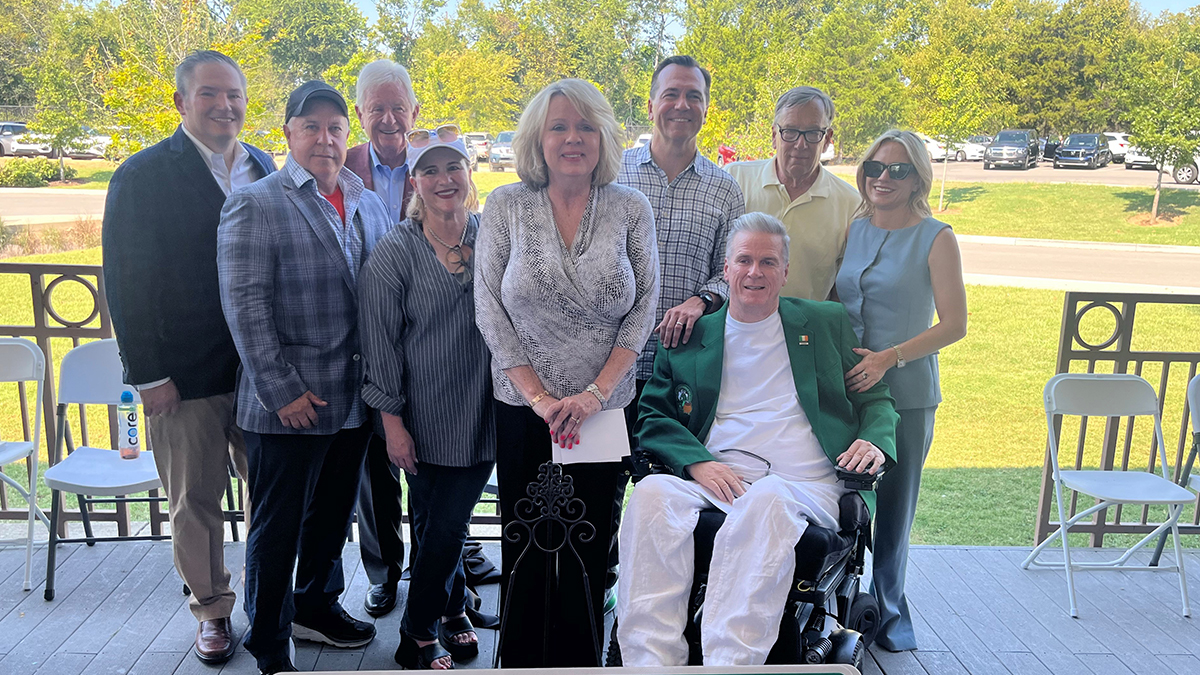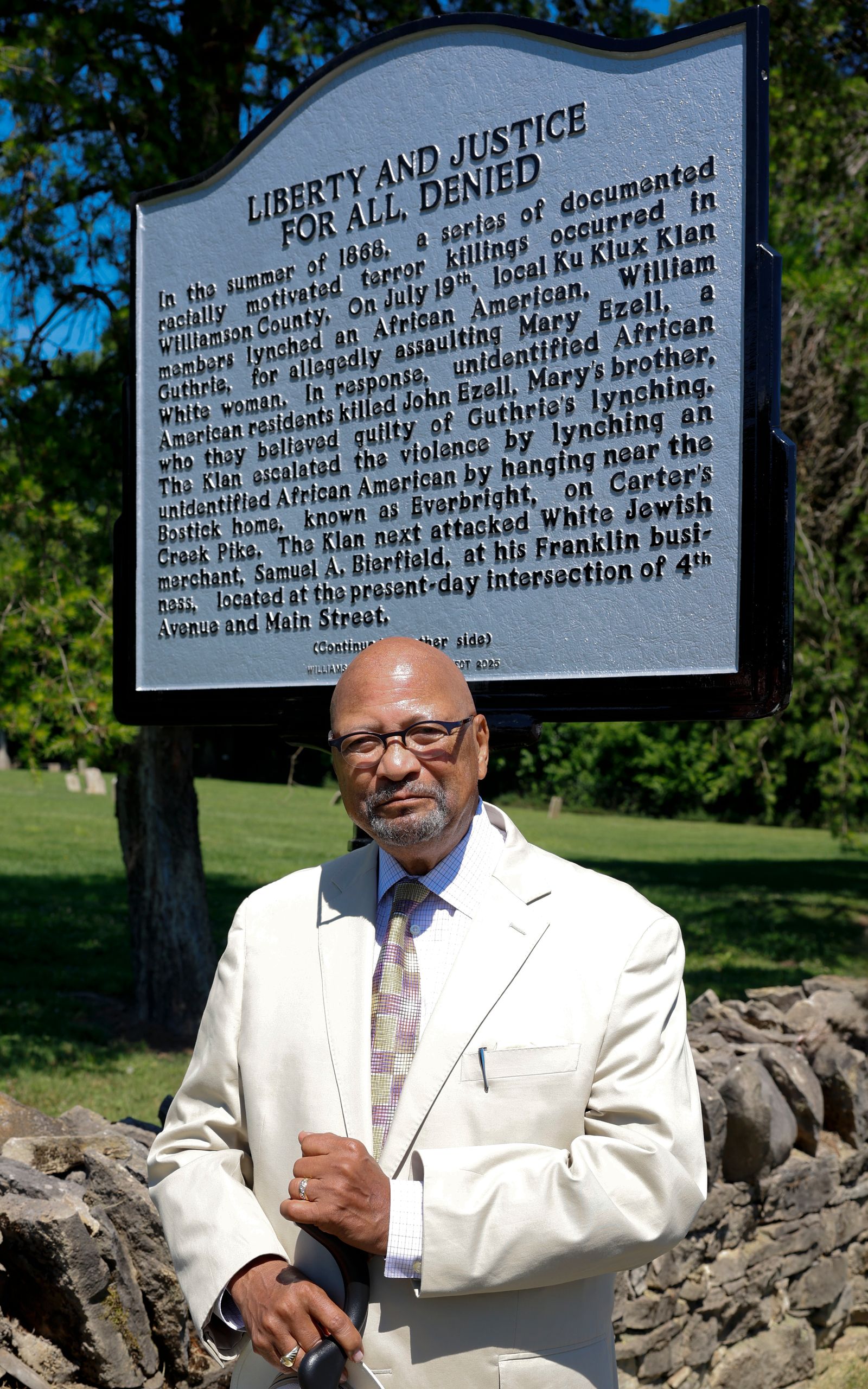
FRANKLIN, Tenn. — Community leaders, elected officials, faith leaders and residents gathered Saturday at Bicentennial Park to unveil two permanent historical markers honoring victims of lynching in Williamson County, marking a significant step in the community’s ongoing effort to confront and acknowledge a painful chapter of its history.
The markers, installed through the work of the Williamson Remembers Committee, recognize African American victims of racial violence during the Reconstruction and Jim Crow eras and are intended to help tell a fuller and more accurate story of Williamson County’s past.
The dedication ceremony opened with a prayer and remarks from Rev. Kenneth Hill, co-chair of the Williamson Remembers Committee and pastor of Shorter Chapel African Methodist Episcopal Church. Franklin Mayor Dr. Ken Moore, Tennessee State Historian Dr. Carrol Van West and Doris McMillian, Middle Tennessee vice chair of the Tennessee Historical Commission, also addressed those in attendance.
“What a wonderful day for us to assemble in this sacred place, on this sacred ground, for this celebration and dedication today,” Hill said.
He explained that the committee’s mission has been to ensure that the experiences of newly freed African Americans and victims of racial violence are remembered and acknowledged publicly.
“Our purpose was to erect narrative markers in public locations to humanize and memorialize this experience of newly freed African Americans,” Hill said.
The Williamson Remembers Committee was established in 2020 by Mayor Moore, who appointed Hill and community leader Julian Bibb as co-chairs. Moore said the initiative gained momentum after several committee members visited the National Memorial for Peace and Justice in Montgomery, Alabama, which memorializes victims of racial terror lynchings throughout the South.
“I felt a clear conviction after seeing that we, too, must tell this story, the story of Williamson County,” Moore said. “These stories affirm the importance of telling the truth, and they mark not an end, but a beginning, a starting point to strengthen our civic health.”
The two markers unveiled Saturday are among three approved by Franklin’s Board of Mayor and Aldermen in 2025. A third marker will be installed outside Franklin’s new City Hall once construction of the facility is completed.
Dr. Van West said the project reflects three themes that have shaped both Tennessee and Franklin’s history: trial, triumph and tolerance. He noted that the markers acknowledge not only African American victims of lynching but also the lynching of a Jewish merchant, highlighting the broader impact of intolerance and violence.
“The fact that this group got together to talk not only about African American lynching, but also the lynching of a Jewish merchant gets to the tolerance that defines this community,” Van West said. “The truth shall set you free—and it does. The truth matters. And to own the truth matters, too.”
McMillian described the project as an important act of remembrance and inclusion.
“This is not a moment of re-defining history,” she said. “It is one of truthful acknowledgment and inclusion of all the people in Williamson County.”
The ceremony concluded with Hill invoking the words of pioneering journalist and anti-lynching activist Ida B. Wells, who famously wrote: “The way to right the wrongs is to turn the light of truth upon them.”
“Today, we create a new legacy by shining the light of truth on lynchings in the city of Franklin,” Hill said. “This dedication ceremony puts us on a new path toward becoming the beloved community.”
Following the program, attendees walked together to the corners of Third Avenue and Margin Street and Third and Fourth avenues, where the newly installed markers were officially unveiled.
The Williamson Remembers Committee was formed to help Williamson County confront its history of racial violence with honesty, dignity and compassion. Through years of research, public engagement and collaboration among civic, faith and preservation leaders, the committee developed the memorial project as a way to encourage reflection, reconciliation and a deeper understanding of local history.
The unveiling represents a milestone in that effort and underscores the community’s commitment to preserving history while fostering dialogue about justice, truth and healing.