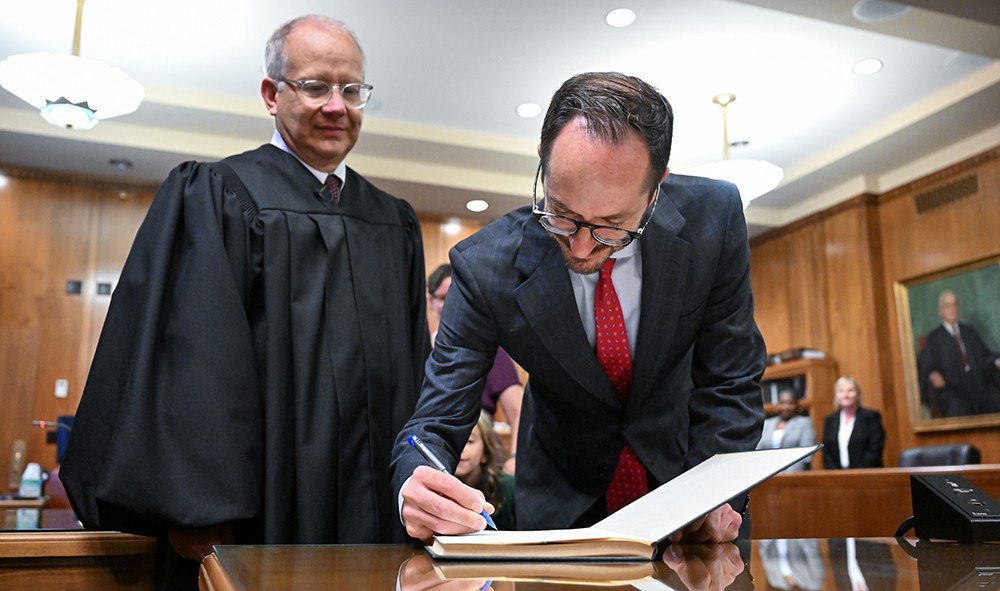
Mayor Freddie O’Connell is celebrating the completion of his first year in office by releasing a progress-tracking story map at <Nashville.gov/Progress> to demonstrate the work accomplished during the first year of his administration.
The interactive story map chronicles Mayor O’Connell’s first year in office including developing the ‘Choose How You Move’ transportation improvement program and putting it on the ballot in November, securing an East Bank Development Agreement, and working with the Metro Council to pass a Capital Spending Plan and Operating Budget that prioritized investments in Nashville’s best asset: it’s people. Those investments included bridging the federal funding cliff for schools, raising the minimum wage for Metro employees, funding nearly 1,000 affordable homes, and cutting the ribbon on more than eight affordable housing developments.

Mayor O’Connell directed his administration to focus its work with two priorities: lowering the cost of living and improving quality of life for everyone who lives in Nashville.
“When I took office on September 25, it was after a campaign built on the idea of making it easier to stay in Nashville—in a city that works for you,” O’Connell said. “We made big progress on key goals and honored our commitments to Nashvillians. I’m excited to share all that we have accomplished and to continue building a Nashville for Nashvillians.”
One year ago, O’Connell took the oath of office and immediately got to work creating three transition committees, How Nashville Moves, How Nashville Works, and How Nashville Grows.
Christy Pruitt-Haynes, chaired the How Nashville Works committee. She said of the mayor’s objectives: “One of the things that the mayor said initially that really attracted me to want to work with this committee is he wanted Nashville to work for Nashvillians. And what so many of us interact with the government aren’t necessarily some of those big things that you hear about. It’s those day-to-day things that affect our lives. Like did our trash get picked up? Do we feel the roads are safe? Things like that. The mayor wanted to prioritize that because that’s what really affects our lives on an ongoing basis.”
To that end, the administration filled more than 33,000 potholes in its first year in office and created a stand-alone Department of Waste Services to ensure that trash and recycling pickup is dependable and well-managed.
You can view the story map and video by visiting <Nashville.gov/progress>.