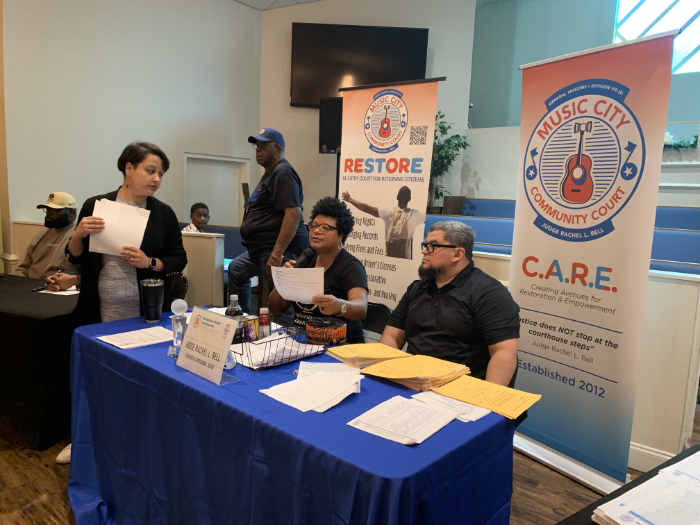
The Music City Community Court (MCCC), Tennessee’s first-ever community court, is proudly celebrating its 12-year anniversary, marking over a decade of groundbreaking restorative justice, service, and innovation under the visionary leadership of Presiding Judge Rachel L. Bell. Judge Rachel L. Bell, shared “Justice is not just about following the law—it’s about ensuring that everyone, regardless of their background or circumstances, has equal access to fairness and equity. True justice uplifts, restores, and brings dignity to individuals and communities. I am committed to creating an inclusive judicial system that serves all individuals fairly and equitably.”
Throughout its existence, the court has established itself as a model for reshaping the justice system by addressing the root causes of crime and offering rehabilitation and support to those who need it most. The MCCC has assisted over 50,000 participants with its Specialty Courts and programming working towards preventative, diversionary and restorative justice because, “Justice does NOT stop at the courthouse steps!”® Among its innovative programs are the Restore Re-Entry Court for Returning Citizens, the nationally recognized LEGACY Housing Resource Diversionary Court and Program, and the CARE Diversionary Court for young adults.

These programs have gained local, national, and even international attention for their contributions to justice reform, community building, and individual empowerment. Each of them embodies the court’s mission: to heal, rehabilitate, and provide a pathway to a more just and compassionate future.
The Restore Re-Entry Court for Returning Citizens: A Fresh Start for Formerly Incarcerated Individuals
The Restore Re-Entry Court for Returning Citizens plays a critical role in reducing recidivism by assisting formerly incarcerated individuals in reintegrating into society. Under the leadership of Judge Bell, Criminal Court Clerk Howard Gentry and their dedicated teams, the program provides returning citizens with the tools they need to navigate life after prison, whether it be through employment support, mental health services, or housing resources.
The court’s holistic approach recognizes that re-entry is a multi-faceted process. It involves addressing barriers such as criminal records, lack of education or training, and mental health issues that often accompany incarceration. By focusing on rehabilitation and offering practical assistance, the Restore Re-Entry Court gives individuals the opportunity to rebuild their lives, reconnect with their communities, and contribute positively to society.
Through partnerships with over 25 community organizations and employers, the program creates a support network here in Davidson County that not only helps returning citizens stay out of the criminal justice system but also provides them with the means to thrive. The Restore Re-Entry Court has become a model for other jurisdictions seeking to address the challenges of re-entry in a meaningful and effective way. To date the Restore Re-Entry Court for Returning Citizens has hosted 44 Saturday Dockets & Expungement Clinics; over 6,599 hours in community service work saving tax payers $146,289.78 in volunteer hours keeping our community clean and free of liter; assisted over 19,551 participants and waived over $15,000,000.00 in court cost fines and fees to assist people in getting their records expunged and back on their feet restoring their voters rights, reinstating their drivers licenses, gaining access to affordable housing and quality wage employment.
LEGACY Housing Resource Diversionary Court and Program: Addressing Housing Instability on a National Stage
One of the most innovative and impactful programs under the Music City Community Court’s umbrella is the LEGACY Housing Resource Diversionary Court and Program (LEGACY). This initiative, designed to address housing instability, has gained national recognition, including being featured at the White House Eviction Prevention Summit and on MSNBC’s Andrea Mitchell Show with Julian Castro, the former U.S. Secretary of Housing and Urban Development.
Launched in response to the growing housing crisis, particularly during the COVID-19 pandemic, the LEGACY program partnered with Metro Action Commission, the Mayor’s Housing Task Force, Legal Aid Society of Middle Tennessee and the Cumberlands, and the United Way Financial Assistance Network focusing on preventing evictions by providing mediation and resources to both landlords and tenants. Rather than treating evictions solely as a legal matter, the program brings together landlords, tenants, and community partners to find solutions that work for everyone. This might include payment plans, rental assistance, or other support to help tenants stay in their homes and landlords maintain their properties.
The LEGACY program also addresses the long-term effects of housing instability by connecting tenants with employment opportunities, financial literacy programs, and housing assistance. By focusing on diversion and prevention, it seeks to break the cycle of homelessness and economic hardship that often accompanies eviction.
The national attention the program received reflects its importance as a model for other cities and states grappling with housing instability. As more communities look for innovative ways to address evictions, LEGACY stands out as a beacon of hope. To date the court has assisted over 8,208 participants and court ordered over $19,610,254.93 to landlords for tenant rent debt/arrearage keeping a roof over our citizens heads.
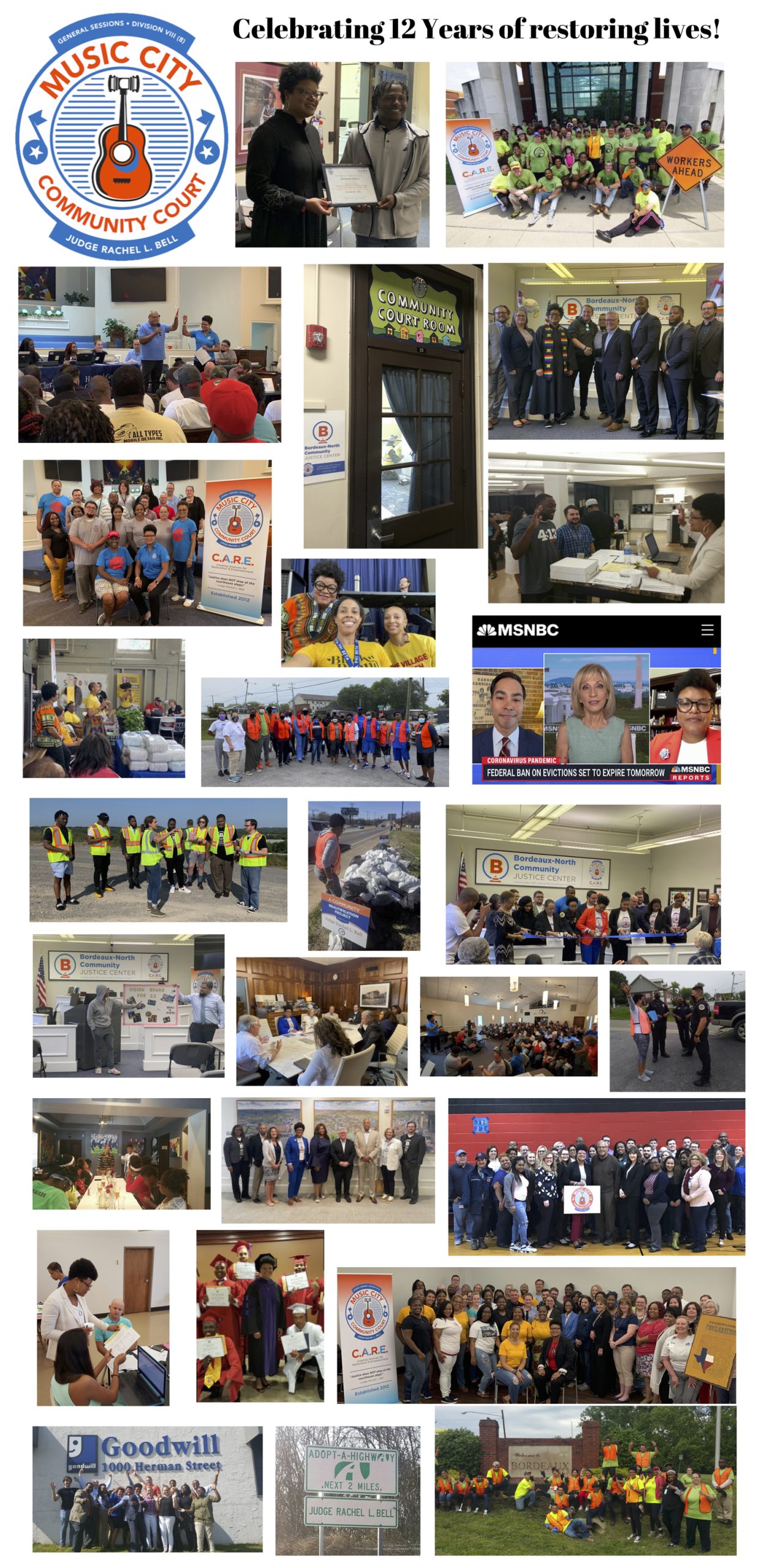
CARE Diversionary Court: Providing a Second Chance for Young Adults
The CARE Diversionary Court, which stands for “Creating Avenues for Restoration and Empowerment,” is aimed at individuals between the ages of 18 and 30. This program is designed for young adults who may have made mistakes but deserve a second chance at building a successful future. Rather than sending these young people into the traditional criminal justice system, the CARE court focuses on providing the support they need to turn their lives around.
The program offers a variety of services, including job training, education, and participants work closely with mentors and case managers who help guide them through the program, ensuring they stay on track and make positive choices. By addressing the underlying causes of criminal behavior, such as poverty, lack of education, and trauma, the CARE court gives young adults the opportunity to change their lives and avoid the long-term consequences of a criminal record.
Since its inception, the CARE Diversionary Court has helped 26 young adults move beyond their past mistakes and build brighter futures. It is an essential part of the Music City Community Court’s broader mission to create a more just and equitable society.
A Legacy of Innovation and Compassion
As the Music City Community Court celebrates its 12-year anniversary, it is clear that Judge Rachel L. Bell and her team have built something truly special. Through the Restore Re-Entry Court, the LEGACY Housing Resource Diversionary Court and Program, and the CARE Diversionary Court, the court has touched the lives of countless individuals and families, offering hope, support, and a path forward.
The court’s success is a testament to the power of restorative justice and the importance of addressing the root causes of crime and hardship. MCCC has worked with over 84 interns in its FUTURE program, 75 young rising 1st -4th graders with its REACH Literacy program and has a Podcast named THE FOLLOW UP for Restorative Justice that has had 23,276 viewers. As it enters its second decade, the Music City Community Court continues to inspire communities across the country to reimagine what justice can look like. Through innovation, compassion, and dedication, it is building a legacy that will be felt for years to come.