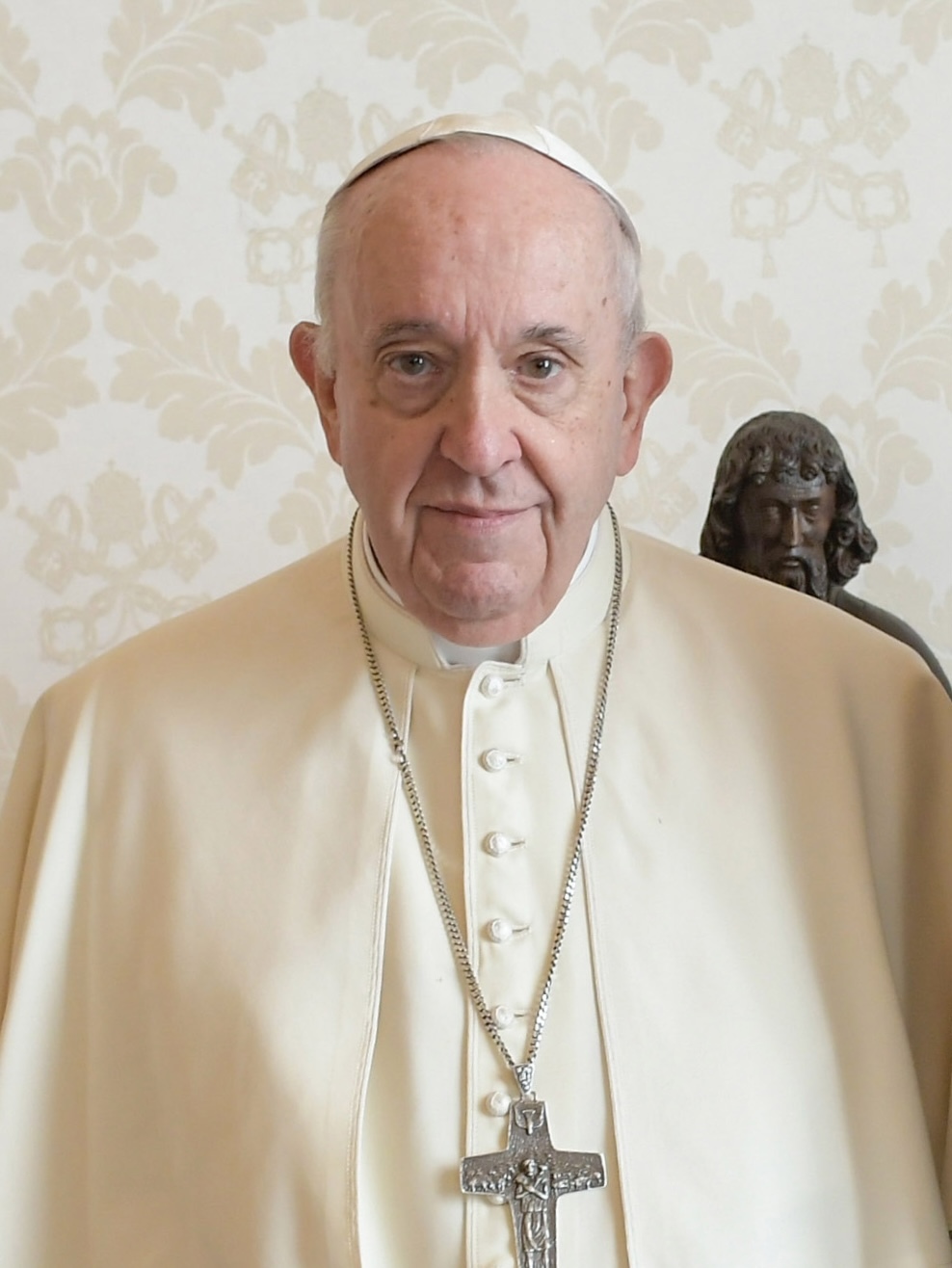
Pope Francis, the first Jesuit and Latin American leader of the Catholic Church, who brought a pastoral and reform-minded approach to the papacy, died on April 21, 2025, at the age of 88, the Vatican announced.
“At 7:35 this morning, the Bishop of Rome, Francis, returned to the house of the Father,” Cardinal Kevin Farrell said in a statement released early Monday. “He taught us to live the values of the Gospel with faithfulness, courage, and universal love, especially in favor of the poorest and the marginalized.”

Born Jorge Mario Bergoglio in Buenos Aires on December 17, 1936, Francis was the son of Italian immigrants. Before entering the priesthood, he worked as a bouncer, janitor, chemist, and food technician. He joined the Society of Jesus in 1958, was ordained in 1969, and later served as provincial superior of the Jesuits in Argentina from 1973 to 1979. Appointed archbishop of Buenos Aires in 1998, he was made a cardinal by Pope John Paul II in 2001.
Following the unexpected resignation of Pope Benedict XVI in 2013 (the first pope to step down in 600 years) Bergoglio was elected by the conclave as the 266th pontiff, taking the name Francis in honor of Saint Francis of Assisi. He was the first pope from the Americas and the Southern Hemisphere, and the first non-European in more than a millennium.
Francis inherited a church rocked by scandals, including global clerical sexual abuse cases and financial mismanagement. He initiated structural reforms in the Roman Curia and implemented the most significant revisions to church law in decades, including new policies on clerical abuse. However, critics argued that some reforms did not go far enough, especially regarding the reporting of abuse to civil authorities.
Throughout his papacy, Francis emphasized mercy, humility, and social justice. He became known for his outreach to marginalized groups, including immigrants, the poor, and LGBTQ individuals. He took symbolic steps, such as washing the feet of Muslim refugees and inviting homeless people to Vatican events. In 2023, he authorized the blessing of same-sex couples outside of formal liturgical settings, a move that drew backlash from conservative Catholics.
Francis also opposed abortion and maintained the Church’s traditional stance on clerical celibacy and the male-only priesthood, while expanding leadership roles for women within the Vatican bureaucracy.
On the global stage, Francis condemned rising nationalism and xenophobia, called for the protection of migrants, and spoke out against the death penalty. He played a diplomatic role in restoring U.S.-Cuba relations and negotiated an agreement with China on the appointment of bishops. In 2022, he issued a formal apology for the Catholic Church’s role in the abuses suffered by Indigenous children in Canada’s residential schools.
Climate change was a hallmark issue of his papacy. In his 2015 encyclical Laudato Si’, he urged urgent action to combat environmental degradation, framing it as a moral imperative. That same year, he became the first pope to address a joint session of the U.S. Congress, calling for legislative action on issues including the environment, immigration, and economic inequality.
His progressive tone on many social issues, found Francis at odds with traditionalists. His support for COVID-19 vaccinations, his openness toward divorced Catholics receiving Communion, and his stance on LGBTQ blessings prompted accusations of heresy from some conservative clerics, particularly in the United States.
In the final years of his life, Francis battled chronic health issues, including diverticulitis, bronchitis, and chronic lung problems that led to repeated hospitalizations. He was often seen using a wheelchair or cane and had recently been treated for pneumonia.
Pope Francis’ body will lie in state in an open coffin in St. Peter’s Basilica. In accordance with his wishes, he is expected to be buried at the Basilica of St. Mary Major in Rome, rather than in the traditional papal tombs.
A conclave of cardinals will soon convene in seclusion to elect his successor.